Table of Contents
- Understanding credit card processing services for small business
- Key features of credit card processing services for small business
- Choosing the right provider for your small business
- How to evaluate credit card processing services for small business
- Understanding the costs and fee structures
- Interchange fees
- Assessment fees
- Monthly and gateway fees
- Other common fees
- Security, compliance, and fraud prevention
- PCI compliance for credit card processing services for small business
- Integration with POS, e‑commerce, and accounting tools
- Top integration scenarios
- Tips to maximize efficiency and reduce costs
- Optimize transaction routing
- Encourage chip and contactless payments
- Batch transactions daily
- Negotiate with your processor
- Monitor chargebacks
- Future trends in credit card processing for small business
- Buy‑Now‑Pay‑Later (BNPL)
- Cryptocurrency payments
- Artificial Intelligence for fraud detection
- Unified commerce platforms
Running a small business today means juggling a never‑ending list of tasks: inventory, marketing, customer service, and—perhaps most importantly—how you get paid. While cash and checks still have a place, the overwhelming majority of consumers prefer the speed and convenience of swiping or tapping a card. That’s where credit card processing services for small business step in, turning a simple transaction into a seamless experience for both you and your customers.
But not every payment solution is created equal. Some charge hidden fees, others lock you into long contracts, and a few simply don’t integrate well with the tools you already use. Choosing the right partner can feel like navigating a maze of jargon and fine print. In this article, we’ll break down the essential components of credit card processing services for small business, highlight common pitfalls, and give you actionable tips to make the best decision for your bottom line.
Whether you run a brick‑and‑mortar boutique, a bustling coffee shop, or an e‑commerce store that ships nationwide, understanding how these services work will empower you to accept more sales, reduce transaction friction, and ultimately grow your revenue.
Understanding credit card processing services for small business
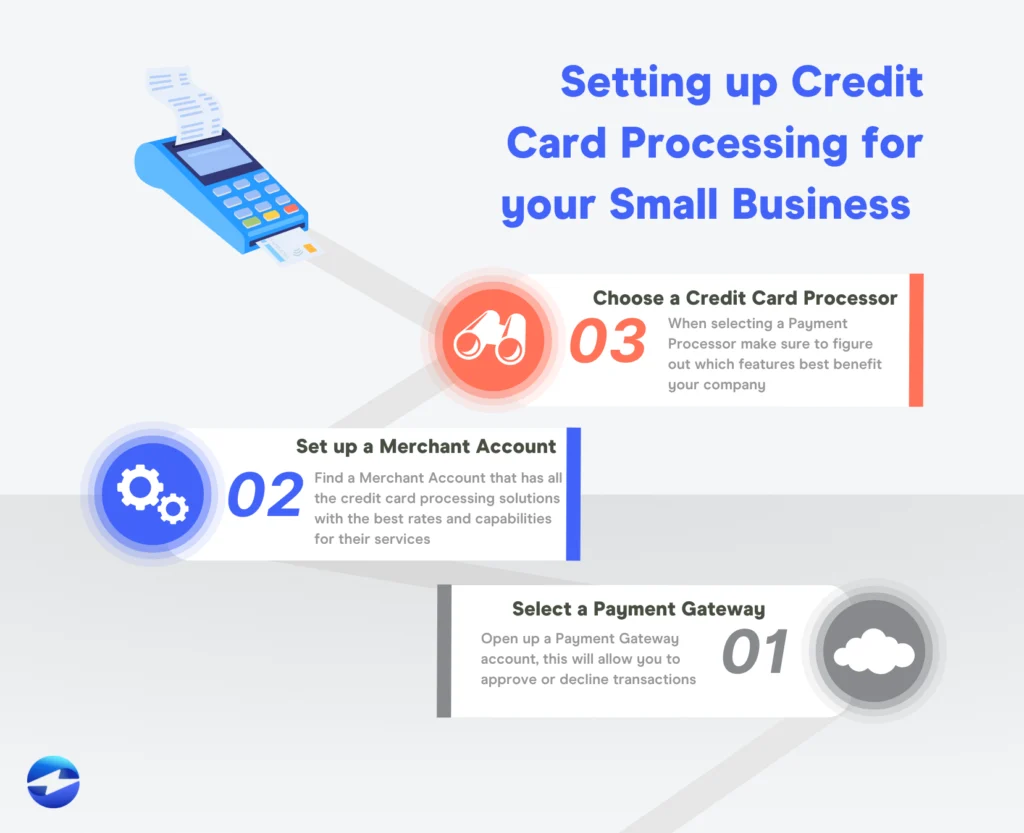
At its core, a credit card processing service is the technology and infrastructure that enables a merchant to accept payment cards from customers. The process involves several moving parts: the cardholder’s bank (issuer), the merchant’s bank (acquirer), the payment network (Visa, Mastercard, etc.), and the processor that connects them all. When you swipe, dip, or tap, the processor encrypts the data, routes it to the appropriate networks, and returns an approval—or decline—in seconds.
For small businesses, the goal is to find a solution that offers:
- Transparent pricing (no surprise fees)
- Fast settlement times
- Robust security (PCI‑DSS compliance, tokenization)
- Easy integration with POS, e‑commerce, and accounting software
When you search for small business online credit card processing options, you’ll quickly see that the market is crowded. Let’s demystify the key categories of providers and what each brings to the table.
Key features of credit card processing services for small business
Below are the features you should prioritize when evaluating a processor:
- Pricing models: Flat‑rate, interchange‑plus, and tiered pricing each have pros and cons. Flat‑rate is simple (e.g., 2.9% + $0.30 per transaction), while interchange‑plus offers lower overall costs but requires more analysis.
- Hardware options: Traditional countertop terminals, mobile card readers (Bluetooth or USB), and virtual terminals for phone orders.
- Payment methods: Support for EMV chip cards, contactless (Apple Pay, Google Pay), and ACH debit.
- Integration capabilities: APIs and plugins for popular platforms like Shopify, WooCommerce, QuickBooks, and Square.
- Security tools: End‑to‑end encryption, tokenization, and fraud detection alerts.
Choosing the right provider for your small business
The “best” processor depends on your industry, transaction volume, and growth plans. Here’s a quick decision‑tree to help you narrow the field:
- Do you need a physical terminal? If you have a storefront, look for providers that bundle hardware with low monthly fees. If you operate mainly online, a virtual terminal or API integration is enough.
- What’s your average ticket size? High‑ticket businesses (e.g., furniture) benefit from lower interchange‑plus rates, while low‑ticket, high‑volume shops often prefer flat‑rate simplicity.
- Do you accept phone orders? A virtual terminal is essential. Check out our guide on how to accept credit cards over the phone for best practices.
- Are you planning to expand online? Choose a processor with robust e‑commerce plugins and multi‑currency support.
When you’ve shortlisted a few candidates, request a detailed pricing sheet, ask about contract length, and verify their customer support hours. A good provider should be transparent and willing to walk you through the fee structure line by line.
How to evaluate credit card processing services for small business
Use this checklist during your vendor calls:
- Does the provider offer a no‑contract or month‑to‑month option?
- What are the exact rates for swiped, keyed‑in, and e‑commerce transactions?
- Are there any hidden fees (batch fees, PCI compliance fees, early termination fees)?
- What is the average settlement time—next‑day, 24‑hour, or longer?
- Is there a dedicated support line for small businesses?
Understanding the costs and fee structures
Pricing is often the most confusing aspect of credit card processing services for small business. Let’s break down the common fee types you’ll encounter:
Interchange fees
These are set by the card networks and passed through the processor. They vary based on card type (debit vs. credit), transaction method (card‑present vs. card‑not‑present), and merchant category code (MCC). Interchange‑plus pricing reveals these fees plus a fixed markup, offering the most transparency.
Assessment fees
Card networks also charge a small percentage (usually 0.13% for Visa, 0.10% for Mastercard) on each transaction. They’re unavoidable, but a good processor will include them in the overall rate rather than tacking them on separately.
Monthly and gateway fees
Many providers charge a monthly gateway fee for the software that connects your POS or website to the payment network. Some waive this fee if you meet a minimum transaction volume.
Other common fees
- PCI compliance fees (often $10–$30 per month)
- Chargeback fees ($15–$25 per disputed transaction)
- Batch fees (a small charge for closing out the day’s transactions)
- Early termination fees (if you break a long‑term contract)
By comparing a flat‑rate provider (e.g., 2.9% + $0.30) against an interchange‑plus offering (e.g., 0.20% + $0.10 plus interchange), you can model your monthly costs based on projected sales. This exercise often reveals that the “cheapest” sounding flat‑rate option can become pricey for high‑volume merchants.
Security, compliance, and fraud prevention
Security is non‑negotiable. A data breach can cripple a small business both financially and reputationally. The payment ecosystem is governed by the PCI Data Security Standard (PCI‑DSS). Processors that are PCI‑validated handle most of the heavy lifting, but you still have responsibilities.
PCI compliance for credit card processing services for small business
Here’s what you need to keep in mind:
- Use encrypted card readers (EMV) to protect card data at the point of entry.
- Never store full card numbers or CVV codes on your own servers.
- Complete the Self‑Assessment Questionnaire (SAQ) annually if you’re a small merchant.
- Leverage tokenization, which replaces sensitive data with a non‑reversible token for storage.
Many processors also provide real‑time fraud detection tools—velocity checks, address verification (AVS), and 3‑D Secure authentication (e.g., Verified by Visa). These extra layers can dramatically reduce chargeback rates.
Integration with POS, e‑commerce, and accounting tools
Today’s small businesses rarely operate in a silo. Your credit card processing services for small business should talk to the rest of your tech stack. Seamless integration reduces manual data entry, minimizes errors, and gives you real‑time insights.
Top integration scenarios
- POS systems: Square, Lightspeed, and Clover often have built‑in processing, but you can also attach a third‑party processor via an API.
- E‑commerce platforms: Shopify, WooCommerce, and BigCommerce support a wide range of gateways; choose one that offers a plug‑and‑play experience.
- Accounting software: QuickBooks, Xero, and FreshBooks can automatically import daily settlement reports, making reconciliation painless.
- CRM and loyalty programs: Some processors sync transaction data with CRM tools, helping you personalize marketing.
For a deeper dive into online setups, check out our Small Business Credit Card Processing Online – A Complete Guide. It walks through the step‑by‑step integration process for popular platforms.
Tips to maximize efficiency and reduce costs
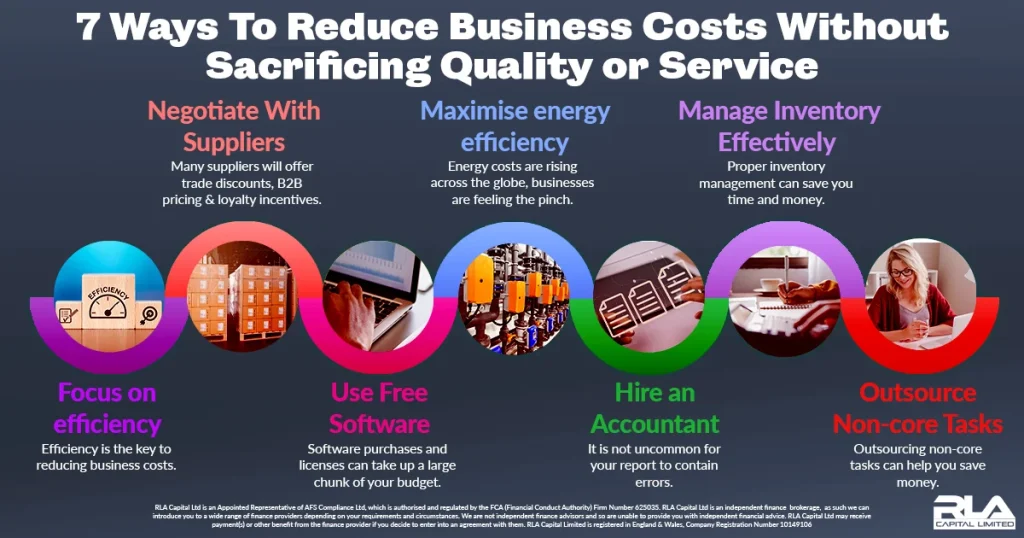
Even after you’ve selected a processor, there are ways to fine‑tune your operation:
Optimize transaction routing
Some processors allow you to route certain card types through the cheapest interchange tier (e.g., routing debit transactions differently from credit). This can shave a few percentage points off your overall cost.
Encourage chip and contactless payments
Card‑present transactions (swipe or tap) carry lower interchange rates than keyed‑in (manual entry) or online transactions. Train staff to prompt customers to use chip or tap whenever possible.
Batch transactions daily
Instead of submitting each sale individually, batch them at the end of the day. This reduces batch fees and can speed up settlement.
Negotiate with your processor
If your volume grows, don’t hesitate to ask for better rates. Processors often have tiered pricing that kicks in once you cross a threshold.
Monitor chargebacks
High chargeback ratios can lead to higher fees or even termination. Use the processor’s fraud tools, keep clear shipping and return policies, and respond promptly to disputes.
Future trends in credit card processing for small business
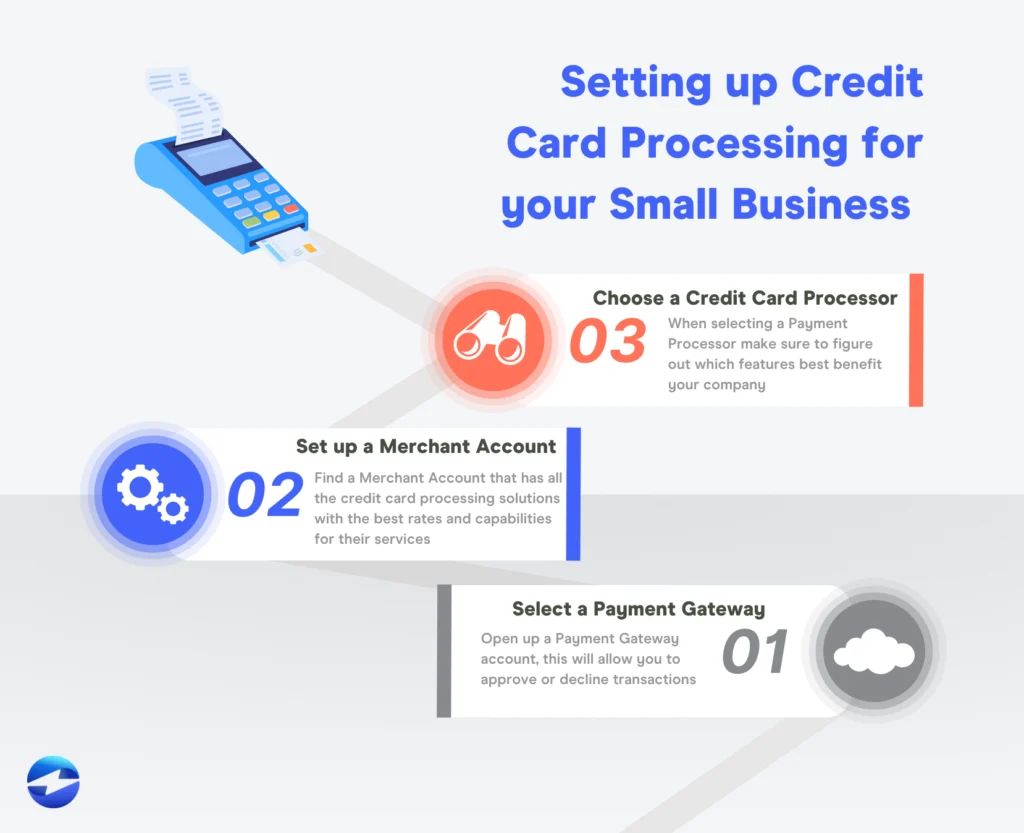
The payment landscape evolves quickly. Staying ahead of trends can give your small business a competitive edge.
Buy‑Now‑Pay‑Later (BNPL)
Options like Afterpay, Klarna, and PayPal Credit let customers split purchases into installments. Many processors now offer built‑in BNPL support, which can increase average order value.
Cryptocurrency payments
While still niche, some processors enable crypto-to-fiat conversion, allowing merchants to accept Bitcoin or stablecoins without taking on volatility risk.
Artificial Intelligence for fraud detection
Machine‑learning models analyze transaction patterns in real time, flagging anomalies before they become costly chargebacks. Look for processors that advertise AI‑driven risk management.
Unified commerce platforms
Unified commerce merges in‑store, online, and mobile channels into a single backend, offering a holistic view of inventory, sales, and customer data. Processors that integrate with unified commerce systems simplify omnichannel management.
Adopting any of these innovations early can set your business apart and meet the evolving expectations of tech‑savvy shoppers.
In the end, the right credit card processing services for small business blend transparent pricing, strong security, smooth integration, and responsive support. Take the time to map out your transaction profile, compare providers side by side, and leverage the tips above to keep costs low and customer satisfaction high. With a solid payment foundation, you can focus on what truly matters: delivering great products, building lasting relationships, and growing your business.