Table of Contents
- use 401k to pay student loans: What the Rules Say
- How a 401k loan works when you use 401k to pay student loans
- Early withdrawal consequences when you use 401k to pay student loans
- Pros and Cons of Using 401k to Pay Student Loans
- Pros of using 401k to pay student loans
- Cons of using 401k to pay student loans
- Alternative Strategies Before You Pull From Your 401k
- Refinancing or consolidating student loans
- Income‑Driven Repayment (IDR) Plans
- Employer tuition assistance or student loan repayment benefits
- Using a cash‑flow loan for short‑term needs
- Calculating the Real Cost of Using 401k to Pay Student Loans
- Key Considerations for Different Life Stages
- Early‑career professionals
- Mid‑career earners
- Approaching retirement
- Steps to Safely Use 401k to Pay Student Loans
- Frequently Asked Questions
- Can I use a 401k to pay student loans without paying taxes?
- What happens to my 401k loan if I lose my job?
- Is there a limit on how many times I can borrow from my 401k?
- Does using a 401k affect my credit score?
- Are there any tax deductions for student loan interest if I use a 401k loan?
Student loan debt has become a defining financial burden for many Millennials and Gen‑Zers. At the same time, the allure of tapping into a 401k—especially when you’re staring at a high‑interest loan—can feel like a quick fix. Before you decide to pull money from your retirement account, it’s worth stepping back and looking at the full picture.
In this article we’ll break down what actually happens when you use a 401k to pay student loans, explore the tax and penalty rules, compare the two main ways to tap your 401k (loan vs. withdrawal), and weigh the long‑term consequences on your retirement nest egg. Whether you’re a recent graduate, a mid‑career professional, or someone who’s already juggling multiple debts, the insights here will help you decide if that shortcut is truly worth it.
We’ll also sprinkle in a few practical tips—like how to avoid the dreaded early‑withdrawal penalty, what to do if you change jobs, and alternative strategies that might preserve your retirement savings while still getting those student loans under control.
use 401k to pay student loans: What the Rules Say
The first question most people ask is whether it’s even legal to use 401k to pay student loans. The short answer: you can, but the method matters. There are two primary routes:
- 401k loan: Borrow up to 50 % of your vested balance (max $50,000) and repay it with interest back into your own account.
- Early withdrawal: Take a distribution before age 59½, which triggers taxes and a 10 % penalty unless you qualify for an exception.
Both options have distinct tax treatment, repayment requirements, and impact on your future compounding growth. Understanding these nuances is crucial before you decide to use 401k to pay student loans.
How a 401k loan works when you use 401k to pay student loans
A 401k loan is essentially a private loan from yourself. Here’s how it typically plays out:
- Application: You request the loan through your plan administrator; most plans approve within a few days.
- Interest rate: Usually set at the prime rate plus 1‑2 %, which you pay back into your own account, effectively paying yourself interest.
- Repayment schedule: Fixed payments (often bi‑weekly) over a 5‑year term, though longer terms are allowed for home‑related expenses.
- Impact on contributions: While the loan is outstanding, you can still make regular 401k contributions, but the loan amount is not counted toward your annual contribution limit.
Because you’re paying yourself back, the tax impact is minimal—no income tax is withheld on the loan amount, and there’s no early‑withdrawal penalty. The downside? If you leave your job, the loan typically becomes due in full within 60 days. Failure to repay triggers a distribution, which then becomes taxable and may incur the 10 % penalty.
Early withdrawal consequences when you use 401k to pay student loans
If you opt for an outright withdrawal instead of a loan, the tax bill can be steep:
- Income tax: The distribution is added to your taxable income for the year, potentially pushing you into a higher bracket.
- 10 % penalty: Unless you meet an IRS exception (e.g., total and permanent disability, certain medical expenses), you’ll owe an additional 10 % early‑withdrawal penalty.
- Lost growth: Money taken out stops compounding, which can shave years off your retirement timeline.
Given these costs, most financial planners recommend the loan route if you’re determined to use 401k to pay student loans.
Pros and Cons of Using 401k to Pay Student Loans
Every financial decision carries trade‑offs. Below is a balanced look at the upside and downside of tapping your retirement savings for student debt.
Pros of using 401k to pay student loans
- Lower interest rate: 401k loan rates are typically lower than private student loan rates, which can reduce overall interest costs.
- Interest goes back to you: The interest you pay on the loan is deposited back into your own retirement account, effectively “recycling” the cost.
- No credit check: Since you’re borrowing from yourself, your credit score isn’t a factor, making it accessible even if you have a less‑than‑perfect credit history.
- Simplified repayment: Payments are often deducted automatically from your paycheck, reducing the risk of missed payments.
Cons of using 401k to pay student loans
- Reduced retirement savings: While you’re repaying the loan, the borrowed amount isn’t invested, missing out on market gains.
- Job‑change risk: Leaving your employer can accelerate repayment deadlines, turning a loan into a taxable distribution.
- Opportunity cost: If your 401k investments are earning higher returns than the student loan interest rate, you could be losing money by borrowing.
- Limited borrowing amount: You can’t tap more than $50,000 or 50 % of your vested balance, which may not cover the full student loan balance.
Balancing these factors often comes down to your individual cash flow, the interest rates on your student loans, and your confidence in staying with your current employer for the loan’s duration.
Alternative Strategies Before You Pull From Your 401k

Before you decide to use 401k to pay student loans, explore other options that might keep your retirement savings intact.
Refinancing or consolidating student loans
Refinancing can lower your interest rate, shorten the repayment term, or both. If you’re curious about how consolidation affects your credit, check out Does Student Loan Consolidation Affect Credit Score? What You Need to Know. A lower rate could make the loan more manageable without touching retirement assets.
Income‑Driven Repayment (IDR) Plans
For federal loans, IDR plans tie your monthly payment to your discretionary income. This can free up cash for retirement contributions, effectively allowing you to keep both your loan and retirement on track.
Employer tuition assistance or student loan repayment benefits
Some employers now offer direct student loan repayment as a benefit. It’s worth checking with HR; a few hundred dollars a month from your boss can make a huge dent without sacrificing retirement growth.
Using a cash‑flow loan for short‑term needs
If you need a lump sum to clear high‑interest student debt, a small cash‑flow loan might be cheaper than borrowing from your 401k. Learn more about cash‑flow loans in Cash Flow Loans for Small Business – A Complete Guide. The key is to compare APRs, fees, and repayment terms carefully.
Calculating the Real Cost of Using 401k to Pay Student Loans
To see whether the strategy makes financial sense, run the numbers. Below is a simple framework you can adapt.
- Determine your student loan interest rate (e.g., 6 %).
- Calculate the effective cost of a 401k loan:
- Loan interest rate (e.g., 5 %).
- Tax impact: none on the loan itself.
- Estimate the lost investment growth:
- Assume an average annual return for your 401k (e.g., 7 %).
- Multiply the borrowed amount by the expected return over the loan term.
- Compare total costs:
- Student loan interest saved + interest paid to yourself vs. lost 401k growth.
For many borrowers, the lost compounding can outweigh the interest savings, especially if you’re early in your career and have a long time horizon for retirement growth.
Key Considerations for Different Life Stages
How you approach the decision to use 401k to pay student loans often depends on where you are in your career and personal life.
Early‑career professionals
If you’re under 30 and just starting to build wealth, preserving the power of compounding is usually a higher priority. A 401k loan might feel tempting, but the long‑term opportunity cost can be significant.
Mid‑career earners
Those in their 40s with a solid retirement balance may have more flexibility. If your 401k is well‑diversified and you’re comfortably on track for retirement, a loan could be a practical way to eliminate high‑interest student debt faster.
Approaching retirement
Near retirement, the focus shifts to cash flow and debt reduction. In this stage, a 401k loan (or even a qualified distribution under the “hardship” rules) might make sense if it clears a large debt burden and improves your monthly budget.
Steps to Safely Use 401k to Pay Student Loans
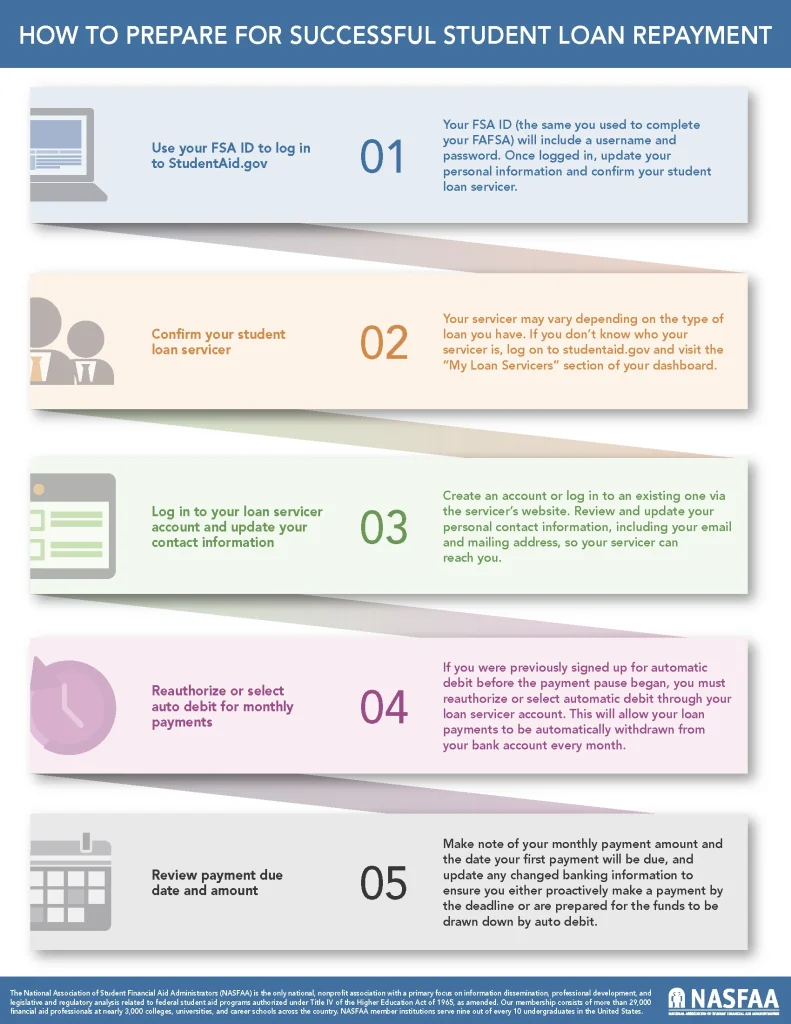
If after weighing pros, cons, and alternatives you still want to proceed, follow these best‑practice steps to protect both your retirement and your credit.
- Check your plan’s loan provisions: Not all 401k plans allow loans, and some have strict repayment terms.
- Calculate the exact amount needed: Borrow only what you need to pay off the loan balance, not extra.
- Set up automatic payroll deductions: This ensures you never miss a payment and avoids accidental defaults.
- Keep records: Document loan agreements, repayment schedules, and any communications with your plan administrator.
- Plan for job changes: If you anticipate switching jobs, consider paying down the loan faster or preparing a contingency fund.
By staying organized and disciplined, you can mitigate many of the risks associated with borrowing from your retirement account.
Frequently Asked Questions
Can I use a 401k to pay student loans without paying taxes?
Only if you take a loan. A direct withdrawal is taxable and may incur a 10 % early‑withdrawal penalty unless you qualify for an exception. For details on penalty exceptions, see What is Grace Period for Student Loans? Everything You Need to Know.
What happens to my 401k loan if I lose my job?
Most plans require the loan to be repaid in full within 60 days of separation. If you can’t repay, the outstanding balance is treated as a distribution—subject to income tax and possibly the 10 % penalty.
Is there a limit on how many times I can borrow from my 401k?
Generally, you can have only one outstanding loan at a time, though some plans allow you to take a second loan once the first is repaid.
Does using a 401k affect my credit score?
No. Since a 401k loan isn’t reported to credit bureaus, it won’t directly affect your credit score. However, a default that turns into a distribution could indirectly impact your finances and future borrowing ability.
Are there any tax deductions for student loan interest if I use a 401k loan?
Yes, you can still claim the student loan interest deduction (up to $2,500 per year) if you meet the income limits, even while repaying a 401k loan. See Income Limit for Student Loan Interest Deduction Explained for details.
In the end, the decision to use 401k to pay student loans isn’t one‑size‑fits‑all. It hinges on your interest rates, job stability, retirement timeline, and overall financial goals. By carefully calculating the hidden costs, exploring alternatives, and following disciplined repayment practices, you can make a choice that protects both your present cash flow and your future retirement security.