Table of Contents
- Understanding How to use 401k to pay off student loan
- Direct Withdrawal: The Simple But Costly Path
- 401(k) Loan: A Safer Alternative?
- Financial Pros and Cons of Using a 401(k) to Pay Off Student Loans
- Pros of Using a 401(k) to Pay Off Student Loans
- Cons of Using a 401(k) to Pay Off Student Loans
- Alternative Strategies Before You Tap Your 401(k)
- 1. Identify Your Loan Servicer and Understand Terms
- 2. Consolidate or Refinance Private Student Loans
- 3. Refinance Through a Traditional Lender
- 4. Boost Savings and Emergency Fund First
- Step‑by‑Step: How to Properly Use a 401(k) Loan to Pay Off Student Loans
- Step 1: Verify Your Plan’s Loan Policy
- Step 2: Calculate the True Cost
- Step 3: Compare Loan Rate vs. Student Loan Rate
- Step 4: Execute the Loan and Pay Off the Debt
- Step 5: Set Up Automatic Repayments
- Long‑Term Implications: Retirement vs. Debt Freedom
- Scenario A: High‑Interest Student Loans, Low 401(k) Balance
- Scenario B: Low‑Interest Loans, Substantial 401(k) Savings
- Scenario C: Near‑Retirement, High‑Interest Debt
- Key Tax Considerations When Using a 401(k) for Debt Repayment
- Real‑World Tips to Maximize the Strategy (If You Choose It)
- Tip 1: Keep the Loan Small
- Tip 2: Align Repayment with Salary Increases
- Tip 3: Re‑contribute After Paying Off the Loan
- Tip 4: Monitor Your Tax Bracket
- Tip 5: Consider a Roth 401(k) Conversion
Student loan debt has become a defining financial challenge for many millennials and Gen Zers. At the same time, the allure of tapping into a 401(k) to wipe out those balances can seem like a quick fix—especially when monthly payments feel endless. But before you start pulling money out of your retirement account, it’s worth stepping back and asking a few critical questions. Will using a 401(k) to pay off student loans actually save you money in the long run? What tax penalties might you face? And are there smarter alternatives that keep your retirement on track while still knocking down that debt?
In this article we’ll dive deep into the mechanics of borrowing or withdrawing from a 401(k) to settle student loans, weigh the financial trade‑offs, and lay out a roadmap for making an informed decision. Whether you’re fresh out of college, juggling a mortgage, or already thinking about early retirement, the insights here can help you balance two of the biggest financial pillars in your life.
Let’s start by unpacking the basics: what the law says about 401(k) withdrawals, how they differ from loans, and why the answer isn’t a one‑size‑fits‑all.
Understanding How to use 401k to pay off student loan
Most 401(k) plans give participants two ways to tap into their savings before retirement: a direct withdrawal or a 401(k) loan. Both options have distinct rules, tax implications, and impact on your retirement timeline.
Direct Withdrawal: The Simple But Costly Path
- Age matters: If you’re under 59½, a withdrawal is generally subject to a 10% early‑distribution penalty plus ordinary income tax.
- Taxable income spike: The amount you take out adds to your taxable earnings for the year, potentially pushing you into a higher tax bracket.
- Irreversible loss: Once the money is withdrawn, you can’t put it back, and you lose out on years of compound growth.
401(k) Loan: A Safer Alternative?
- Loan limits: Most plans allow you to borrow up to 50% of your vested balance, capped at $50,000.
- Repayment terms: Typically a five‑year schedule, with interest paid back into your own account (so you’re essentially paying yourself).
- Potential pitfalls: If you leave your employer, the loan often becomes due within 60 days; otherwise it’s considered a distribution and taxed.
Both routes can be used to use 401k to pay off student loan, but the choice hinges on your current employment situation, the size of your debt, and your long‑term retirement goals.
Financial Pros and Cons of Using a 401(k) to Pay Off Student Loans
Let’s break down the benefits and drawbacks so you can see the full picture.
Pros of Using a 401(k) to Pay Off Student Loans
- Immediate debt reduction: Paying off high‑interest student loans can free up cash flow, especially if your loan interest exceeds what you might earn in the market.
- Psychological relief: Eliminating that monthly loan payment can reduce stress and improve your overall financial confidence.
- Potential interest arbitrage: If you borrow from your 401(k) at a low rate (often prime + 1%), you might save on the higher rates typical of private student loans.
Cons of Using a 401(k) to Pay Off Student Loans
- Tax and penalty costs: Early withdrawals can erode the net benefit due to taxes and penalties.
- Lost compounding: Money removed from your retirement account misses out on years of compound growth—a loss that can easily eclipse the interest saved on loans.
- Risk of reduced retirement security: If the market crashes after you’ve withdrawn funds, you may find yourself both debt‑free but under‑funded for retirement.
In many cases, the cons outweigh the short‑term gains, especially if you’re younger and have a long horizon for retirement growth.
Alternative Strategies Before You Tap Your 401(k)

Before you decide to use 401k to pay off student loan, consider these alternatives that might preserve your retirement nest egg while still addressing debt.
1. Identify Your Loan Servicer and Understand Terms
Knowing exactly who owns your loans can open up options you didn’t realize were available. A quick read of who are my student loans through – Identify Your Loan Servicer Today can guide you to income‑driven repayment plans, forgiveness programs, or temporary forbearance.
2. Consolidate or Refinance Private Student Loans
If you have private loans with high rates, consolidating them might lower your interest and monthly payment. Check out the guide on Can I Consolidate My Private Student Loans? A Complete Guide for a step‑by‑step walkthrough.
3. Refinance Through a Traditional Lender
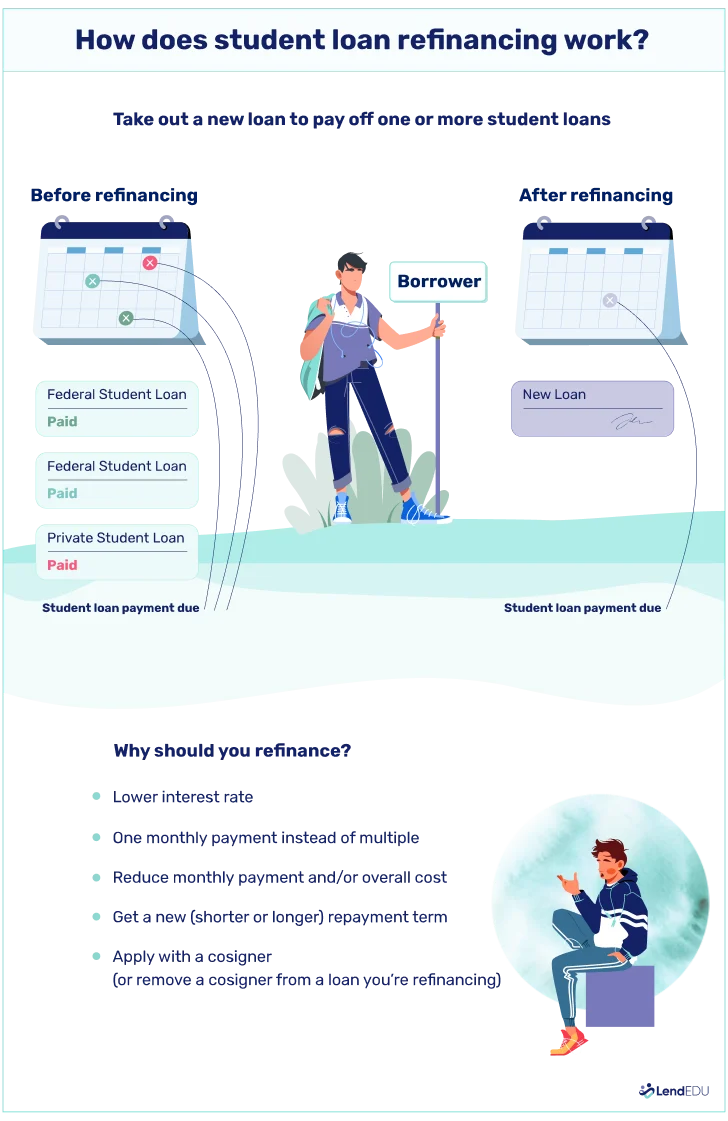
Refinancing can lock in a lower rate, especially if your credit score has improved since you first borrowed. The How Do I Refinance My Student Loans? A Complete Step‑by‑Step Guide outlines the process and what to watch out for.
4. Boost Savings and Emergency Fund First
Having three to six months of living expenses saved can prevent you from needing a 401(k) loan if you lose a job. It also gives you flexibility to stay on track with loan payments during rough patches.
Step‑by‑Step: How to Properly Use a 401(k) Loan to Pay Off Student Loans
If after evaluating alternatives you still believe borrowing from your 401(k) is the best move, follow this checklist to do it responsibly.
Step 1: Verify Your Plan’s Loan Policy
Not every employer permits 401(k) loans, and some have stricter limits. Contact your HR or plan administrator and ask about:
- Maximum loan amount (usually 50% of vested balance, up to $50k)
- Interest rate and repayment schedule
- Consequences of job change or termination
Step 2: Calculate the True Cost
Even though you’re paying interest back to yourself, you still need to consider:
- Opportunity cost of missed market gains
- Potential tax impact if you default on the loan
- Any fees your plan may charge for processing the loan
Step 3: Compare Loan Rate vs. Student Loan Rate
Pull your latest student loan statements and note the average interest rate. If your 401(k) loan rate is lower, you may have a net saving, but only after accounting for the lost compounding.
Step 4: Execute the Loan and Pay Off the Debt
Once approved, request the loan amount to be sent directly to your loan servicer. Keep documentation of the payoff to avoid any confusion later.
Step 5: Set Up Automatic Repayments
Most plans require payroll deductions. Ensure the repayment schedule aligns with your cash flow so you never miss a payment, which would trigger a taxable distribution.
Long‑Term Implications: Retirement vs. Debt Freedom
The decision to use 401k to pay off student loan isn’t just about the numbers today; it shapes your financial future. Below are scenarios that illustrate how the choice can play out over a 20‑year horizon.
Scenario A: High‑Interest Student Loans, Low 401(k) Balance
Imagine you owe $30,000 in student loans at a 7% interest rate, and your 401(k) balance is $20,000. Borrowing $15,000 (the max 50%) could cut your loan interest by roughly $1,050 per year. However, the $15,000 removed from retirement misses out on an average 6% market return, costing you about $1,800 in missed growth each year. In this case, the loss outweighs the interest savings.
Scenario B: Low‑Interest Loans, Substantial 401(k) Savings
If your student loans sit at 3% and you have $80,000 in a 401(k) earning 7% annually, taking a $20,000 loan actually reduces your net wealth. You’d be paying yourself 7% but still owe 3% on the loan, creating an awkward cash‑flow situation without any real gain.
Scenario C: Near‑Retirement, High‑Interest Debt
For someone in their late 50s with a modest 401(k) balance and a looming retirement deadline, eliminating a high‑interest loan could make sense, especially if the loan threatens eligibility for mortgage or other retirement‑related expenses. Here, the short‑term relief might justify the long‑term trade‑off.
These scenarios show that timing, loan rates, and retirement balance size are crucial variables. There’s no universal rule, but a systematic comparison can illuminate the best path.
Key Tax Considerations When Using a 401(k) for Debt Repayment
Taxes are often the hidden cost that makes a 401(k) withdrawal look attractive at first glance but painful later. Keep these points top of mind:
- Early withdrawal penalty: 10% if you’re under 59½, unless you qualify for an exception (e.g., total and permanent disability).
- Ordinary income tax: The withdrawn amount adds to your taxable wages for the year, potentially pushing you into a higher bracket.
- State taxes: Some states levy additional penalties on early distributions.
- Loan default: If you can’t repay a 401(k) loan, the outstanding balance is treated as a distribution, triggering both tax and penalty.
Because of these tax impacts, many financial planners recommend treating a 401(k) loan as a last‑ditch option, reserved for emergencies rather than routine debt management.
Real‑World Tips to Maximize the Strategy (If You Choose It)
Tip 1: Keep the Loan Small
Borrow only enough to eliminate the highest‑interest portion of your student loans. The smaller the loan, the less you sacrifice in retirement growth.
Tip 2: Align Repayment with Salary Increases
If you expect annual raises, consider increasing your loan repayment amount each year. This accelerates debt payoff and restores your retirement balance faster.
Tip 3: Re‑contribute After Paying Off the Loan
Once the student loan is cleared, redirect the amount you were using for loan payments back into your 401(k) or an IRA. This helps you recover the lost compounding time.
Tip 4: Monitor Your Tax Bracket
Plan withdrawals or loans in years when your taxable income is lower (e.g., a sabbatical year) to minimize the tax bite.
Tip 5: Consider a Roth 401(k) Conversion
If your plan offers a Roth option, converting a portion of your pre‑tax balance before borrowing can reduce future tax liability on withdrawals, though it does increase current taxable income.
These practical steps can soften the blow to your retirement while still allowing you to use 401k to pay off student loan if that’s the route you decide on.
At the end of the day, the decision hinges on a balance between immediate cash flow relief and long‑term wealth accumulation. By weighing tax consequences, opportunity costs, and alternative debt‑reduction tools, you can make a choice that aligns with both your present needs and future aspirations.
Remember, there’s no shame in seeking professional advice. A certified financial planner can run personalized projections and help you see the hidden numbers behind each option. Whether you end up borrowing from your 401(k), refinancing your student loans, or simply tightening your budget, the goal remains the same: a healthier financial life that lets you enjoy both today and tomorrow.
[Finance]: Finance