First day cover ·
Two Lion Prides, One Clearing, and a Swat That Settled It
Two Kambula mothers and five Ntsevu lionesses met over a wildebeest kill at Londolozi. The encounter shows how related prides keep a tense, shared history.
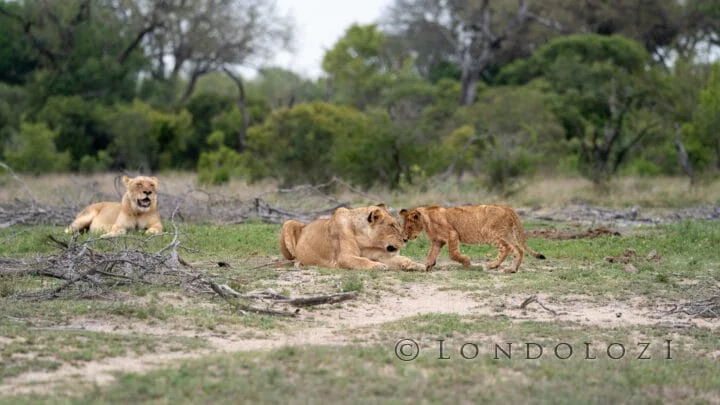
Two Kambula mothers were raising eight cubs at Carcass Clearing, with both Gijima Males stretched out beside a wildebeest kill. Then five lionesses from the Ntsevu Pride walked in. The meeting could have turned violent. It didn't, and the reason says a lot about how lion families split and drift apart.
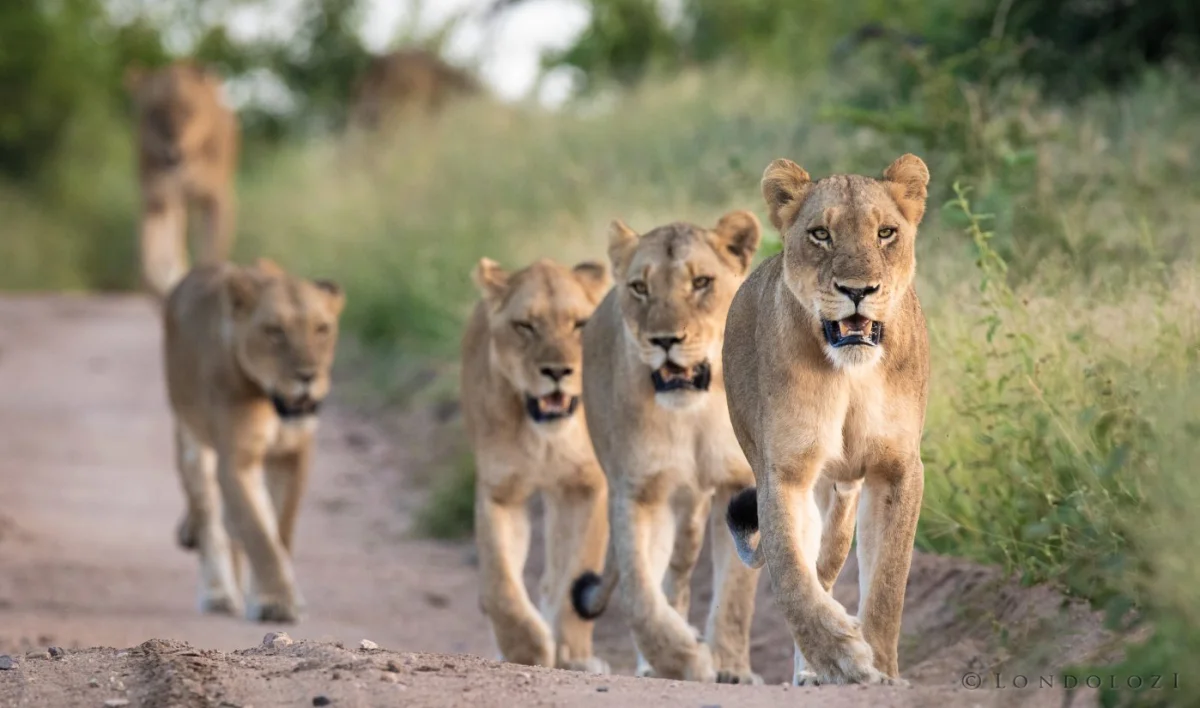

The Gijima Males had dragged the kill through the clearing and settled on the edge of the thicket to feed. A carcass that loud doesn't stay quiet for long. The Ntsevu Pride was somewhere between a few hundred metres and a kilometre to the north, and lions track each other by sound. A pride that hears squabbling on a kill tends to come and look, weighing what it hears before deciding how boldly to approach. Here's the thing: a feeding pride broadcasts two things at once, that there's food and that there are lions on it.

The Ntsevu lionesses didn't charge in. They circled the edge of the clearing, passed the kill, and lay down in the open roughly forty or fifty metres from the carcass. That's a deliberate, unhurried way to arrive, and it signalled that they weren't looking for a fight.
The Kambula mothers didn't register them at first. Some of the cubs did. A few peeled away from the carcass and edged toward the newcomers, ears forward, with the total lack of caution that young lions have before they learn what to fear. When the mothers finally spotted the Ntsevu females, they walked over with clear intent and then stopped short. The rest of the litter, equally curious, drifted to within twenty metres of the other lionesses. Some came closer than was comfortable.

This is where the tension peaked. Female lions are fiercely territorial. Neighbouring prides compete for ground, prey and water, and those contests can turn lethal. Cubs are especially exposed when rival lionesses clash, and bigger groups usually win these disputes. On numbers alone, five Ntsevu females faced two Kambula mothers with eight small cubs spread across open ground. On paper, this should have gone badly.

Why the Numbers Didn't Decide It
To understand why it stayed calm, you need the history of these two prides. Lion naming gets tangled here, and it's easy to lose track.
The story starts with six young lionesses born in 2013 into the Mhangeni Pride. Around 2016 they broke away from their mothers and set up on their own, roaming ground shared by Londolozi and its neighbours. Londolozi named them the Ntsevu Pride in 2017, after the Shangaan word for six. Neighbours to the east called them the Kambula Pride, after the Kambula Koppies where they spent much of their time. Same six lions, two names.


Under the Birmingham Males, the pride thrived. Among the cubs born in that period were daughters born in 2018, two of whom are the Kambula mothers now at Carcass Clearing. The older lionesses lying in the clearing are, literally, their mothers and aunts.

Then the pride began to fracture. The arrival of the Ndzhenga Males in late 2021 started splitting it apart, and two of the original lionesses died in 2023. In 2024 the two reserves agreed to formalise the division. The three surviving originals kept the Ntsevu name, while the larger group of daughters, led by the last original lioness, became the Kambula Pride.

When the Gijima Males arrived, the Kambula Pride splintered again, leaving these two mothers on their own. The Ntsevu lionesses raised their latest litter to near-independence. Two of those young females have since been accepted, to a degree, by the Gijima Males. All five Ntsevu lionesses have been seen back in their old territory, and the older females are mating with the same two males who fathered the Kambula cubs.

Prides that split from a common line usually tolerate each other far more than they tolerate unrelated neighbours, at least in the early years. That tolerance fades as the two lines drift apart and the shared familiarity thins, and the risk of serious conflict rises with it. The Ntsevu and Kambula lionesses lived as one pride until only a couple of years ago, so the shared history is still fresh. The older females would have watched those mothers grow up. Whether lions read that as kinship the way we would is impossible to say. Familiarity matters a great deal to lions, though, and it seemed to matter that morning.
One Cub Learns a Lesson
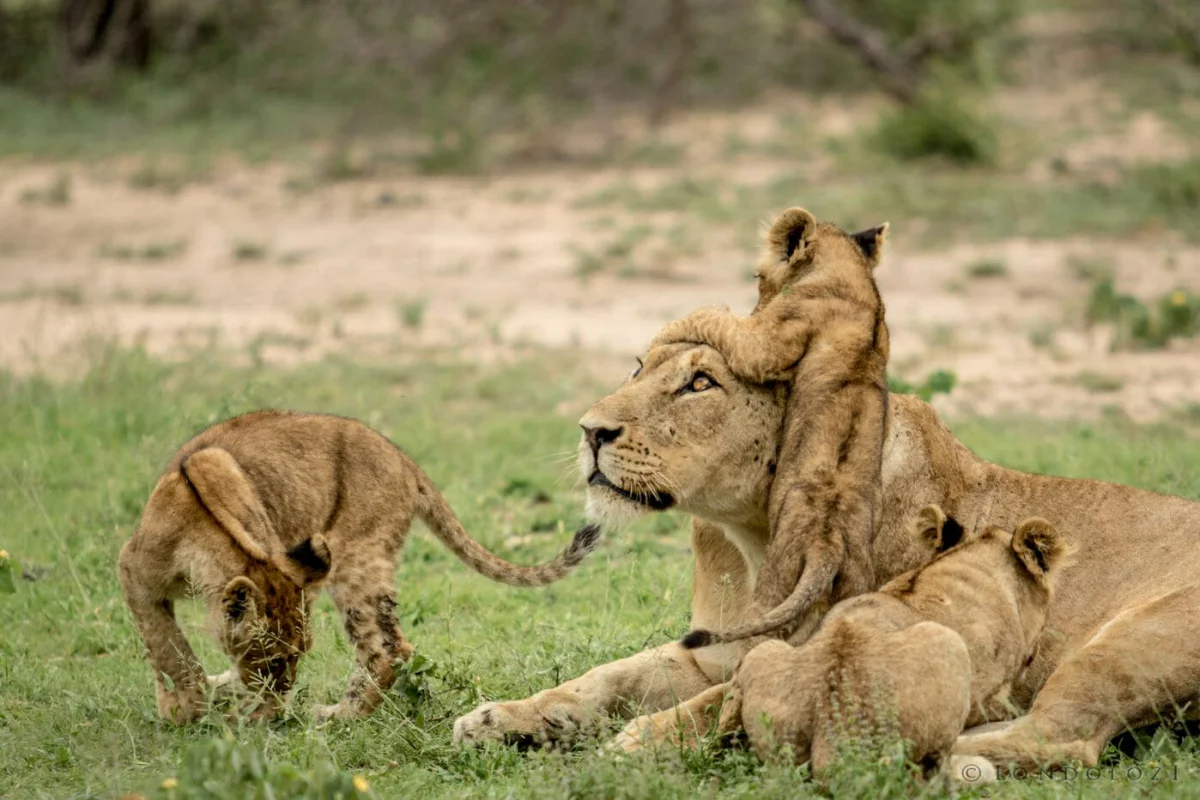
Two of the eight cubs were bolder than the rest, and one of them pushed its luck. It walked straight up to a young Ntsevu female, close enough to touch. She answered the way any lioness would to an uninvited youngster in her face. She gave it a swat.
No bite, nothing more. Just a quick, unmistakable swat that sent the cub scrambling back to its mothers. It probably learned more about lion manners in two seconds than in its previous six months.
What stays with me is who was involved. That young female grew up on the Ntsevu side of the split and never met the Kambula mothers, let alone their cubs. To her, the cub was simply a nuisance. Depending on exactly whose daughter she is, she may have just disciplined a niece or nephew without knowing it. And it happened a few metres from the older Ntsevu lionesses who raised the Kambula mothers. If any lion in that clearing understood what it was looking at, it was them: a litter of eight carrying their line forward, sired by the same males they are now mating with.

The cub had wandered straight into its own family, whether or not anyone in the clearing recognised it. The young females now in the Ntsevu Pride have no shared history with the Kambulas at all, and tolerance between related prides fades with time. One day the old lionesses who remember this will be gone, and the relationship between the two prides may look very different. Could they reunite? Stranger things have happened in the bush. For now, eight cubs are growing up within earshot of their grandmothers and cousins, and the next generation of Londolozi lions will show us how that story goes.