First day cover ·
Sony's XYN Spatial Capture Solution Arrives in the US and Canada
Sony's XYN spatial capture tools now ship in the US and Canada with subscriptions, tokens, and online purchasing for 3DCG asset creation.
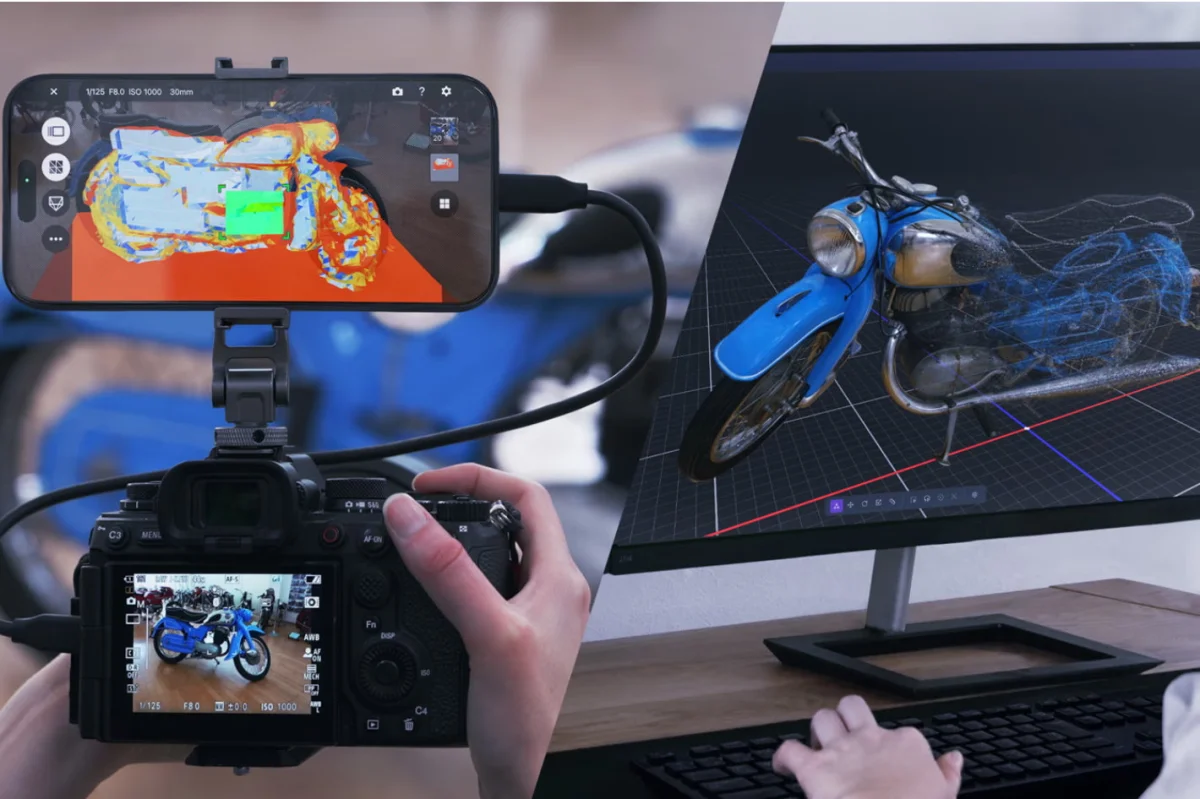
Sony's XYN spatial capture solution is now available to buyers in the United States and Canada, and the bigger shift is in how you pay for it. Instead of a single license model, Sony is offering subscription tiers, token packs, and online credit card checkout. That makes the toolkit reachable for a freelance DP with a single scan job as easily as for a studio booking a stage full of assets.
Three pieces, one pipeline
The system was first announced in April 2026, and it still breaks into three parts that hand off to each other. XYN Spatial Scan Navi is a smartphone app that guides you through capturing the space. XYN Spatial Scan is a cloud application, accessed through the XYN website, that processes that capture into high-quality 3DCG assets. XYN Spatial Renderer Plugin then brings those assets into a rendering environment, with virtual production as the primary target.
Think of it as a loop: scan on set, process in the cloud, display on the wall. The phone-to-cloud step is where most of the time savings lives. You're not hauling a dedicated rig through a historic building or a crowded industrial site when a phone and a mirrorless camera can do the initial capture.
What's changed since the April reveal
Sony has pushed software updates to all three applications since launch. The aim is broader subject coverage. The earlier focus on capturing environments now extends to props and consumer products, plus vehicles and larger industrial assets. That matters because a location scan is only one kind of job. A product shot for a commercial, a car for a chase sequence, or a piece of machinery for a digital twin all need a different level of geometry and detail, and the update is meant to cover those cases.
Sony points to a wide set of uses: VFX production, games, virtual production, digital twins, product visualization, and immersive experiences. My read is that the cross-over between these fields is where this tool will get the most interesting use. A digital twin built for facilities planning can double as a virtual set for a commercial, and that reuse is where the economics start to make sense.
Paying for it: plans, tokens, and the free tier
This is the part of the announcement that will affect purchasing decisions most. Sony says multiple subscription plans, token options, and online credit card purchasing are designed to suit freelancers, small production teams, studios, and enterprise customers. You pick the package that fits your workflow, your project scale, and your budget.
The structure works like this. Every plan includes application licenses. Paid plans come with token allocations for generating 3DCG assets. The free plan doesn't include an allowance, but it lets you buy tokens individually when a job calls for them. Extra tokens are available on any plan, and Sony plans to extend token support to more XYN applications over time.
Here's the thing: the token model means your cost follows your generation volume, not just your seat count. If you shoot one location a quarter, the free tier with pay-as-you-go tokens may be the cleaner path. If you're building a library of assets across a production slate, a subscription with a token allocation will usually be easier to forecast. Run your expected asset count against the plan tiers before you commit, because the cheapest option depends entirely on how many assets you actually generate.
Where it fits on set
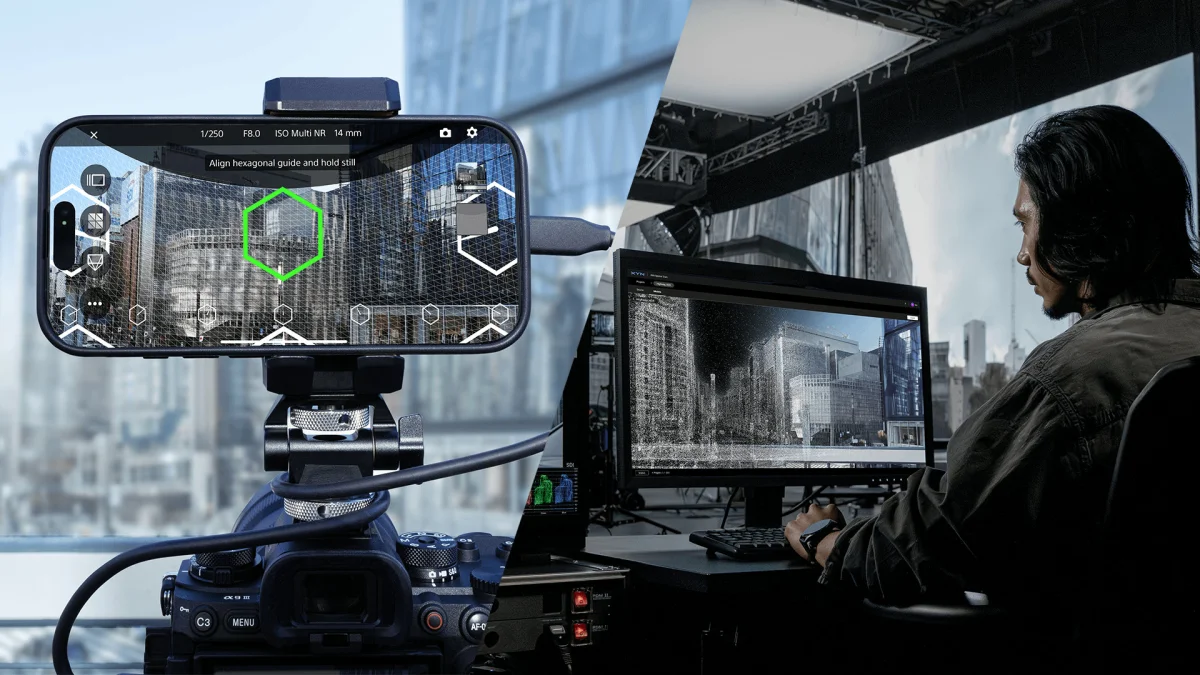
Director of Photography Erik "Wolfie" Wolford describes XYN as a tool that makes hard-to-film locations easy to capture as a digital asset, process, and bring back to an LED volume or green screen stage. He highlights the scans it produces from a phone mounted to a mirrorless camera, which he calls "high quality, fillable scans." His favorite use case is the one filmmakers know well: scan a location, then "digitally fold and hold" it so you can return for reshoots without re-traveling to the site.
That workflow solves a real problem. Location access windows close, weather changes, and a scene that needed a particular facade in October may need a reshoot in March. A captured environment gives you a stable reference you can revisit on your schedule.
Justin Kirchhoff, Virtual Production Supervisor at the Virtual Production Institute at Texas A&M University's College of Performance, Visualization & Fine Arts, takes the idea somewhere else. He points to the capture of historical buildings as photorealistic 3DCG assets, which also works as a faithful record of a structure as it stands at a particular moment. For a campus that keeps changing, that record has value well beyond production. Kirchhoff expects the solution to reach into many other areas, and he notes that once props and animated CG objects can live inside captured environments, the creative range opens further.
Lab apps and what's next
Sony plans to start rolling out Lab apps by the end of 2026. These will let creators test features and algorithms still in development on the XYN platform. Sony says feedback from creators will be built into feature improvements and future development. For working professionals, that's an early look at tools before they reach the main app lineup, and a chance to shape them. If you rely on a particular capture case, such as reflective surfaces, tight interiors, or fine product detail, it's worth paying attention to what the Lab apps prioritize.
Getting started
Access runs through an XYN account. Registering gives you the application features available to your plan, and you can buy additional tokens from there to generate 3DCG assets. Before your first paid project, run a small test capture on a space you know well. Check how the phone-based scan holds up under your lighting, then render the result on the wall or in your comp pipeline. That single test will tell you more about fit than any spec sheet, and it will show you how many tokens a real asset costs before you budget a full shoot.