First day cover ·
Jaguars and Hyacinth Macaws on the Northern Pantanal River
Jeff Cable's first full day in the northern Pantanal brought jaguars, hyacinth macaws, and otters, plus the lens setup and shooting tactics behind the shots.

Jaguars are the reason many photographers book the northern Pantanal, and the first full day on the river delivered them. After working the southern part of the region, Jeff Cable's group flew north by charter and spent the day photographing wildlife that had little reason to be wary of a boat full of cameras.
Arriving with the light still on
The afternoon charter put the group at the lodge with a couple of hours of daylight left. The airstrip connects directly to the property, so guests land and walk straight to their rooms. That's a small detail, but it changes the rhythm of a trip. There's no long road transfer eating into the first evening, and you can spend the last of the light looking around the grounds.
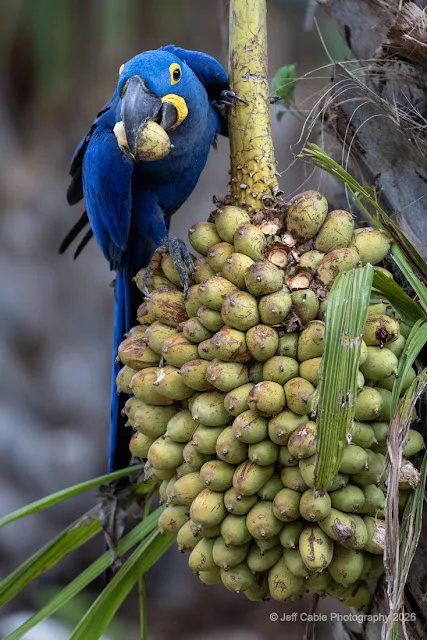
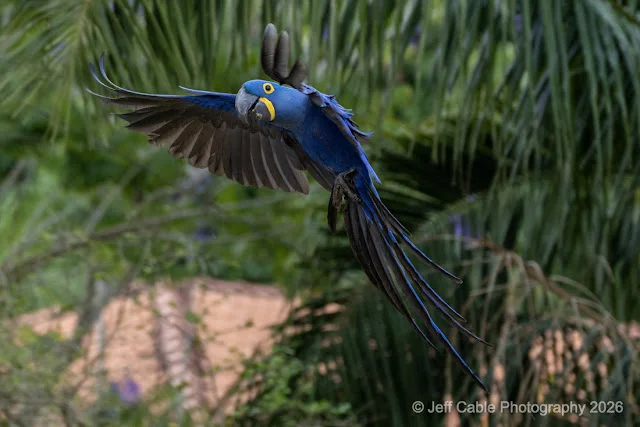
That's what the group did. Hyacinth macaws were feeding in the low branches close to them, several of them, which gave the first chance to work at close range. Four of the birds were feasting on palm fruit right at eye level, the kind of setup you can't count on in more open country. Photographers working macaws at this distance usually want a fast shutter to freeze the wingbeat and the fruit in the beak, and a clean background to keep the blue plumage separated from the foliage.
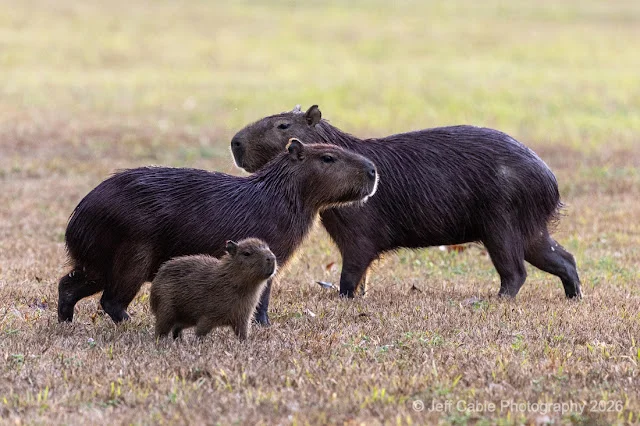
Capybaras were everywhere in the open areas. Hundreds of them, and the group had been walking through them every morning on the way to breakfast. Animals that common become easy to overlook, and that's a mistake. Capybaras in the open, grazing at close range, make good environmental context shots, with lodge buildings or water in the frame.
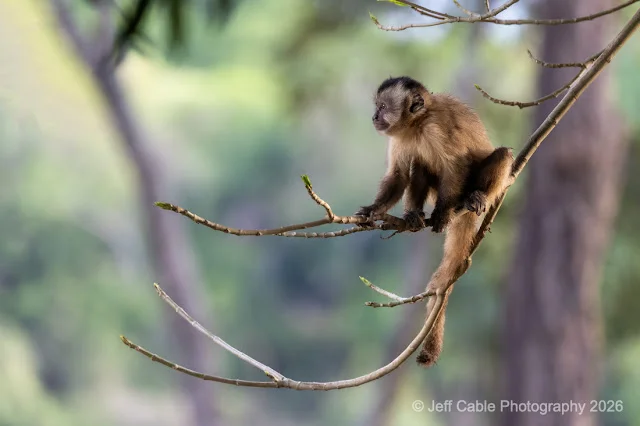
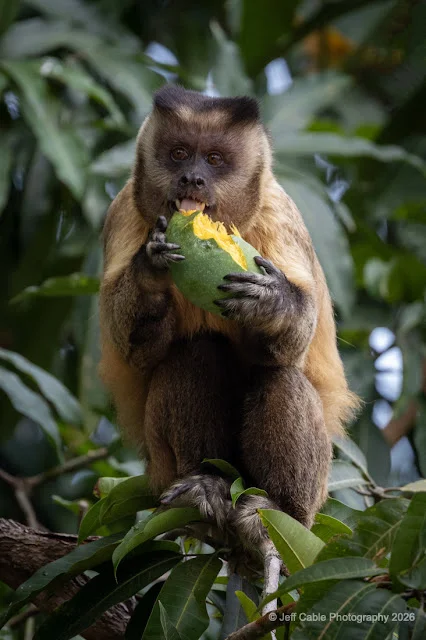
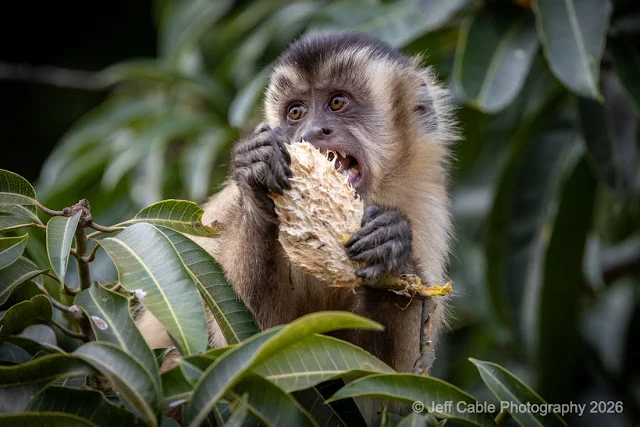
That same afternoon, a large group of tufted capuchin monkeys moved through the trees around the rooms. Like the macaws, they didn't seem bothered by people, and they stayed close enough for detailed portraits. Monkeys in motion are hard to predict, so the trick is to pick a clear perch, keep the focus point on the face, and shoot in bursts.
The river before dawn: setup for jaguars
The next morning started early with the first boat ride up the river to look for jaguars. Jeff Cable chose a Canon EOS R5 Mark II with the RF 100-300mm f/2.8L lens and the RF 1.4x extender. That combination reaches 420mm at f/4.
The tradeoff is worth knowing. A 1.4x teleconverter costs about a stop of light and can slow autofocus, especially in dim conditions. A lens that holds f/2.8 at 300mm and then drops to f/4 at 420mm is a reasonable compromise. On a boat, where you can't just step closer, the extra reach matters more than a little lost light, and the R5 Mark II's autofocus handles a subject moving through foliage better than older bodies did.
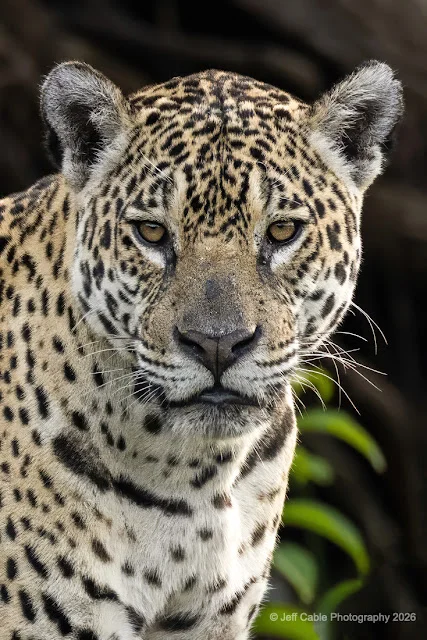
Madrosa and her cubs
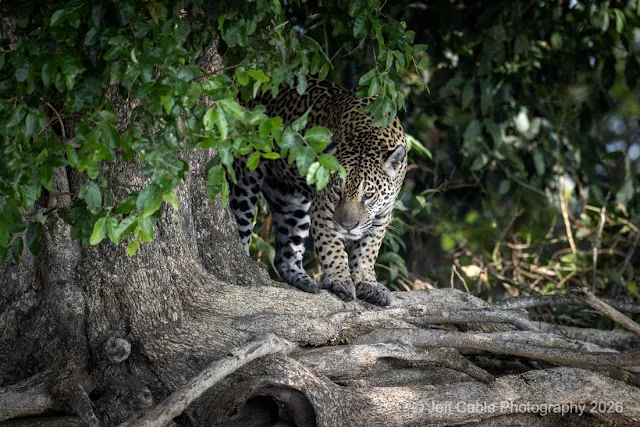
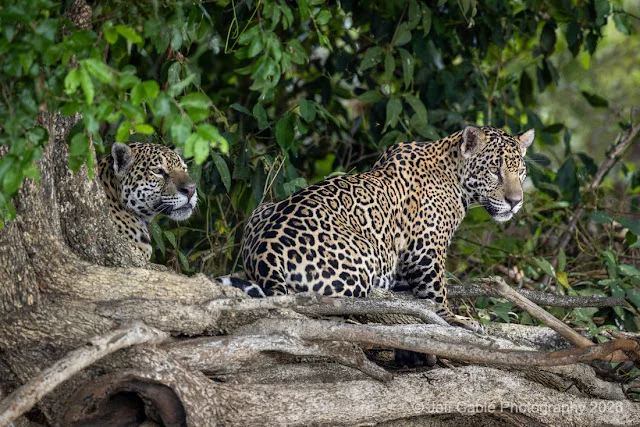
The first stop was the spot where Madrosa, a female jaguar, is most often seen. She tends to stay in the same stretch of river, which is why she's the easiest jaguar to find, and why many boats gather there. Jeff's group wasn't the only one with a lens pointed at her, but the crowd didn't seem to affect how close she came.
On a boat with several guests, the instruction he gave was simple: shoot tight for detail, then shoot wide to show the setting. A tight frame gives you the face and the pattern of the coat. A wider one shows the water, the shoreline, and the scale of the wetland, which is what makes a jaguar photo read as a place rather than a studio image with a background.
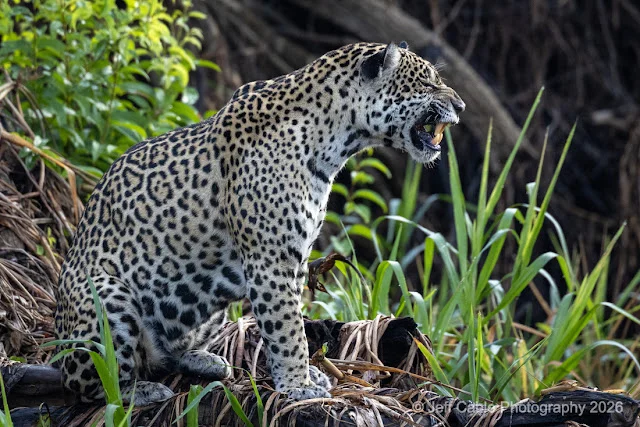
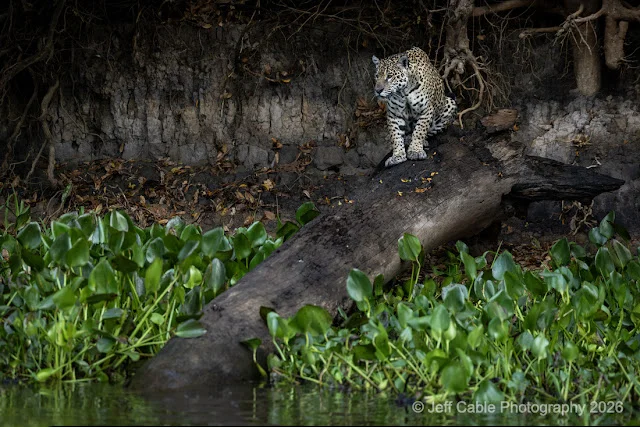
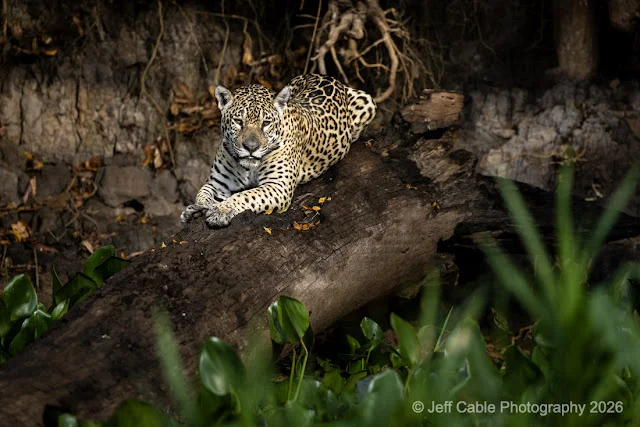
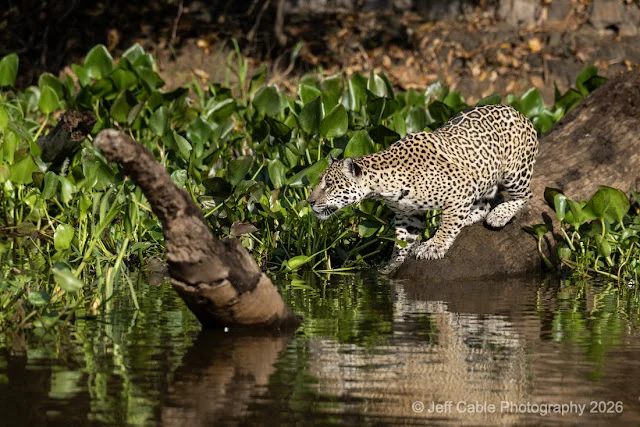
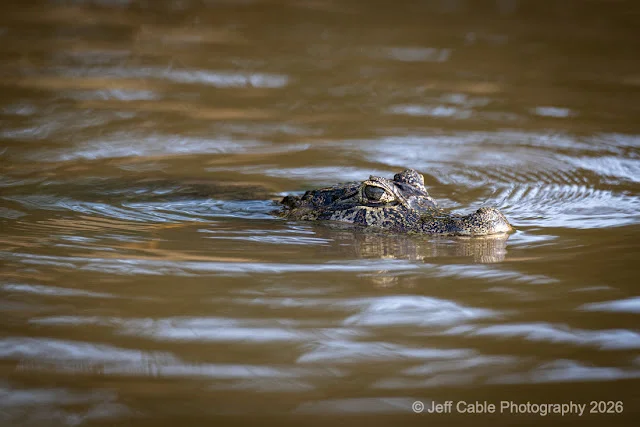
The group had hoped she would jump into the river after a cayman. That didn't happen. She watched the water closely, clearly considering the possibility, but the caymen in the river were too far from her to be easy prey. Watching a predator wait is its own kind of photography. It's slower, and the picture is in the anticipation: the head angle, the tension in the shoulders, the attention on the water. Those frames tend to hold up better than the splash you hoped for, because they show what the animal is actually doing.
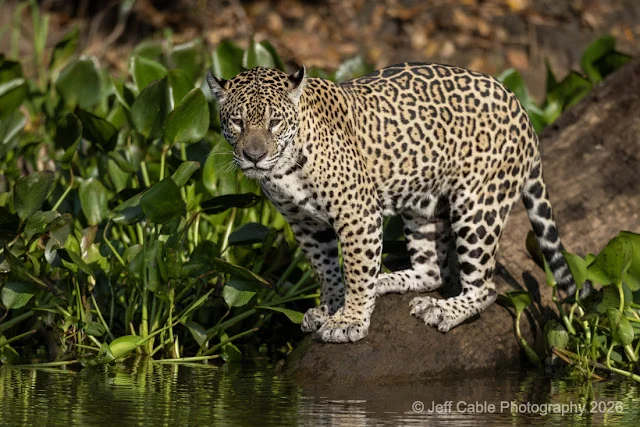
About an hour later, two of Madrosa's cubs appeared. Seeing both cubs gave the group the set of images they had come for. The light was a real asset here. Overcast skies diffuse the sun, which softens shadows across the spotted coats and keeps highlights from blowing out on wet fur. For a jaguar photographer, that's often better than harsh sun, and the group said as much.
Otters, a swallow, and a heron at dusk
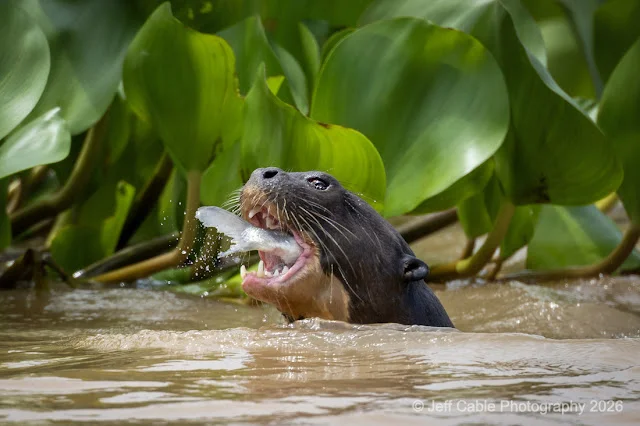
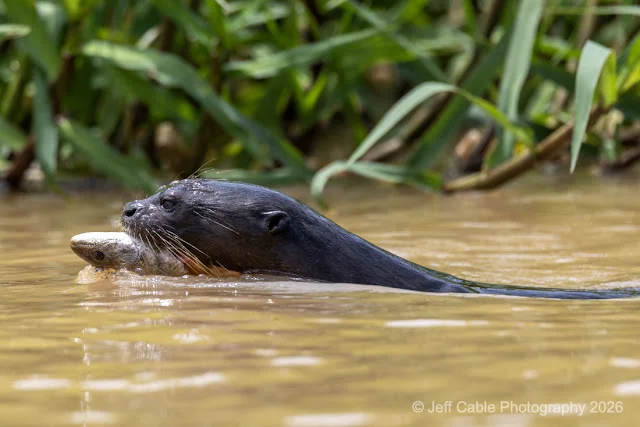
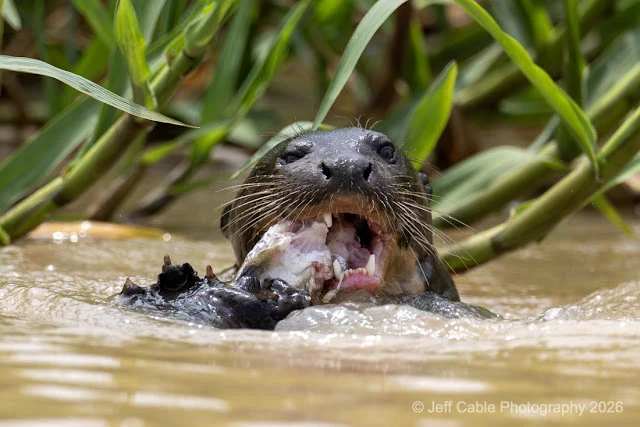
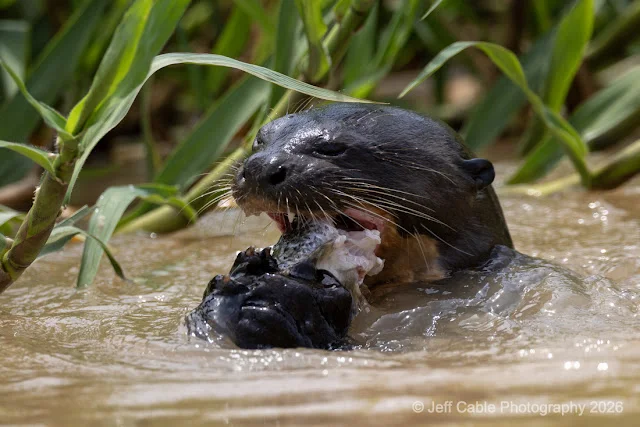
After the cats, the boat moved along the river's edge, where a group of giant river otters was fishing. They were eating well on the plentiful fish, and they stayed active long enough to capture a range of action. Otters move fast and change direction without warning, so the strategy is to shoot in continuous mode and let the sequence do the work. Then edit hard, because one strong frame from a burst is worth more than a dozen similar ones.
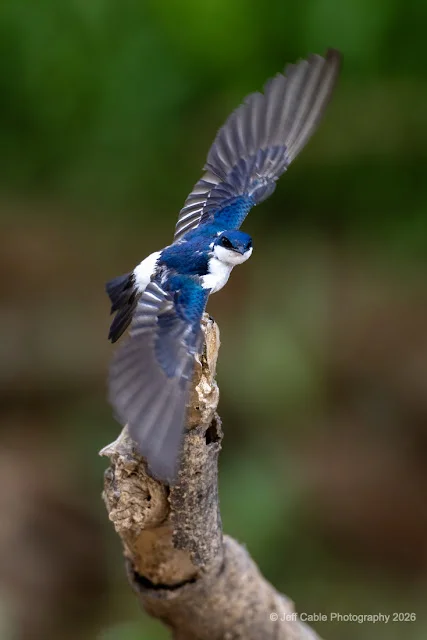
Before heading back, the group found a tree swallow on a nearby branch. Jeff set the R5 Mark II to pre-continuous shooting, which begins buffering frames before the shutter is fully pressed, and waited for the bird to take off. The result caught the moment it spread its wings and left the branch. Pre-continuous mode is useful for exactly this kind of unpredictable departure: you don't have to react in time to get the first frame.
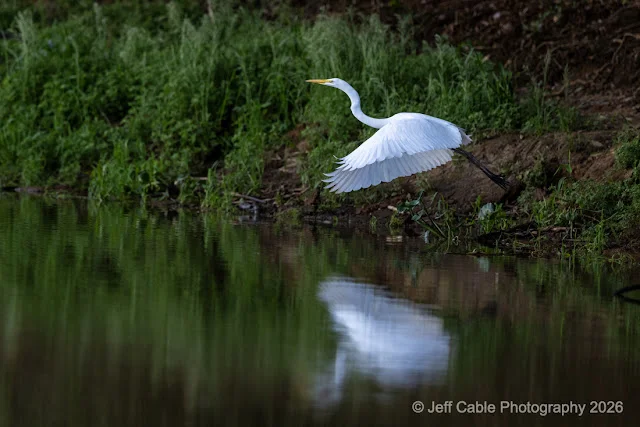
As the light faded, a great egret stood against a dark background with its reflection in the water. The dark backdrop separated the white bird cleanly from its surroundings. Once the egret lifted off, the group had the chance to capture it in flight. Dusk on a river like this gives you a short window of very usable light, and it rewards photographers who stay put when the day seems to be ending.
The first day was a strong start. The group was thrilled with what they had seen, and they couldn't wait to get back to their rooms to review the files. Day one on this river is one thing. What's coming in the rest of the trip is the real test of how much the northern Pantanal has to offer.