First day cover ·
Red-and-Green Macaws at Brazil's Buraco das Araras Sinkhole
Shooting red-and-green macaws in the Pantanal: shadowed backgrounds, pre-capture for flight, and a deliberate motion-pan challenge at the sinkhole.

The Pantanal rewards photographers who are willing to change locations, and the second stop on this trip showed why. The goal was clear from the start: photograph red-and-green macaws. Getting there meant a late-afternoon arrival at the second lodge and a short window of usable light, which turned out to be enough for a surprise before dinner.
An owl and a monkey before the main event
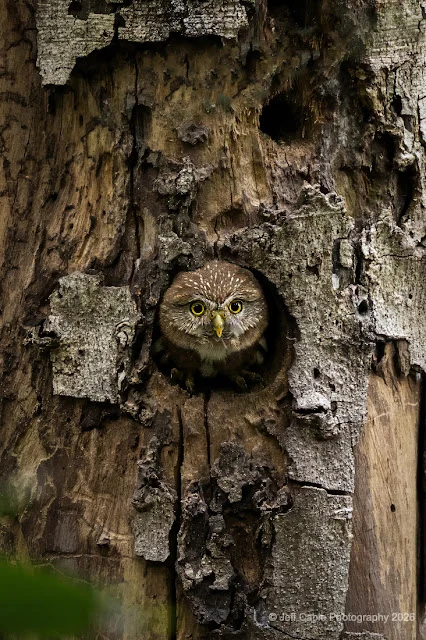
Only minutes into the evening walk, the guide spotted a pygmy owl peeking out of its nest. Small owls are tough to find in dense vegetation, and a nest opening gives you a clean, framed subject. Here's the thing with a sighting like this: you have seconds before the bird decides it has seen enough, so the priority is getting a sharp frame first and refining composition second.
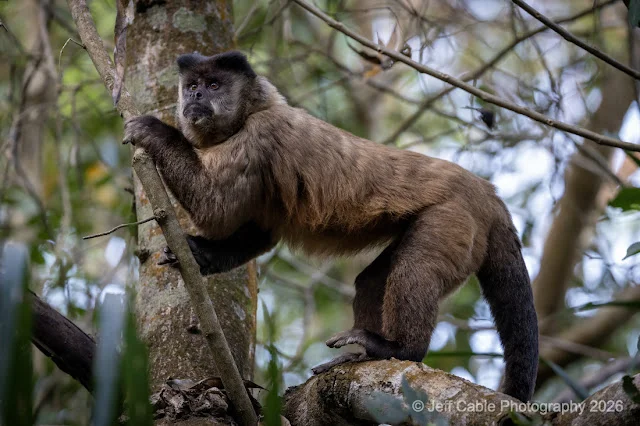
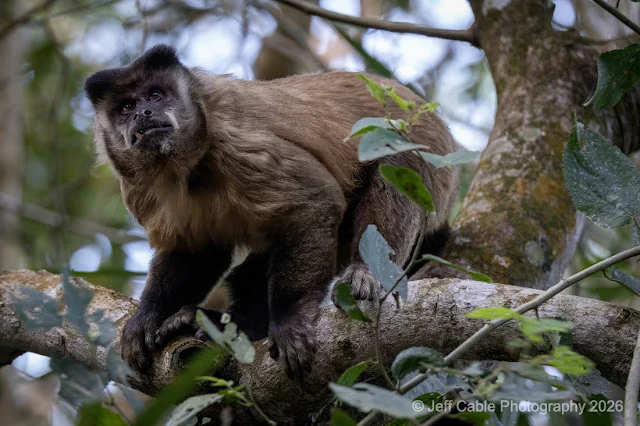
After the group headed back to their rooms, the author kept walking along the entry road and found a monkey. Plenty of experience with monkeys in Costa Rica doesn't dull the appeal of a new species, and this was the first time the author had photographed a tufted capuchin. Species novelty matters for a working portfolio, because a new subject forces you to reconsider framing, shutter speed and how much of the animal's movement to freeze.
Why the Buraco das Araras sinkhole works for macaws
The next morning the group went to Buraco das Araras. The sinkhole formed after a cave collapsed, leaving a deep, vertical pit. The walls give the macaws nesting sites, and the birds use the space year-round, which is why the location is a reliable choice for this species. Two platforms sit on opposite sides of the pit, so you can shoot birds flying across the opening and, from the right angle, look down on them.
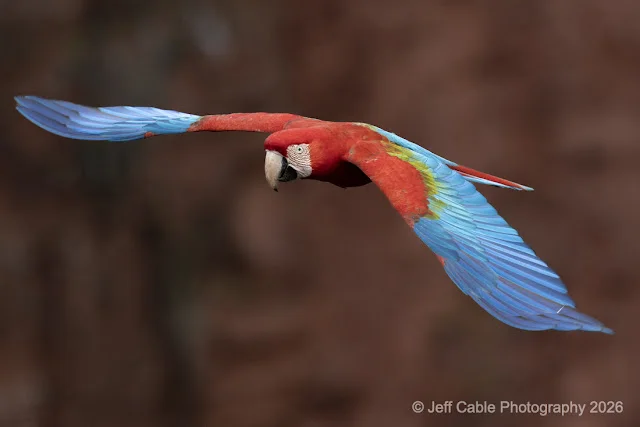
The lighting is the real planning variable. In the morning, one side of the sinkhole was in sun and the other in shade. The sunlit wall produced a very bright background that flattens the bird's colors against a blown-out tone. The shaded wall gave a darker, even backdrop that makes the greens and reds stand out. The author encouraged everyone to work the shaded side, and that's the right instinct: a dark background does more for a bird in flight than any amount of post-processing.
For most of these frames the author used a Canon R5 Mark II with an RF 100-300mm lens and a 1.4x extender. That combination reaches roughly 420mm equivalent on a full-frame body. The trade-off is light: a 1.4x extender costs about a stop of light, so you need to keep an eye on shutter speed and autofocus performance, especially in the shadowed areas of the pit.
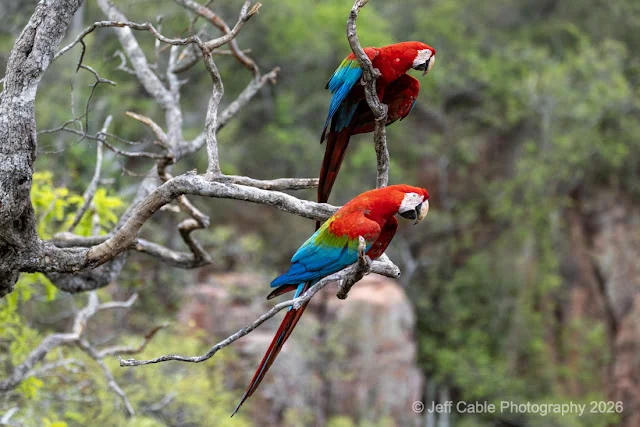
Many times the birds flew over and landed in the trees only feet away. That kind of proximity is rare for macaws and makes the 100-300mm reach almost excessive. When birds are that close, a shorter focal length and a wider frame can help you show the setting and the bird together.
Pre-capture and flight shots
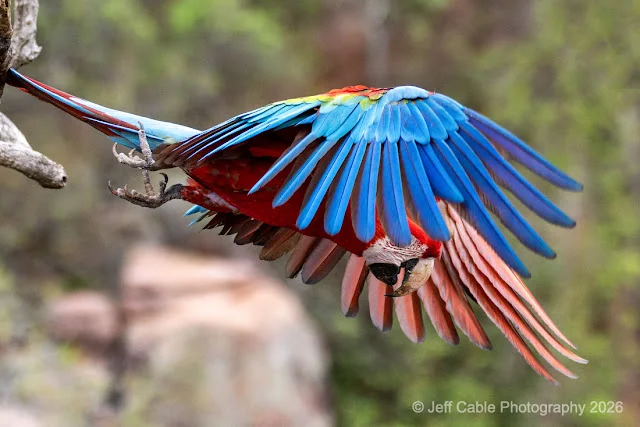
Birds taking off from nearby branches are hard to time by reaction alone. The group switched on the pre-continuous setting, which buffers frames before the shutter is fully pressed. Your camera starts recording the moment you half-press, so when the bird launches you already have the frames from just before takeoff. This is one of those features that feels like a gimmick until you check the first sequence and find the wingbeat you were after.
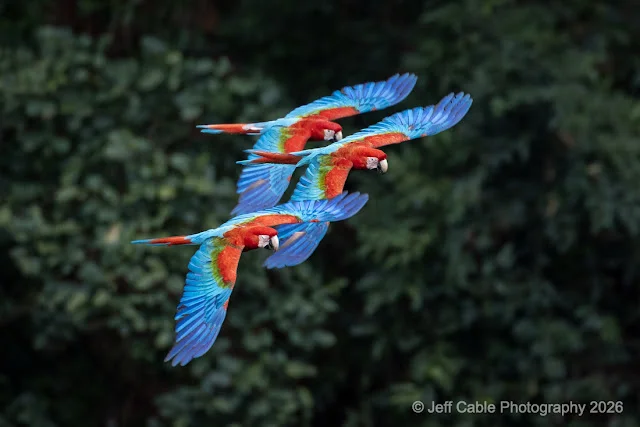
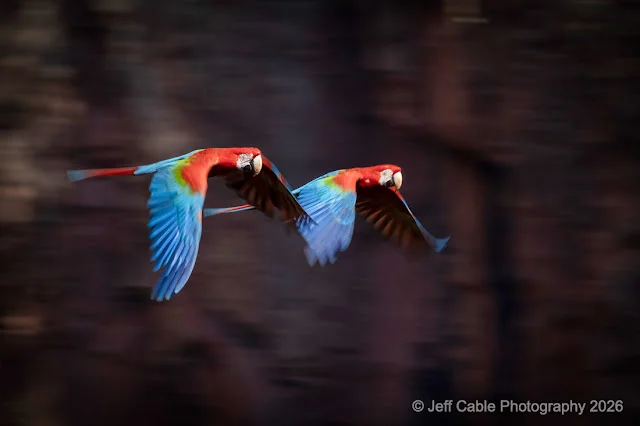
A single bird in flight is a good picture. Several birds crossing the opening is better, and the group found that the flocks were the real prize. Groups give you layered wing positions, more variety in silhouette and a sense of scale against the pit walls.
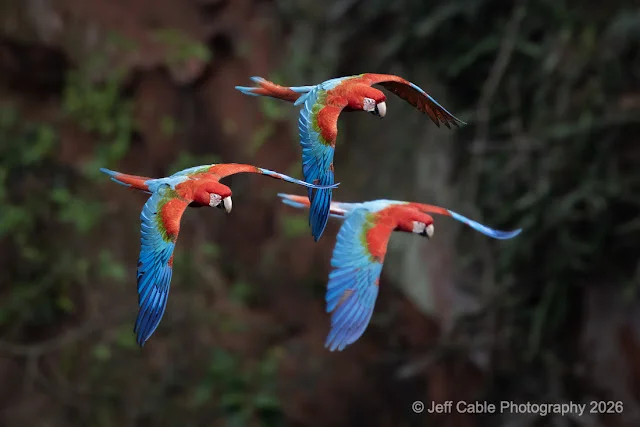
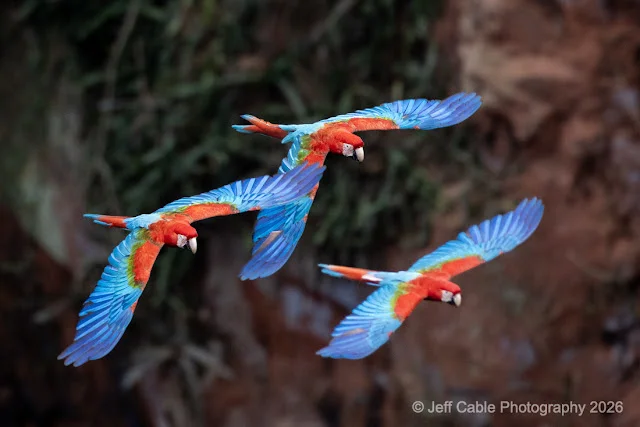
Most of the afternoon's work was done at shutter speeds around 1/3000 sec, which freezes wingbeats and feather detail. A varied wing position is harder than it sounds, because a bird can look dramatic in one frame and awkward in the next. The author treated wing position as a challenge to chase across the session.
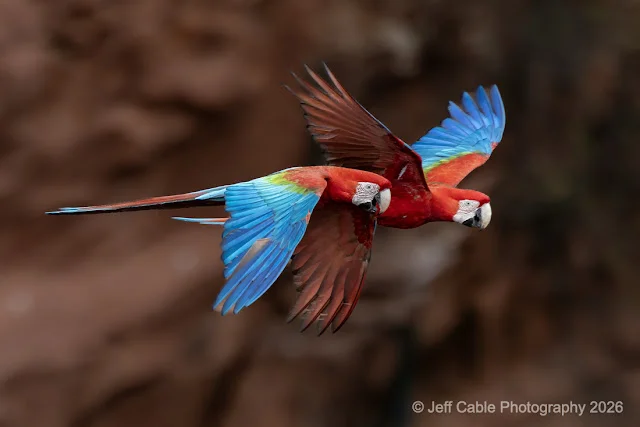
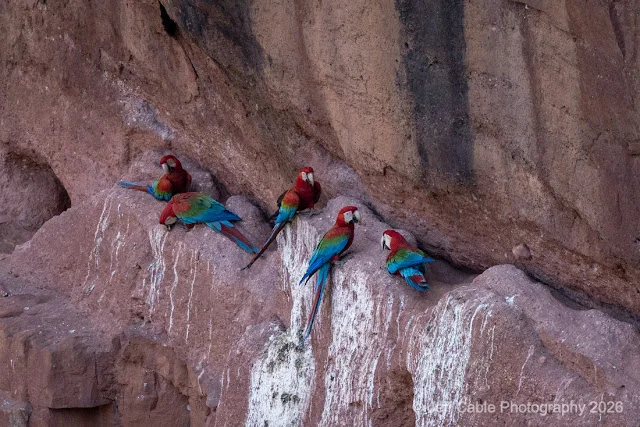
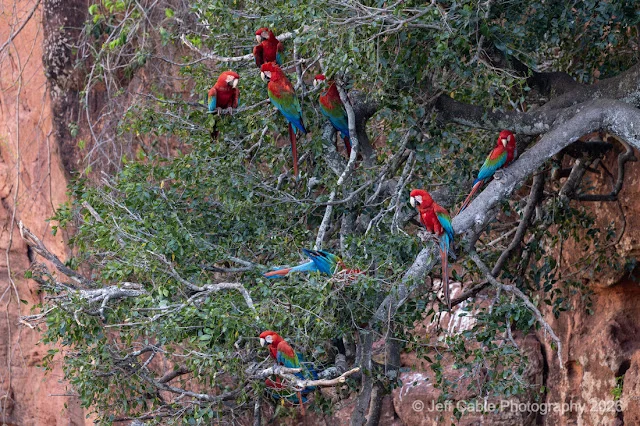
Perched birds on the sinkhole walls and in the nearby trees offer a different kind of image. A group of five on one stretch of wall gives you a pattern, while a single bird in the trees is a portrait. Changing your framing between these two approaches is worth the extra effort.
A deliberate motion-pan challenge
Midday meant a break for lunch. When the group returned in the afternoon, the author set a different challenge: motion panning. The camera went to shutter priority at 1/80 sec. At that speed, a sharp bird and a blurred background are a matter of technique as much as settings. You track the bird's flight path smoothly, rotate from the hips and follow through after the shutter fires. Most frames came out soft, which is normal at this speed. The group still walked away with strong images, and a few of the best ones show a sharp subject against a streaked background.
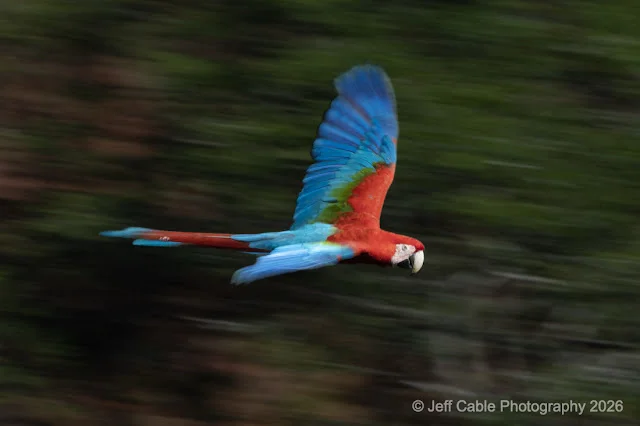
The motion-pan exercise is worth trying in any setting where you have a predictable flight path. Shutter priority keeps you focused on the panning action, and burst mode plus pre-capture gives you a shot at the one frame where the bird and background line up.
The author's verdict on the day was simple: nobody had a bad time, and the group left with images they'll keep. This was only the first half of the trip. The next leg moves to the North Pantanal, which the author describes as the stop with monkeys, birds and jaguars. For macaw work, the lesson from this sinkhole is that light direction and background choice matter as much as the gear you bring.