First day cover ·
Brompton Processing Carries the Cinematic Look of Bad Bunny's Stadium Tour
Brompton's Tessera processing drove a 462-panel INFiLED wall on Bad Bunny's 57-show tour, using a 10-bit camera-to-LED pipeline.
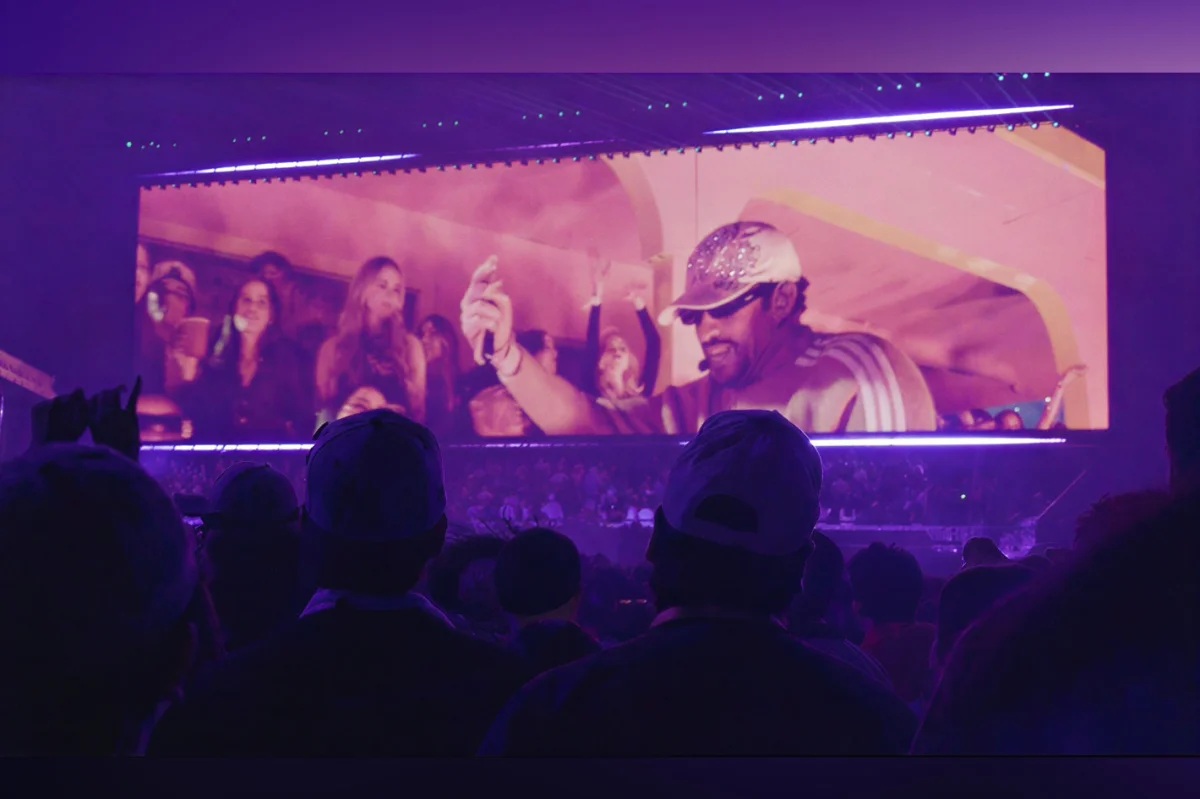
On a stadium LED wall, the picture is only as good as the chain that feeds it. Bad Bunny's Debí Tirar Más Fotos World Tour put that chain under heavy load, and the production leaned on a 10-bit workflow to keep cinematic camera footage looking like film on a screen the size of a building facade.
The scale of the run
The Debí Tirar Más Fotos World Tour runs 57 shows, all in stadiums, across roughly 20 countries from November 2025 to August 2026. It's built to support the artist's latest album. Stops across Latin America and Europe include London's Tottenham Hotspur Stadium, and the run has made Bad Bunny the first Latin artist to pass $1 billion in gross ticket sales.
Numbers like that tell you the screens will be pushed hard, night after night, and that any drop in image quality or uptime gets noticed by a lot of people in a lot of different venues.
Panels chosen by the artist
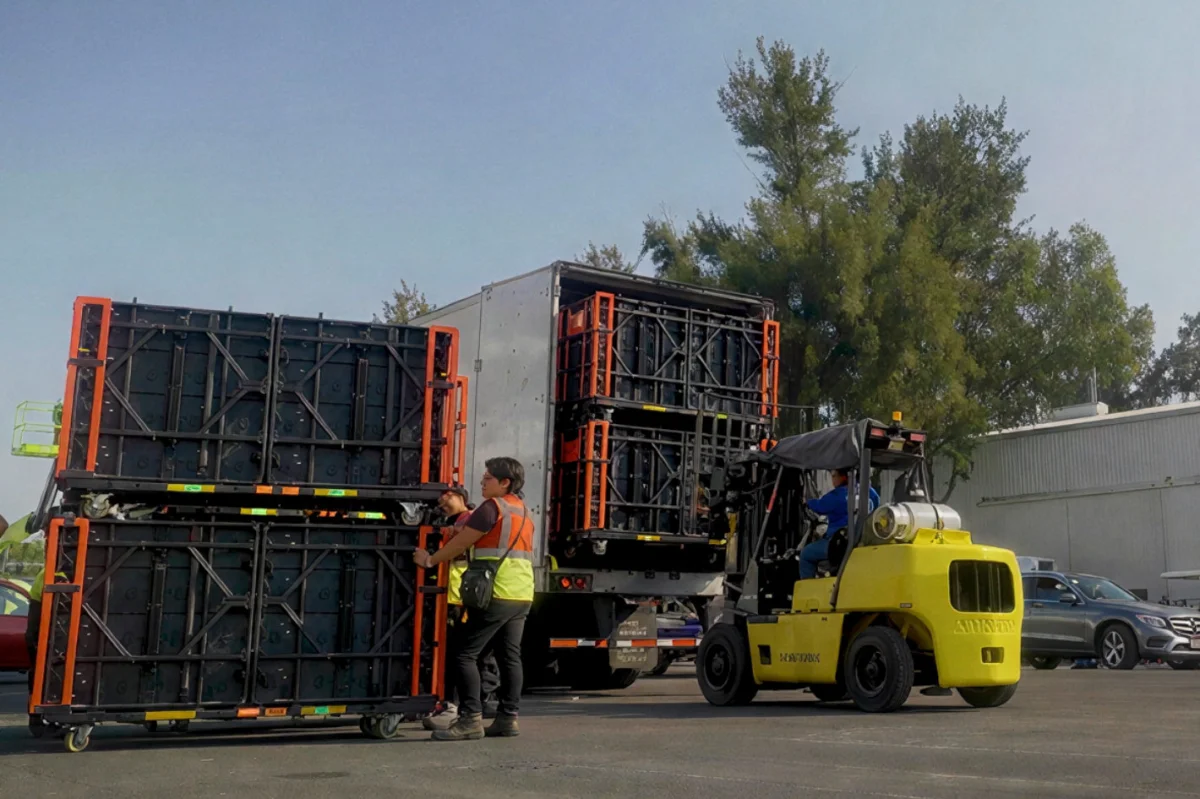
The LED setup used 462 INFiLED Black Widow AMT series panels. According to Brompton Technology, the artist personally selected them during a 31-show arena residency in Puerto Rico, where different LED products were put through a head-to-head comparison. The panels were sourced for the tour by Production Video Group.
That detail matters more than it might seem. When the performer is also picking the hardware, the visual identity of the show tends to come from the top down, and the processing has to serve that choice rather than reshape it.
Mapping a 42-metre canvas without custom resolutions
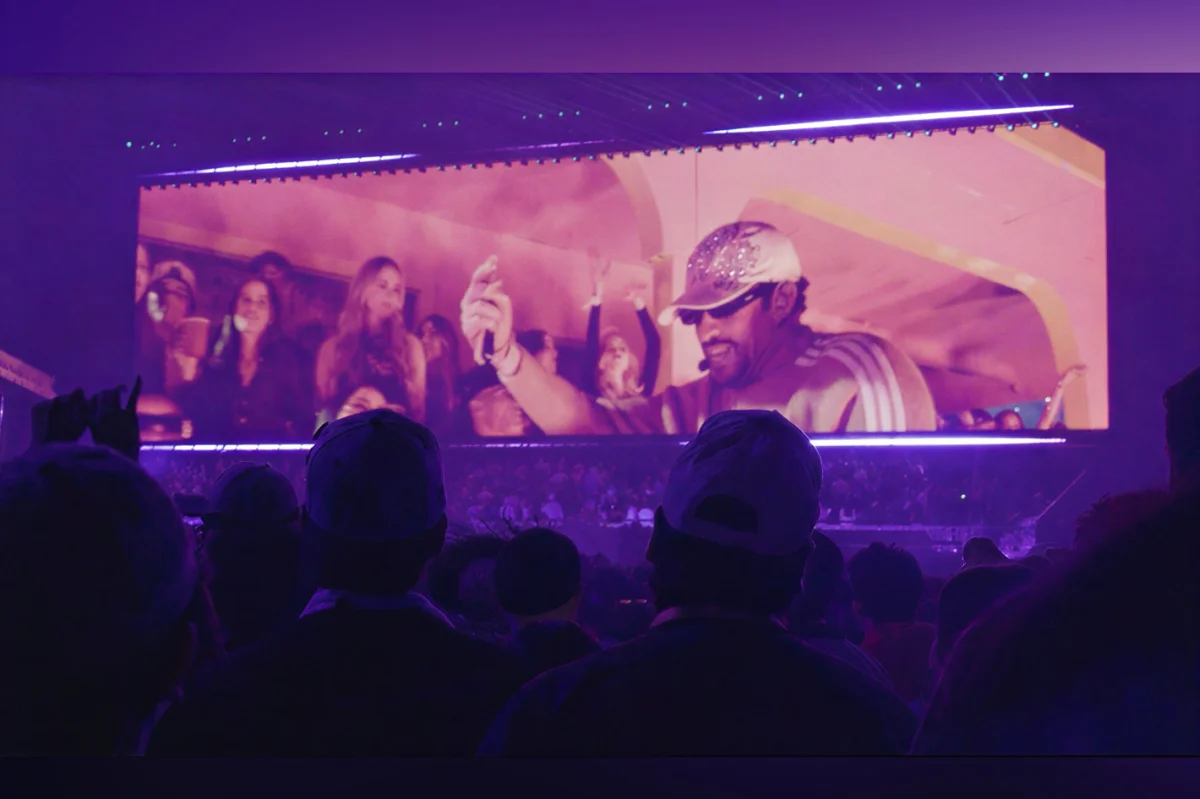
The main upstage wall measures 10,752 pixels wide by 2,816 pixels high, which works out to about 42 metres by 11 metres. Four SX40 processors drove it, each feeding four Tessera XD 10G data distribution units. Two smaller delay screens, one stage right and one stage left, ran on a further SX40 with four XD units.
The more interesting decision was on the media side. Rather than building custom resolutions for a canvas this wide, the team sent four UHD feeds from a bank of Disguise GX 3+ media servers. That kept the show compatible with the production's existing playback infrastructure. Brompton's account credits the straightforward mapping across multiple SX40 units, together with a full 10-bit workflow, for making the pipeline fast and dependable at this size.
For anyone who has fought with custom canvas resolutions on a tour, that's a practical lesson. Standard feeds reduce the number of things that can break at load-in, and they make it easier to swap or troubleshoot media servers when a schedule is tight.
Shooting for the screen
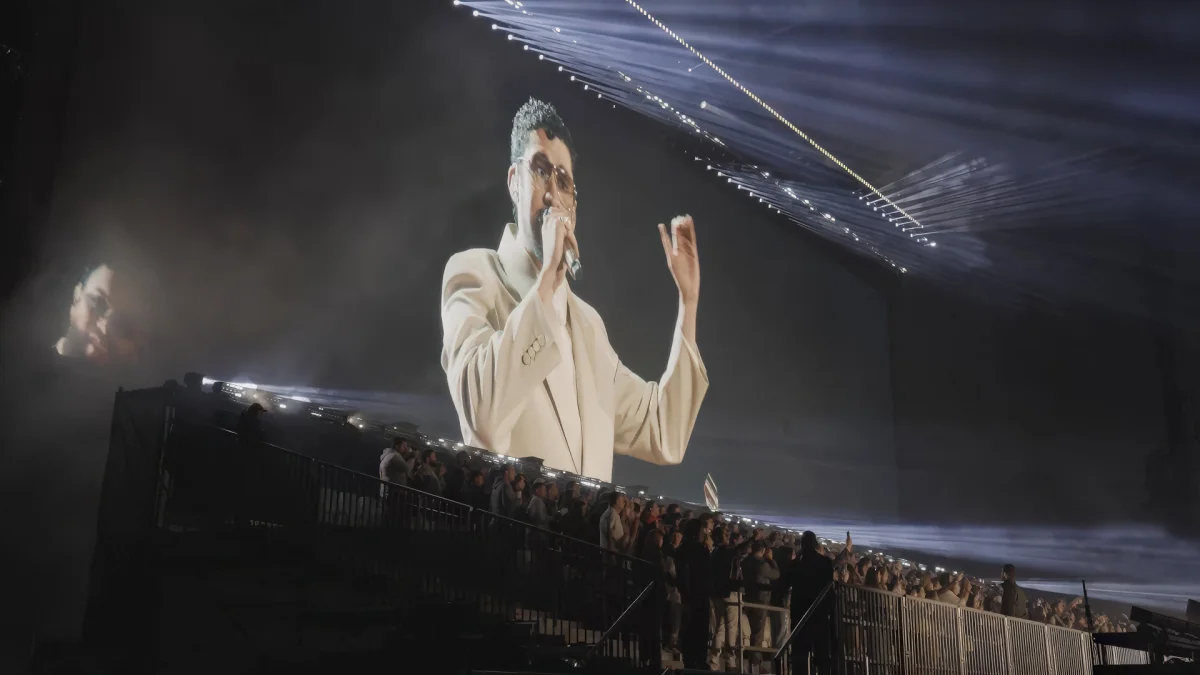
Pieter Laleman, Video Technician and Head of LED on the tour, says Bad Bunny became more involved in the visual identity of the album era as the show took shape, pushing it toward a distinctly cinematic look. Over 90% of the show is built around cinematic camera imagery, captured on 4K Sony cinema cameras. The material ranges from clean shots to footage treated with Notch effects, so image fidelity became a deciding factor in choosing the processing platform.
Here's the thing about that 90% figure: it means the LED wall is mostly a camera display, not a graphics display. That changes the priorities. Motion graphics can hide banding and limited gradients, but live camera footage on a large, close-viewed surface shows every compromise in the chain. A 10-bit path keeps more tonal steps in skin tones, shadows and sky gradients, which is why the team leaned on it.
Laleman described the rehearsal process directly: "We worked hard during rehearsals to get the maximum quality out of the cameras, using a 10-bit workflow and custom LUTs for colour consistency across different songs." Custom LUTs are the piece many touring crews underrate. Songs shot under different lighting or in different camera setups can look like they came from different shows, and a shared LUT is one of the simplest ways to hold the look together.
He added: "Running everything in 10-bit gave us so much extra detail in the camera images, and with all the different capabilities Brompton offers, we were able to provide the audience with the visual experience the artist had in mind."
Keeping every panel lit
A tour of this length also depends on uptime. The team could monitor the topology and online state of every LED panel, which gave them early warning of possible faults. That let them fix problems before the audience could see them.
The production also ran Brompton's closed-loop cable redundancy, with two XD units per screen. According to Brompton, this provided near-seamless failover and kept the wall free of black panels even when cables were lost. Notably, it did this without adding processing redundancy. Cable-level redundancy tends to be a cheaper and quicker fix than duplicating whole processing chains, and it's often the failure that actually happens on the road: a damaged run, a loose connector, a cable pulled during teardown.
What to take from it
Laurent Theurin, Technical Sales Manager (France) at Brompton Technology, framed the project as a test of what the processing was built for. "Supporting a production of this scale, with such a strong creative vision and genuinely cinematic ambition, while maintaining the reliability required across a full stadium tour, is a fantastic achievement for the entire team. Seeing INFiLED's panels and Brompton processing work together night after night to deliver that vision is a real testament to what this combination of technologies can deliver."
My read: the useful part for working crews isn't the headline panel count. It's the combination of a 10-bit camera-to-LED path, standard UHD feeds into a wide canvas, shared LUTs across a setlist, and cable-level redundancy. Each of those choices is easy to copy at smaller scale, and together they explain how a 57-show, all-stadium run can keep a cinematic image intact from load-in to the last date.