First day cover ·
Nature Photographer of the Year 2026: Winning Images and the Stories Behind Them
From a snowless Finnish winter to wildlife encounters and abstract landscapes, the 2026 winners show how patience, framing and light shape nature photography.
The 2026 Nature Photographer of the Year winners make a strong case for looking beyond the obvious subject. A bird can be framed by the forest that feeds it; a small patch of ice can turn fallen leaves into natural ornaments; and a fleeting break in fog can give a giraffe just enough presence to anchor a landscape. Across the winning and commended images, the photographers describe careful observation, deliberate composition and, often, a willingness to wait.
Winter details and a bird in its habitat
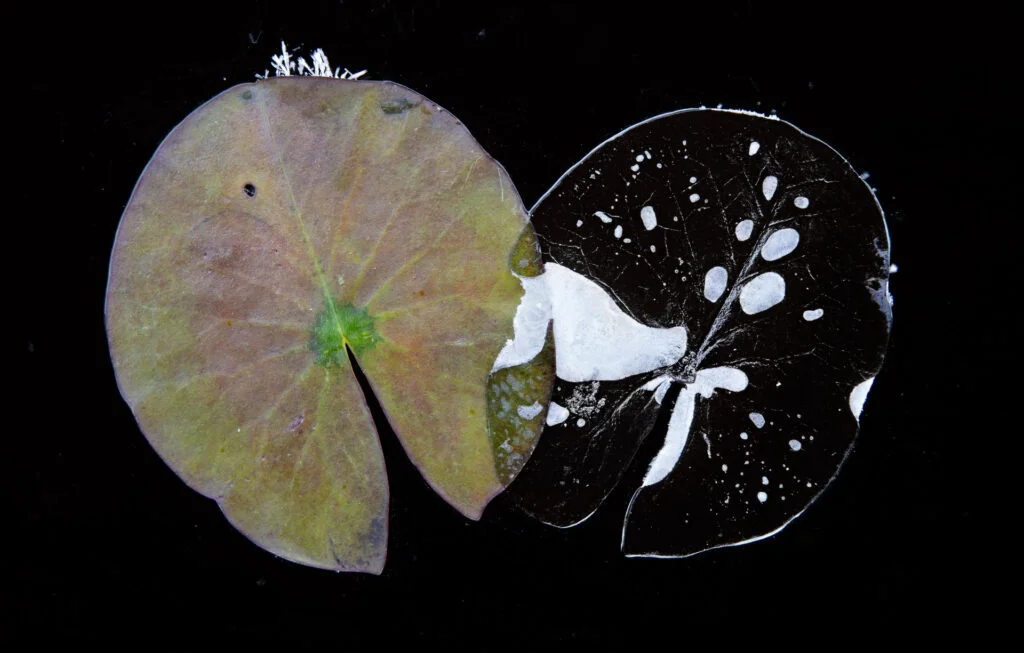
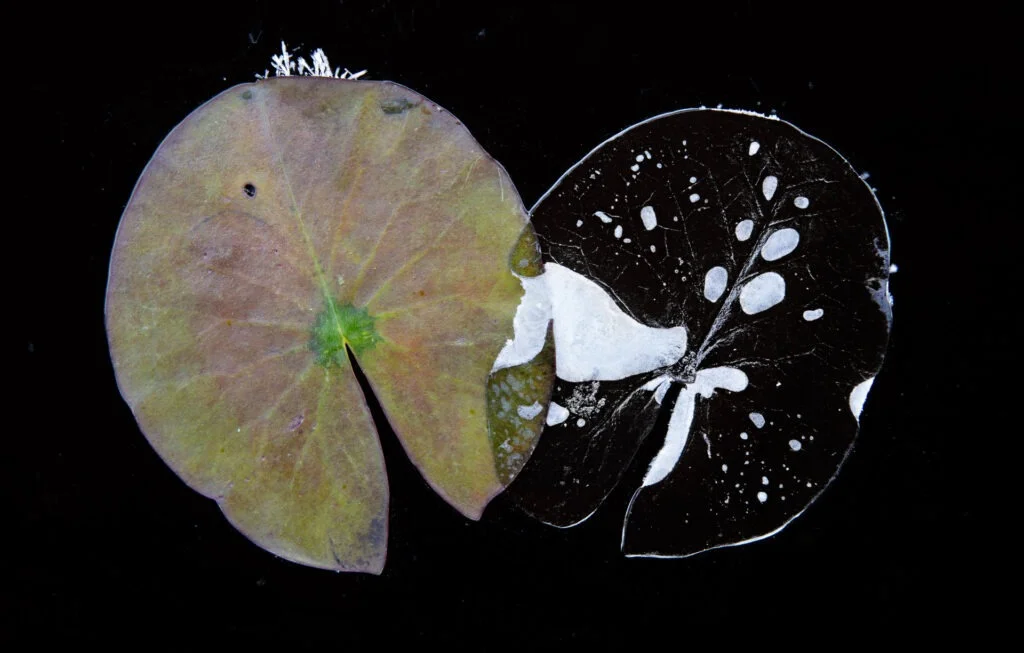
Overall winner Hannu Ahonen of Finland also took the Plants and Fungi category with The one that left and the one that stayed. A long snowless stretch followed the arrival of winter ice. As lily pad leaves crumbled on the pond’s frozen surface, wind carried some away. The exposed patches revealed frost patterns left by the leaves, a natural detail Ahonen says he had never seen before. His discovery turned a change in the pond’s surface into the picture’s central subject.
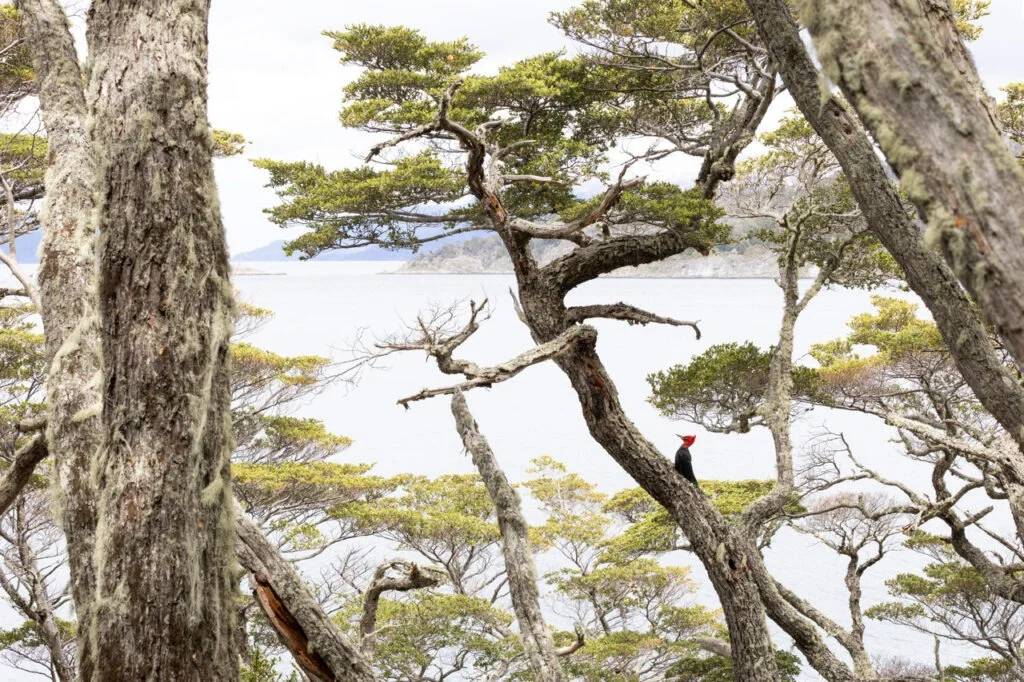
In the Birds category, Lucas Mugnier-Lavorel of France won with Painting from the end of the world. Made in early December 2025 in Argentina’s Tierra del Fuego National Park, the image shows a Magellanic woodpecker (Campephilus magellanicus) working along a weathered trunk in a Nothofagus forest.
The setting carries ecological context as well as visual structure. These southern beech forests, shaped by cold winds, provide decaying wood that supports the wood-boring beetle larvae that make up much of the woodpecker’s diet. Mature forest with plentiful dead wood is declining across much of the bird’s range. Mugnier-Lavorel chose a relatively short focal length to keep the bird within this larger world, including the branches and the view towards Lapataia Bay and the Beagle Channel. He assembled a panorama from two frames taken less than a second apart to include the entire tree. The bird continued feeding for nearly an hour as hikers passed; he stayed on the trail to avoid disturbing it.
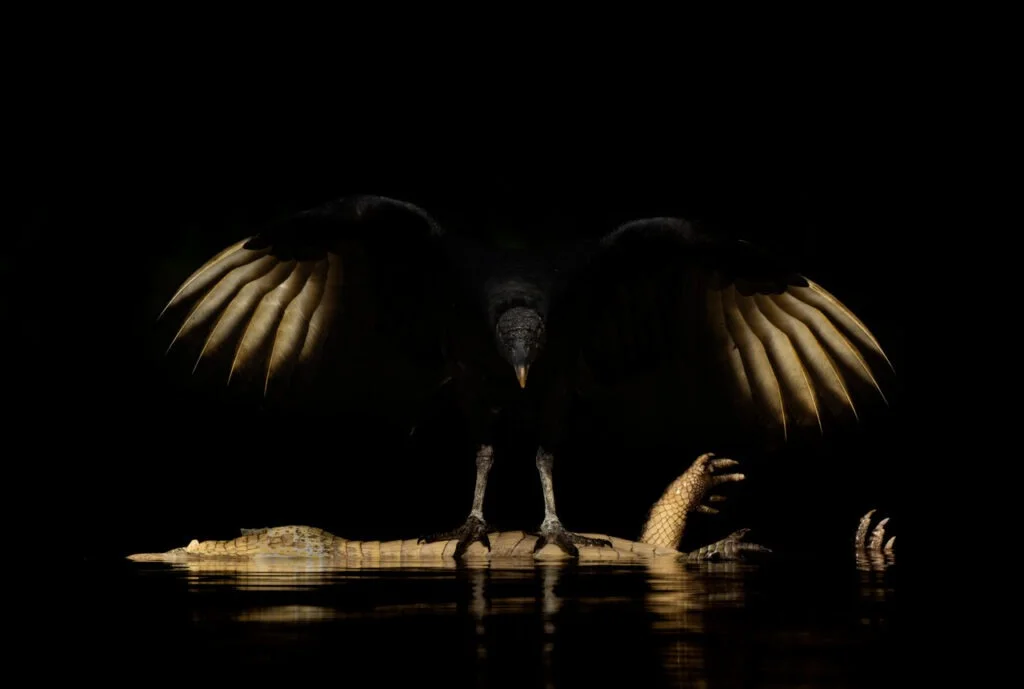
Birds runner-up Andy Parkinson of the UK waited beside a caiman carcass for a jaguar to return. The big cat had initially approached from cover in the water hyacinth, but a tourist boat came too close and it left, followed by the other boats. As Parkinson expected the jaguar to come back for the easy meal, a black vulture landed on the carcass. Passing boats sent wakes across the water, forcing the bird to spread its wings for balance. It eventually gave up trying to open the carcass; the jaguar later returned.
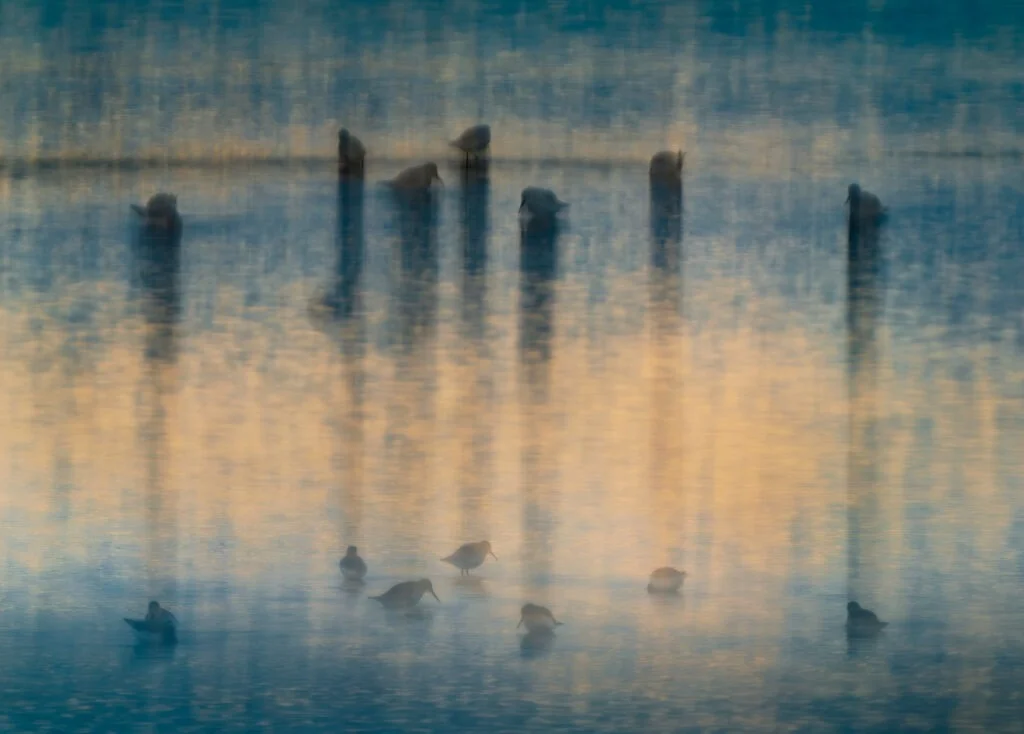
Csaba Daroczi of Hungary earned a highly commended mention for Parallel universes, made at Balatonfenyves on Lake Balaton during September migration. With birds accustomed to people, he could work without a hide. This time he wanted a less conventional result, so he used a long shutter speed and moved the camera: following birds in flight and panning while they fed. The aim was to retain a sharp point within the blur. Daroczi notes that getting that balance took luck as well as repeated attempts.
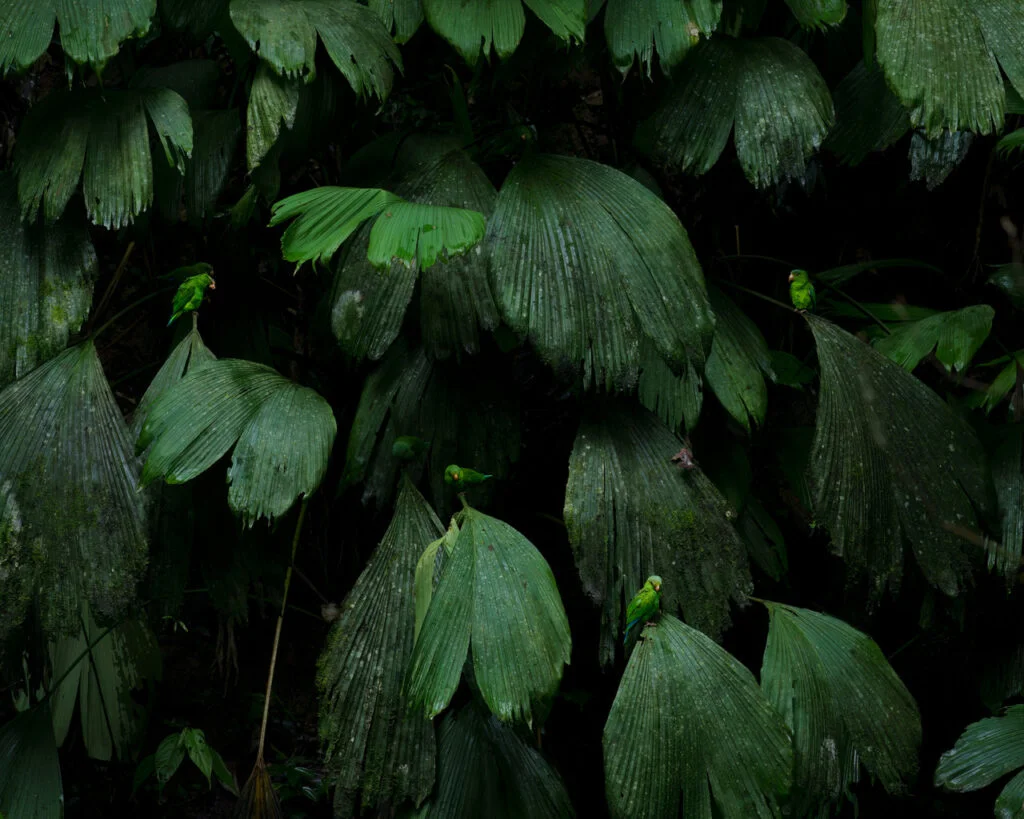
In Ecuador’s Amazon region, Raphael De Moliner of Switzerland went to the Napo River to see scarlet macaws at a clay lick, but the cobalt-winged parakeets held his attention. Their calls filled the area while the birds remained difficult to see among green foliage. They gathered in the vegetation for hours, communicating with one another, before coming down to drink and take in minerals. The highly commended photograph, Hiding in the green, draws on that visual puzzle: even when the parakeets emerged from cover, their plumage blended into the leaves.
Wildlife shaped by weather and place
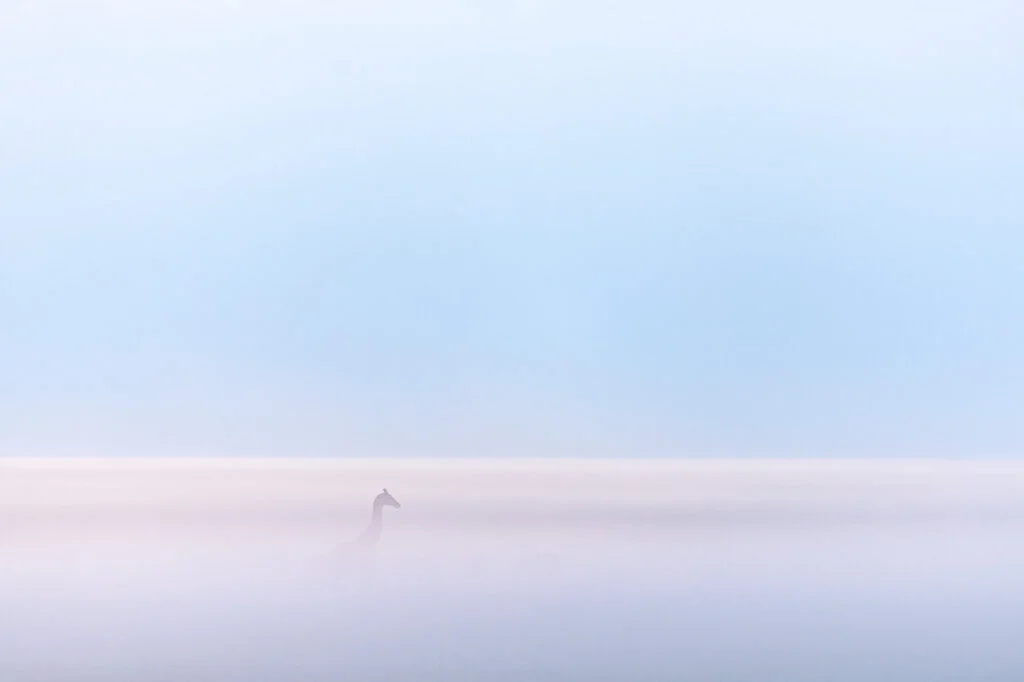
Paul Goldstein of the UK won the Mammals category with Play misty, a photograph built around a brief opening in fog. After years of trying to find the right conditions on Laikipia’s northern plains, he and local guide William Wanyika set out before sunrise. They drove eight minutes from camp, towards Mount Kenya, but mist made it almost impossible to spot wildlife. A light breeze briefly parted the grey veil, revealing a giraffe.
Goldstein moved farther away and used a 600mm lens to compress the scene. The giraffe stayed still in the cold, giving him time to make the frame. Within five minutes, both the animal and the mist had disappeared. The soft, pastel colour is characteristic of the area, but the picture’s defining element is the short-lived alignment of weather, distance and subject.
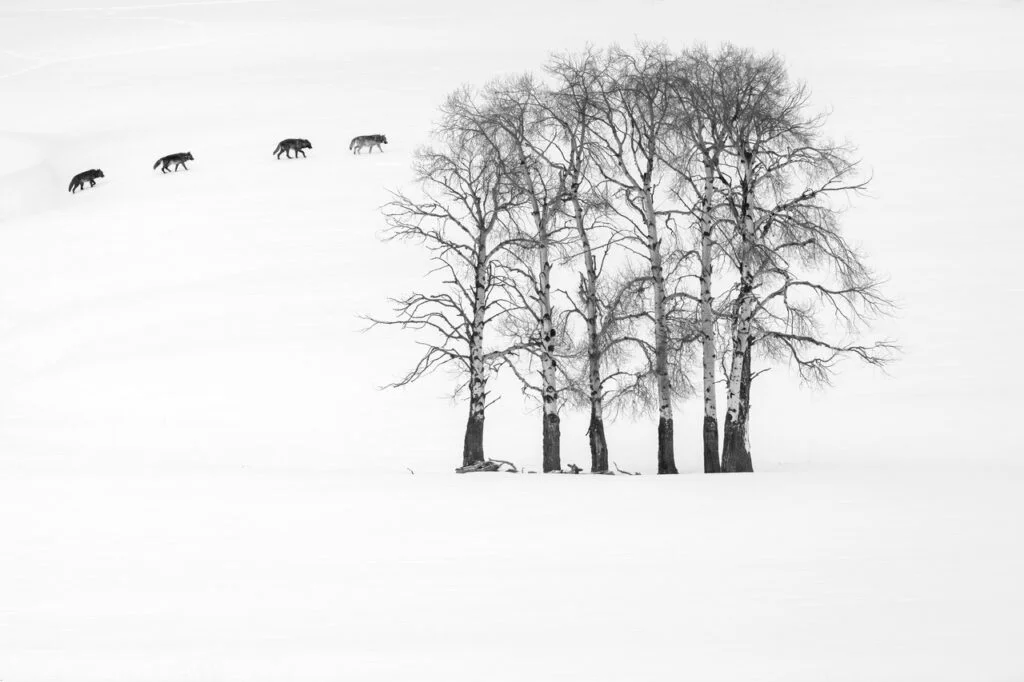
Devon Pradhuman of the USA received a highly commended mention for Aspen shadows. Four grey wolves cross fresh snow in Yellowstone’s Lamar Valley, their elongated shadows stretching across the frame. Pradhuman watched the pack from a distance, looking for a composition able to hold the scale of the landscape. Against the white ground, the wolves appear as small dark marks, with the shadows helping connect their movement to the surrounding space.
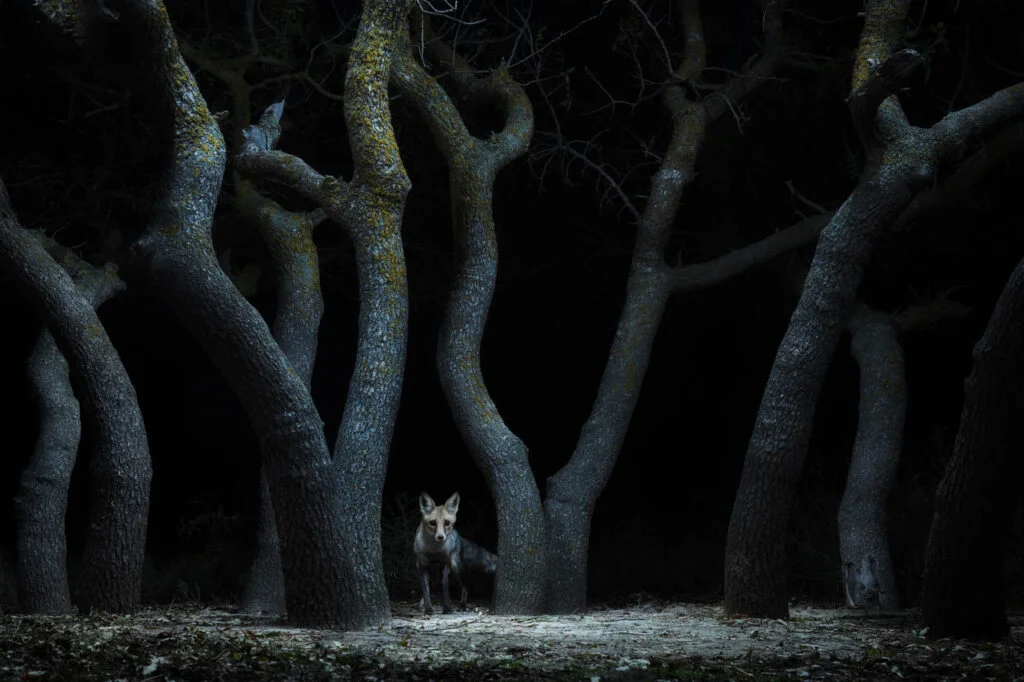
For Out of the shadows, another highly commended Mammals image, Sergey Bystritsky of Argentina set up for night visitors in Georgia’s Vashlovani National Park. The photograph shows a fox in Samukhi’s semi-desert, where trees are scarce except near the hills. Bystritsky noticed a dense cluster of trees and inferred from the terrain that an animal trail might pass nearby. He prepared a camera with a motion sensor and four flashes. Two large pieces of fabric hung in the canopy softened the flash light, functioning as softboxes.
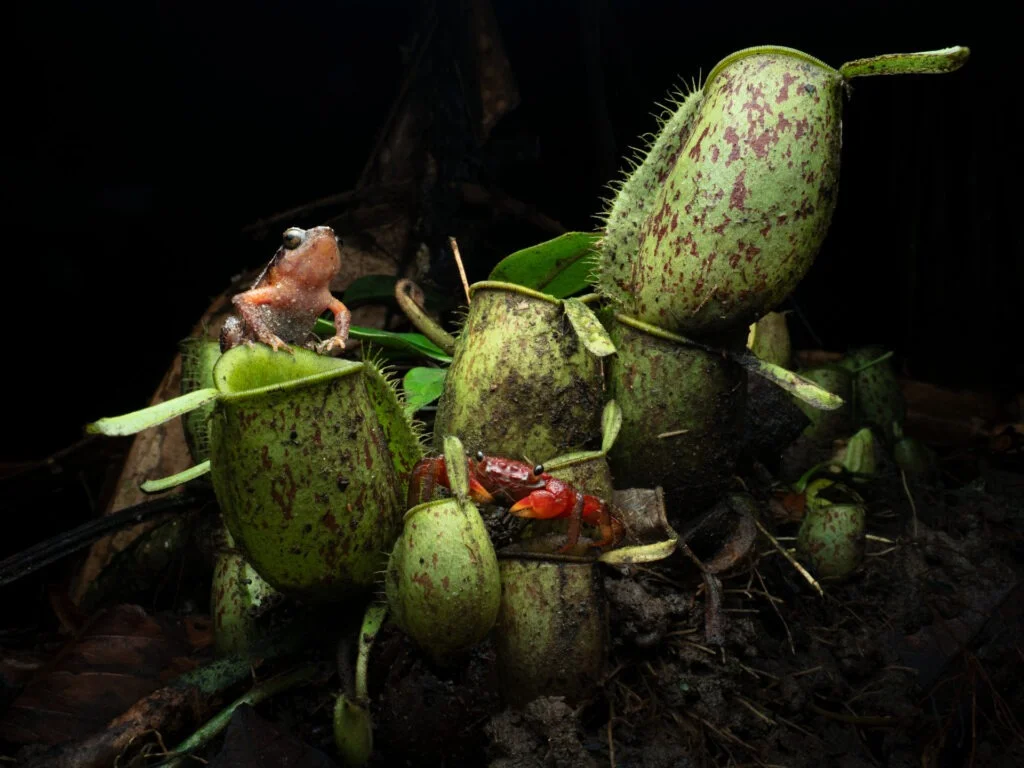
Marcus Kuan of Singapore won Other Animals with The pitcher’s micro-kingdom. While trekking through roughly a foot of water in a swamp forest, he returned to a cluster of pitcher plants he had monitored for two years. This time, a land crab (Phricotelphusa sp.) and a Lim Boo Liat’s sticky frog (Kalophrynus limbooliati) were perched on the same cluster.
The frog has previously been observed using the pools inside pitcher plants as places for tadpoles to develop. No equivalent relationship is documented for the crab, which appeared to be searching for organic material around the plants. The image brings the two animals together in a small habitat and leaves their different uses of that space visible without implying a shared dependency.
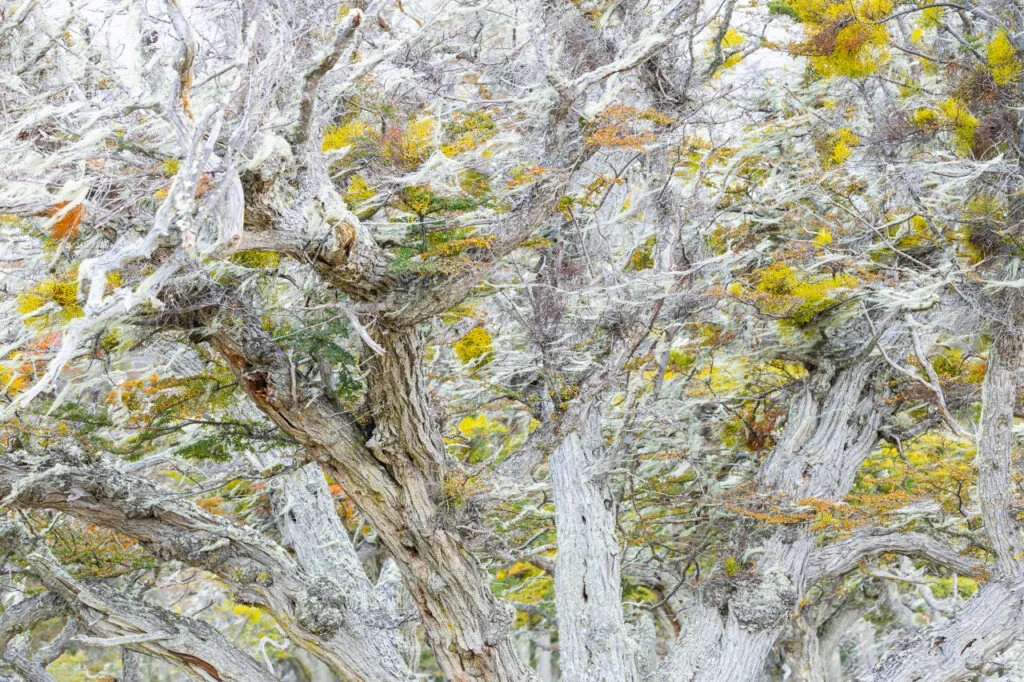
Antonio Nuñez Lemos, based in Switzerland, was highly commended in Plants and Fungi for Interwoven. Near Lago Blanco in southern Tierra del Fuego, Chile, he returned to photograph the austral autumn. On earlier visits, the old-growth lenga forests (Nothofagus pumilio) had drawn him for their Magellanic woodpeckers. This time, his focus shifted to the forest’s structure: twisted trunks, crossing branches, lichens and other epiphytes.
Rather than include a broad view or a horizon, Nuñez Lemos isolated a dense section and built a close composition from layered lines and textures. He slightly overexposed the frame to lighten the shadows and bring out the trunks and lichens, whose pale tones sit among the greens, yellows and oranges. The result asks the eye to move through the forest’s overlapping forms rather than settle on a single point.
Fresh angles on water, colour and pattern
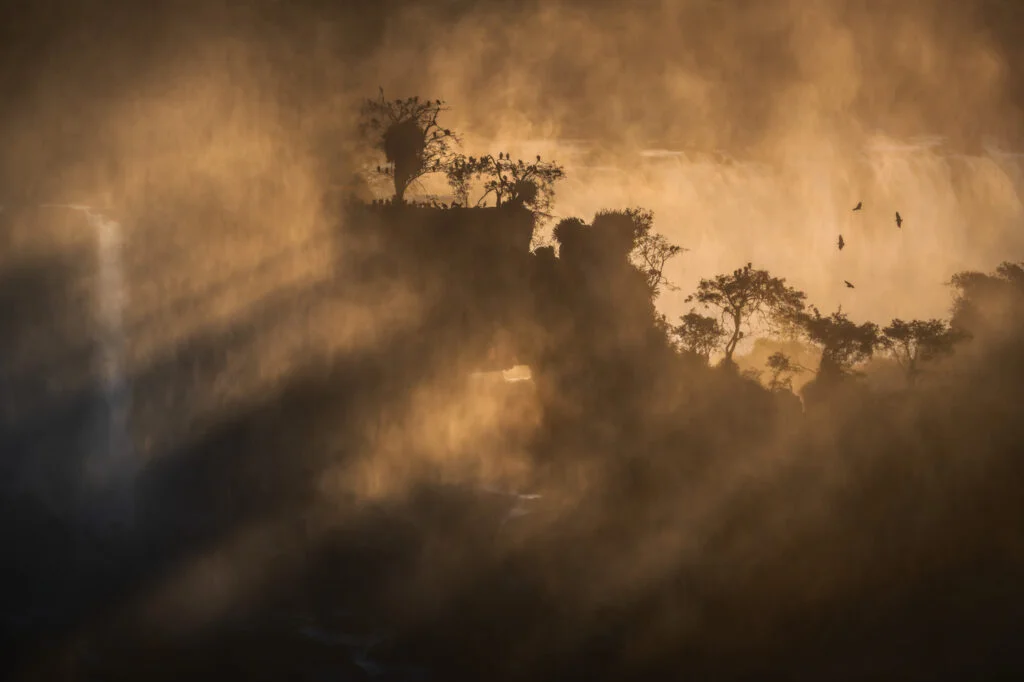
J Fritz Rumpf of the USA won a Birds category award with In the circle of vultures around the falls, made at Iguazú Falls in 2025. The falls comprise about 275 cascades across roughly 2,700 metres, with an average height of around 80 metres, on the Brazil–Argentina border. Rumpf set aside the challenge of capturing the entire expanse in one frame and searched instead for a more intimate composition that could still convey the place’s scale and force. The adjoining parkland is a significant remnant of Atlantic Forest, a habitat noted for its range of species and environments.
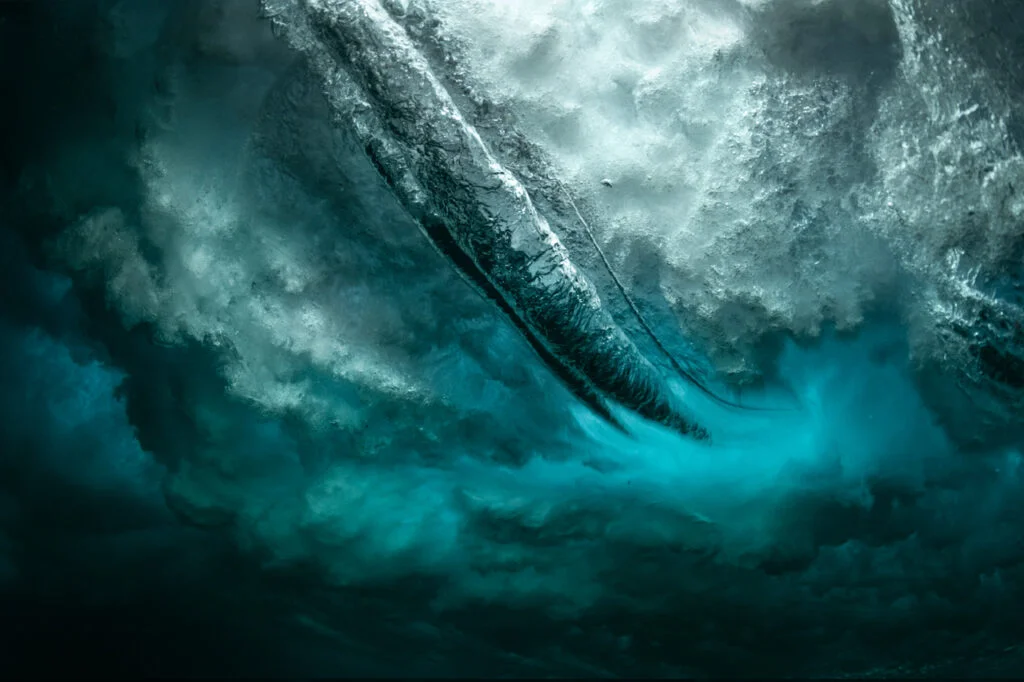
At Sydney’s Bronte Beach, Gergo Rugli of Australia was photographing waves breaking over a reef with an underwater housing and flash when a larger, unexpected wave arrived. He duck-dived and pointed the camera towards it as it broke. The wave pushed him against the reef and formed the circular patterns in Catherine wheel, a highly commended Landscapes image named for its wheel-like shape.
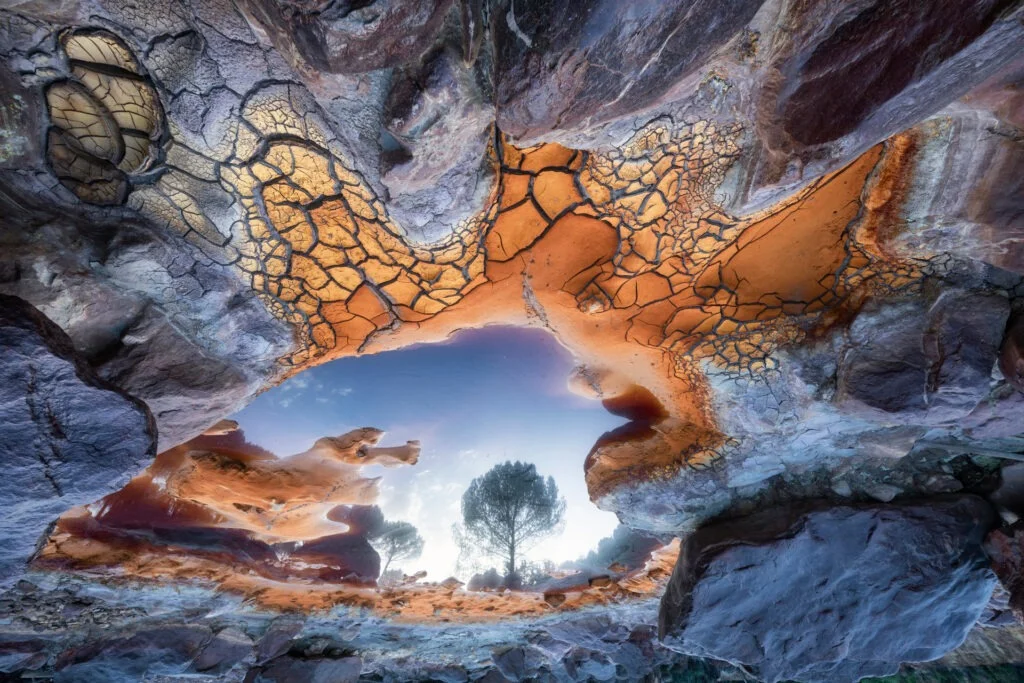
Juan Garcia Lucas of Spain also received a highly commended Landscapes mention, for The cave of illusion. He composed the photograph as a trompe-l’œil: rotate it 180 degrees, and the scene is intended to resemble a view from inside a cave, looking past its entrance towards a tree. The colours come from the Río Tinto in Huelva, Spain. Here, orientation is part of the composition; the image depends on the viewer briefly reinterpreting what the shapes represent.
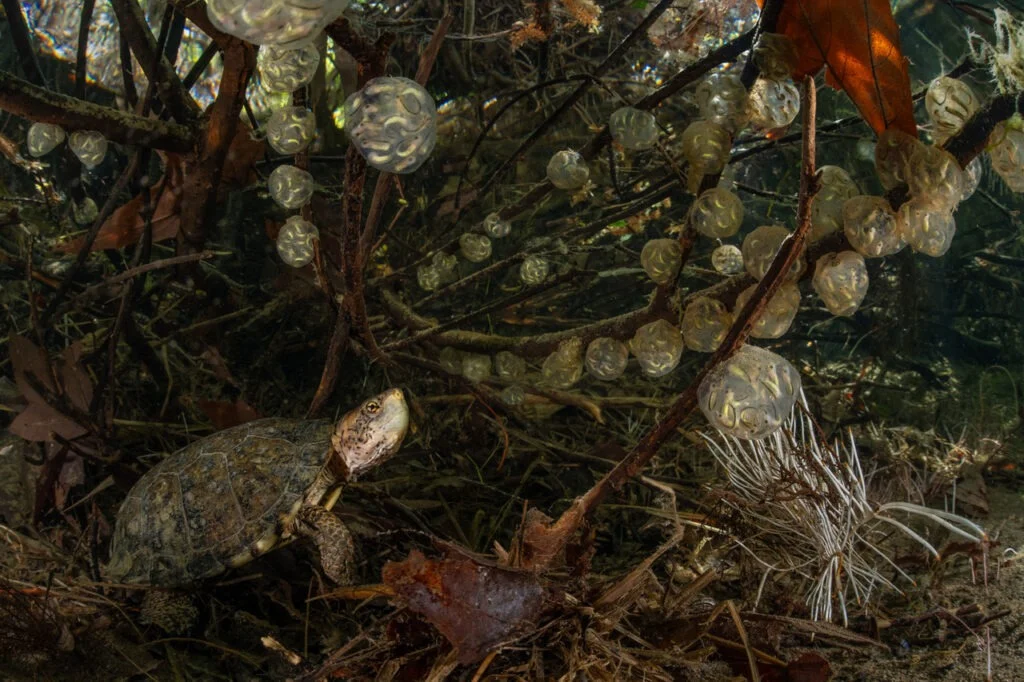
Matt Pérez of the USA won Underwater with Beneath aquatic constellations, featuring a southwestern pond turtle (Actinemys pallida) and egg masses of California newts (Taricha torosa). Pérez makes several annual trips from San Jose to snorkel and observe the turtles. On this outing, he saw two at the beginning of courtship. He drifted downstream, approached the male slowly and anchored himself when the animal remained calm.
As he moved closer, he noticed developed larvae inside newt egg masses attached to nearby branches. He lowered the camera housing and angled it slightly upward, placing the turtle beneath the eggs and letting branches extend towards the dome. Once the frame was made, he left the turtle to continue its courtship.
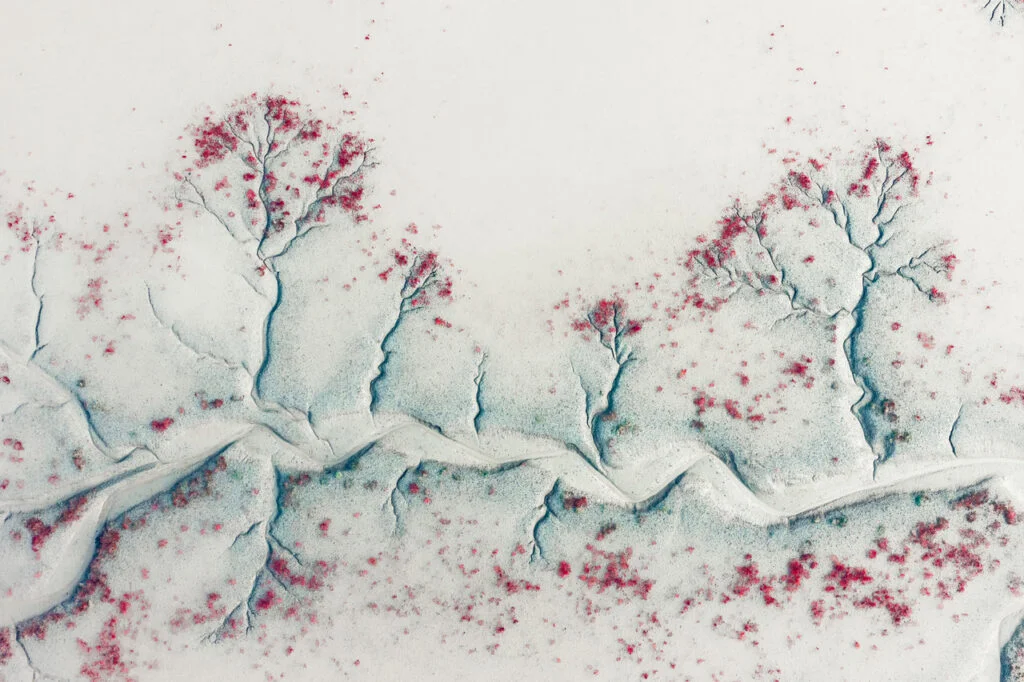
Xuzhong Liu of China won Natural Art with Peach blossoms in the snow, photographed in September 2025 at Red Beach in a wetland reserve in Panjin, Liaoning Province. Working from a drone, Liu spotted the composition on the remote controller’s screen. Its appearance recalled peach blossoms he had photographed in Nyingchi, Tibet, during March, and he made the exposure as soon as he saw the pattern.
Portraits built around perspective
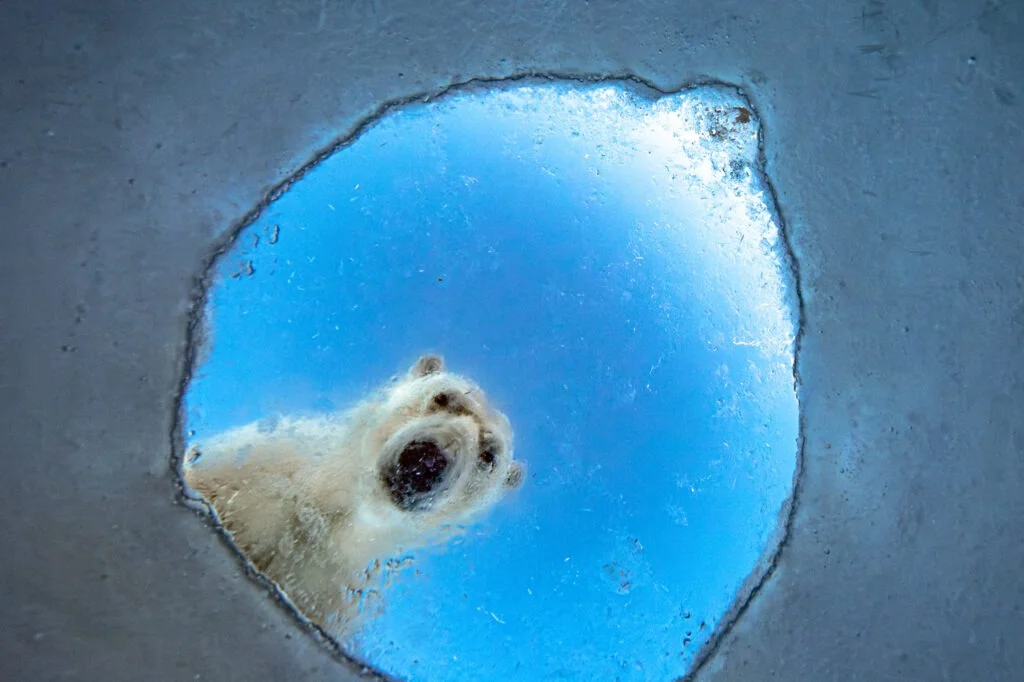
Norwegian photographer Audun Rikardsen won Animal Portraits with A seal’s worst nightmare. A polar bear looks down into a seal’s breathing hole in the drift ice north of Svalbard, at almost 83 degrees north. Rikardsen had spent more than three years planning and attempting the photograph, with several unsuccessful tries. His aim was to show a familiar polar bear hunting tactic from the seal’s point of view, at the moment it might discover a predator waiting above the opening.
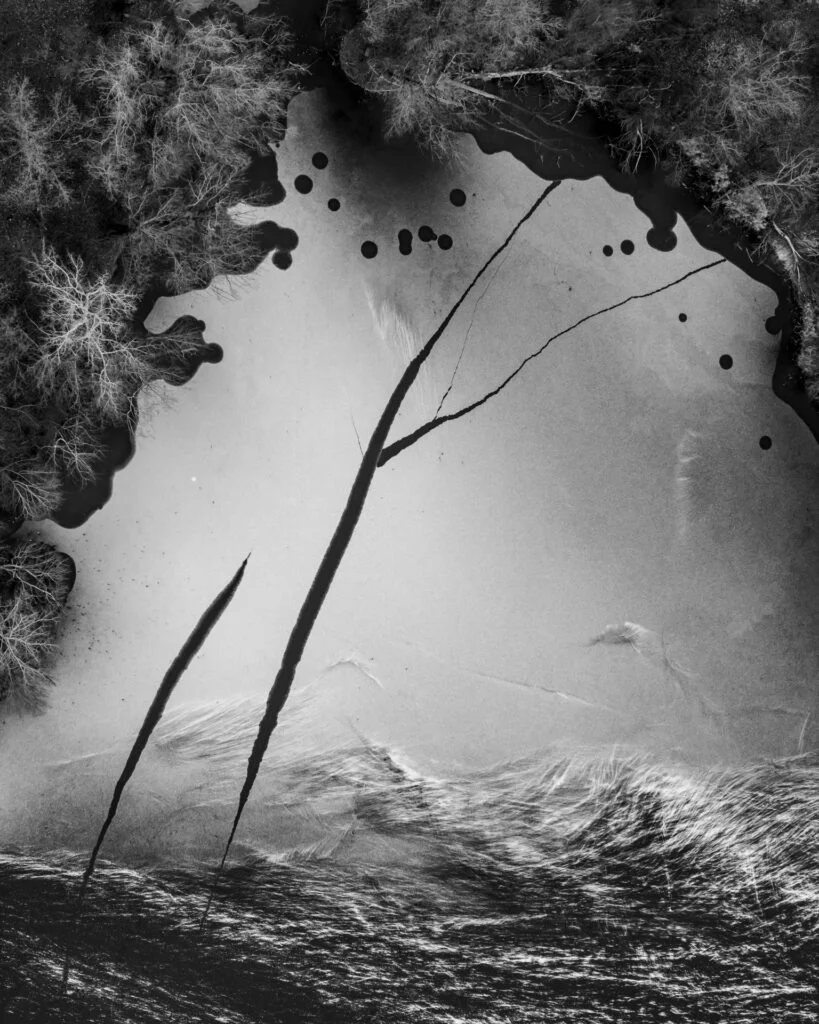
László Tóth of Hungary took the Black and White prize with Storm on the sea. He regularly flies over frozen lakes near his home in winter, drawn to the graphic patterns in the ice. On this occasion, a thin layer of 0.5 centimetres of snow covered the frozen surface as strong wind crossed the lake. Tóth decided to fly his drone in those conditions and found a pattern that suited monochrome treatment.
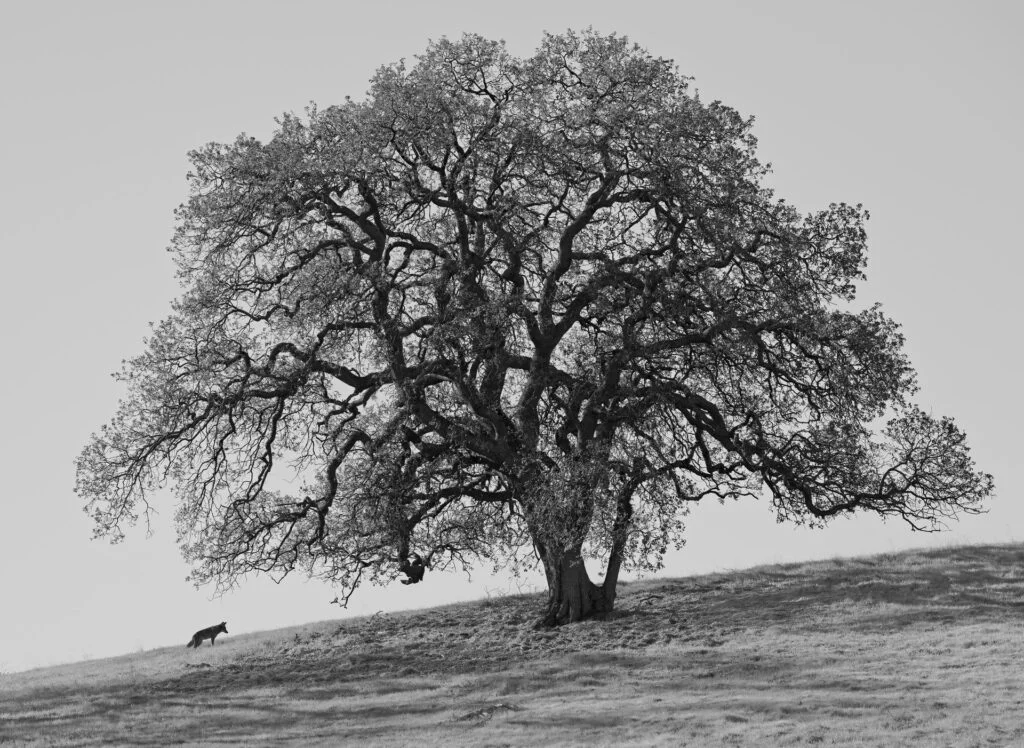
Youth winner Parham Pourahmad of the USA has followed coyotes living in the hills near Stanford University for several years. With Tree of life, he wanted to place one in its oak savannah habitat. He watched coyotes search grassy slopes for rodents, then lost sight of one when it entered a creek. After waiting 15 minutes, he spotted it again beneath a nearby oak, hunting for prey. Pourahmad moved to improve his position and made the frame as the animal lowered its head beneath the large tree.
The 2027 Nature Photographer of the Year competition is open for entries, with a prize pool worth €25,000. Entry details are available at naturephotographeroftheyear.com.