First day cover ·
Tokina 50–135mm f/2.8 Review: A Portrait Zoom for APS-C on a Budget
With a constant f/2.8 aperture and pleasing portrait rendering, this older APS-C zoom can be a strong used buy, provided its autofocus and handling suit your work.
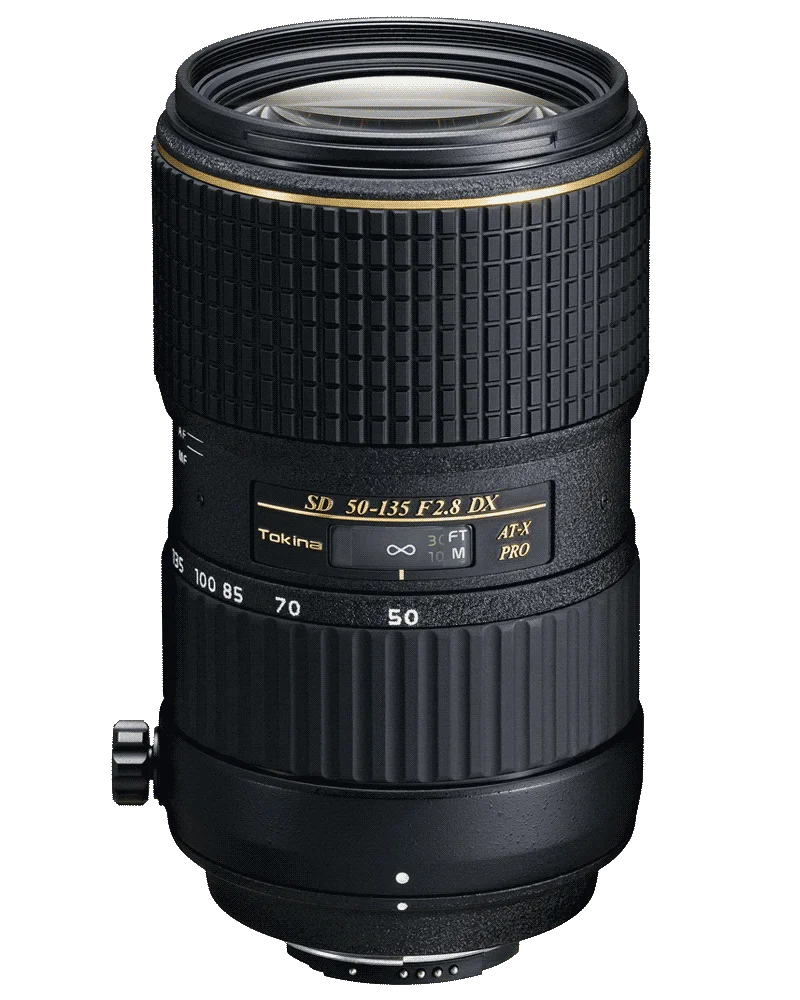
A clean used Tokina AT-X 535 PRO DX 50–135mm f/2.8 can cost about $200–$250, yet it offers the constant aperture and portrait-friendly reach that make a fast telephoto useful in the studio. Introduced around 2006–2007 for APS-C DSLR cameras, it remains an appealing option for photographers who can work around its slower, noisy autofocus and lack of image stabilization.
That balance is the point. This isn’t a modern all-purpose zoom: its strengths show most clearly when the subject and camera position are controlled. For portraits, its optics, focal range and f/2.8 maximum aperture can matter more than the fast focusing that action work demands.
A portrait range with room to reframe
On a Canon 7D Mark II, the 50–135mm range gives a field of view comparable to roughly 80–216mm on full frame. At the short end, there’s room to include more of a person and their surroundings. Zoom toward 135mm to tighten a headshot or use the narrower angle of view for a more compressed composition.
The maximum aperture stays at f/2.8 throughout the zoom range. That means you can adjust framing without giving up the same aperture setting, and it provides control over depth of field and subject separation. In portrait work, the resulting background blur can help a face stand out from its surroundings.
The reported optical construction is 18 elements in 14 groups, with nine aperture blades. Minimum focusing distance is one meter, the filter diameter is 67mm and the lens weighs approximately 845g. It was designed for APS-C cameras, so its practical field of view depends on the camera format used.
Rendering that suits controlled portraits
In use, the strongest impression is the image quality: sharp results, good contrast and pleasing color. Portrait rendering is a particular strength, and the constant f/2.8 aperture gives useful flexibility for separating a subject from the background. Color has also held up well in controlled lighting.
Independent testing gives a more qualified picture: sharpness varies with focal length and aperture. That’s a useful reminder that a zoom doesn’t necessarily perform identically at every setting. Photographers who want detailed measurements can consult the LensTip review and the Imaging Resource lens listing.
The lens is especially at home in studio portraiture. When lighting is controlled and subjects aren’t moving quickly, there’s time to compose, adjust the light and focus with care. On a tripod, its weight and lack of stabilization are easier to manage, while its zoom range helps shift between a looser portrait and a tighter crop without moving the camera.
Where its compromises show
Autofocus speed is the clearest limitation. Even when paired with the capable autofocus system of a Canon 7D Mark II, the camera can only focus as quickly as the lens allows. For athletes moving toward or away from the camera, that delay can cost a shot. The lens is better suited to deliberate portraits, fashion work, product photography and other situations where the photographer can control the subject and timing.
The focusing motor is also loud. That’s usually a small concern for still photographs, but the sound can reach a camera’s built-in microphone or a microphone mounted on the camera. Manual focus or placing an external microphone farther from the camera may help; for video that depends on quiet autofocus, this isn’t an obvious choice.
There’s no image stabilization. Camera shake becomes more noticeable toward the 135mm end, where the field of view is narrower. For handheld work, pay close attention to shutter speed and camera support. On a tripod, this limitation matters much less. At f/2.8, the lens can also help with exposure in lower light, but it doesn’t steady the camera or freeze subject movement.
Who should consider it?
The Tokina makes the most sense for APS-C photographers who prioritize portraits and can accept manual control over the pace of a shoot. Studio headshots, environmental and outdoor portraits, fashion work and tripod-based product photography all play to its strengths. Its long end offers tighter framing, while the short end gives more room for a portrait with context.
Fast sports, wildlife and action work put more pressure on autofocus response. Handheld low-light photography can also be challenging when stabilization would help, and video shooters may find the motor noise intrusive. These limits are practical considerations, not surprises to discover after choosing the lens for a demanding assignment.
At approximately $200–$250 for a clean used copy, the Tokina pairs a constant f/2.8 aperture with a useful portrait range and solid construction. Condition and availability affect the price. It dates from the mid-2000s, but age alone doesn’t erase the value of good optics. For a photographer working mainly with controlled subjects on an APS-C camera, this remains a compelling way to add a fast telephoto zoom without paying for a newer professional lens.


