First day cover ·
Walking Away from Unpaid Shoots: Scripts for Photographers Ready to Charge
Stuck on free shoots while the portfolio never feels finished? Here's how to spot the real reasons you're saying yes, and the scripts for raising your rates.
The portfolio is always almost ready. You keep taking free assignments to polish it, telling yourself you'll start charging once the work is strong enough. Then the bar moves again, and the portfolio you wanted stays just out of reach.
Meanwhile, the day job is wearing thin, and the math doesn't work. Sooner or later, the only real path forward is charging for your photography. The hard part is taking the first step.
What's Actually Keeping You Stuck
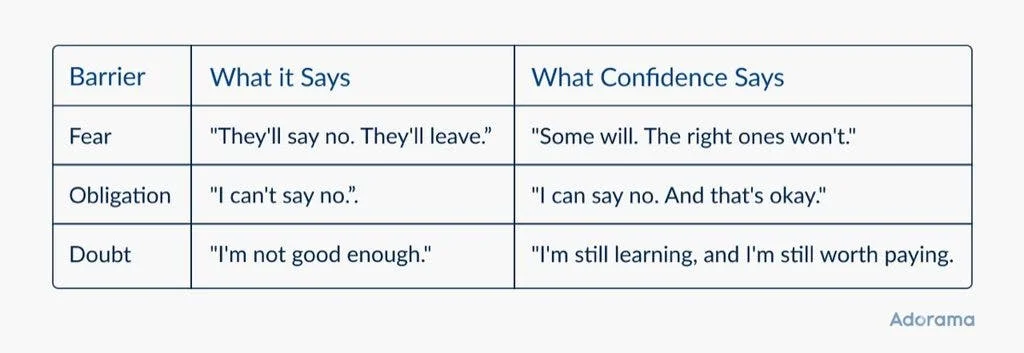
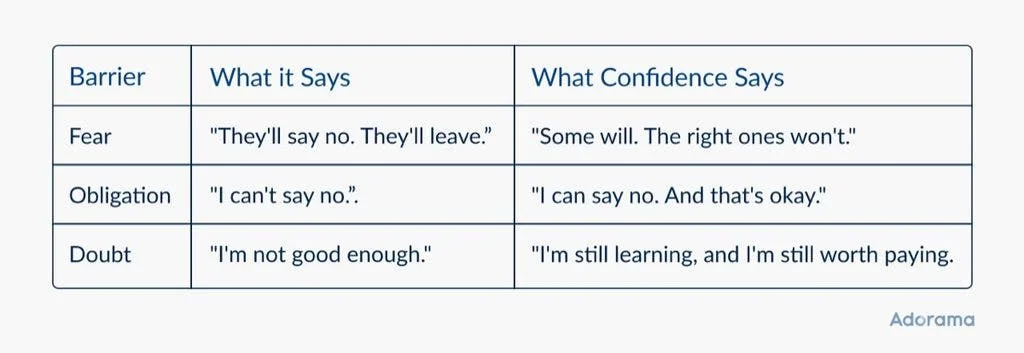
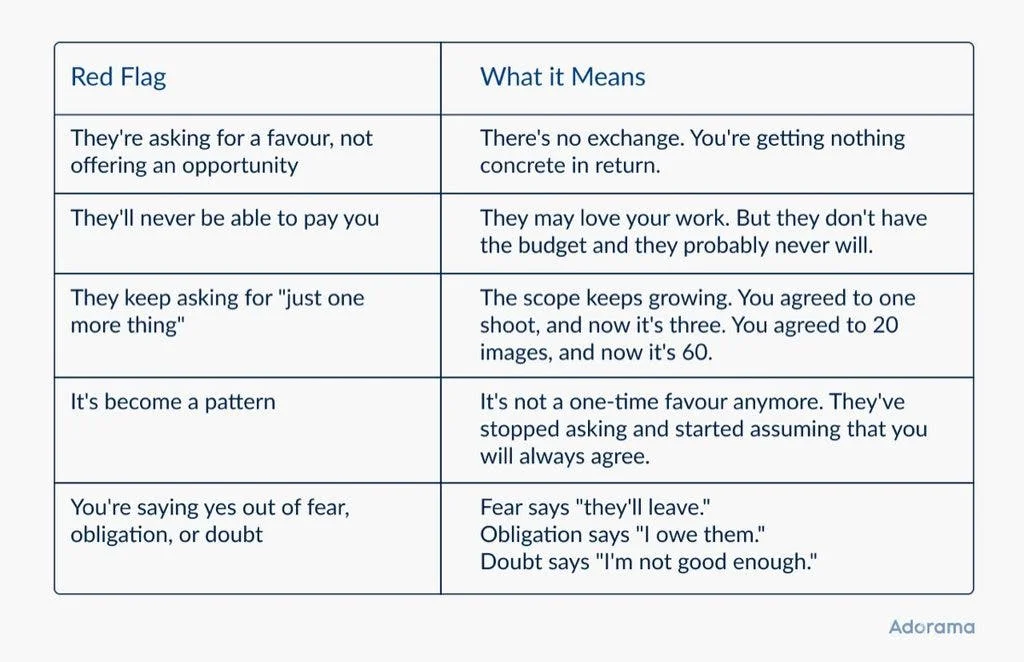
Before you touch your rates, look at why you're hesitating. In most cases it comes down to three things: fear, obligation, and doubt.
Fear usually sounds like "If I start charging, I'll lose the clients I have," or "If I say no, they'll find someone else." That's a scarcity mindset, and it's worth naming for what it is. The clients who value your work will pay for it. The ones who won't were never going to build your business anyway.
The industry also has a well-worn tactic for this: exposure. "We can't pay you, but it'll be great for your portfolio." Or the classic, "Think of the connections." Photographer and Adorama contributor Mujahid Ur Rehman puts it bluntly: "The industry lures you in with exposure. 'We'll give you credit in the bottom corner of the image.' It's designed to keep you working for free." It works because it turns your fear of missing out into a reason to say yes.
Obligation is harder, because the people asking are often friends, family, or a local charity you care about. You worked for them once without charging, and now every new request feels like a debt. If that resentment is building, take it as a signal. "I said yes again, and now I'm angry about it" is a clear sign something needs to change.
Doubt is the most common blocker. "I'm not ready yet." "I need more experience." Those thoughts keep the goalpost moving. You don't need a perfect portfolio. You need one good enough that a client can see you'll deliver for them.
All three come from the same place: low confidence. Here's the thing, though. Confidence isn't the absence of those feelings. You build it while they're still there. Waiting to feel ready is how you stay stuck. Act first, and the confidence tends to catch up.
What Breaking Away Actually Means
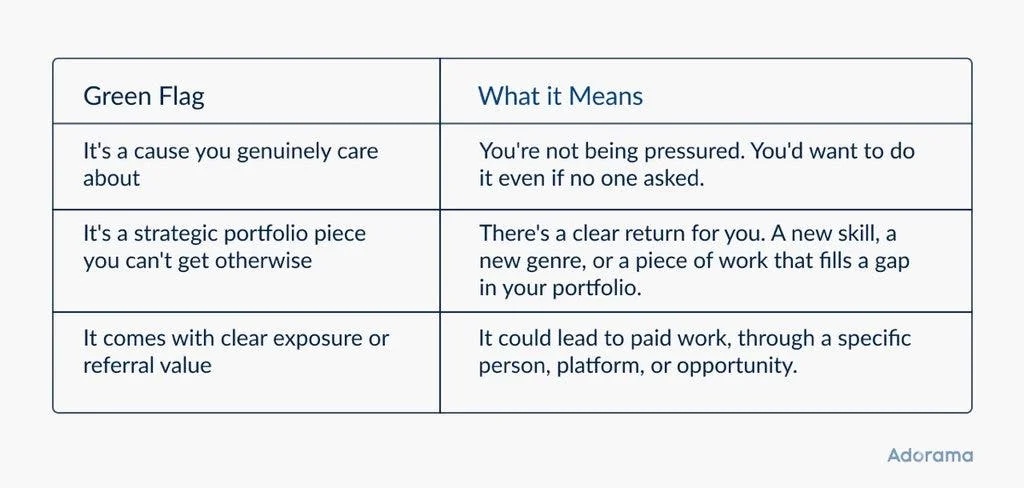
Breaking away from free work doesn't mean refusing every unpaid request. It means you stop saying yes on autopilot. The skill is telling a yes that builds your career from a yes that just serves someone else's project.
A useful yes usually has a genuine cause you care about, a strategic portfolio piece that's exactly what you want to shoot next, or a real referral path to paying clients. A bad yes tends to come with a favour rather than an opportunity, no budget at all, scope that keeps growing, or a pattern that repeats every few months.
A Step-by-Step Way Out
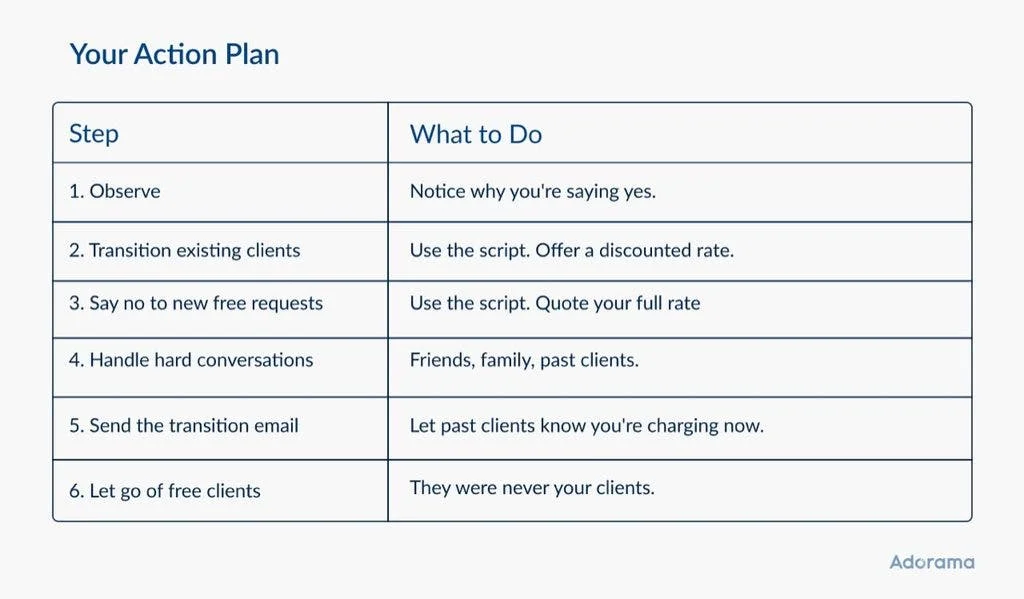
Step 1: Observe before you answer
Each time a request comes in, pause and ask whether it's a real opportunity or whether fear, obligation, or doubt is doing the talking. Ten seconds of honesty here saves a lot of unpaid hours.
Step 2: Move existing clients to paid work
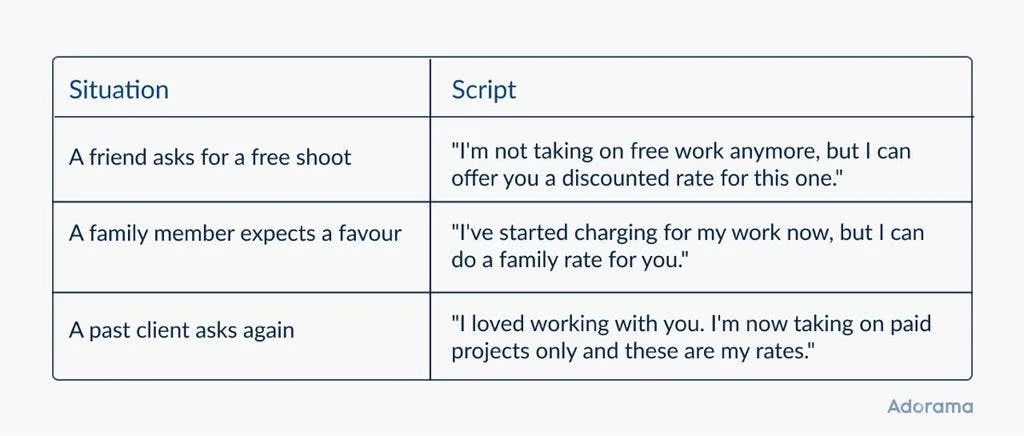
If a past client asks for another free project, don't just refuse. Offer a path to paid work with a discount. Try something like:
"I'm no longer taking on unpaid work, but I'd love to offer you a discounted rate for this project."
Step 3: Decline new free requests and hold your rate
For a new inquiry, keep it short and warm:
"I'd love to help, but I'm not able to take on unpaid work right now. Happy to share my rates if you're interested."
Then quote a fair, undiscounted rate. When someone comes back with "it'll be great exposure," hold your position:
"I appreciate the offer of exposure and credit, but I'm not taking on unpaid work. I charge for my time and skill, just like any other professional. If you have a budget for this project, I'd be happy to send you my rates. If not, I wish you the best with it."
The key is that you don't argue the merits of exposure. You restate your price and let them decide.
Step 4: Handle the hard conversations with people you know
Friends and family need a different approach. Acknowledge the relationship first, explain that photography is now your business, and offer a rate that feels fair to both sides. They'll usually respect the boundary more than you expect.
Step 5: Send a transition email to past clients
A short note tells people where you stand without making it a confrontation. Something like:
Subject: A quick update from [Your Name]
Hi [Name],
I've enjoyed working with you, and I wanted to let you know that I'm now taking on only paid projects. These are my rates. If you'd like to work together again, I'd love to hear from you.
Thanks for your support.
[Your Name]
Step 6: Let go of clients who only wanted free work
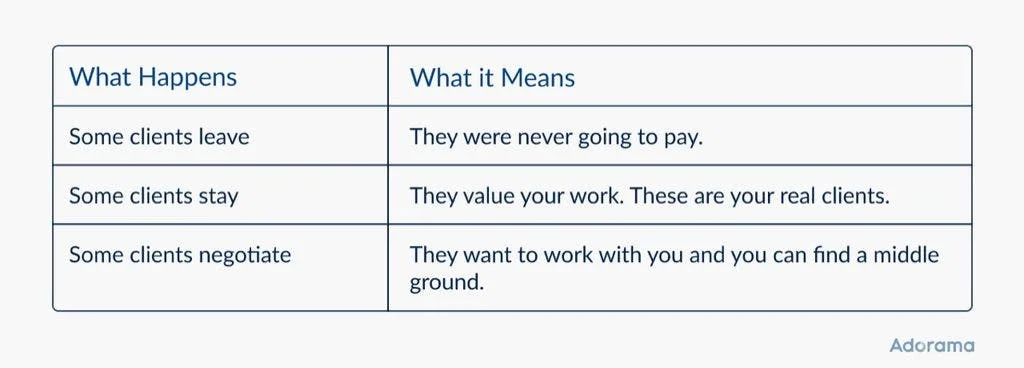
Some people will leave when rates go up. That's not a failure. They were never really clients; they wanted a free service. Others will stay and pay, and some will negotiate. Expect all three outcomes and plan for them rather than being surprised.
Where to Start Tomorrow
The move from free work to paid work won't happen overnight, and it won't wait for a flawless portfolio. It starts with naming the obstacle you're facing and taking one action against it. You have the right to charge for your work and the right to decline unpaid requests. Once you start treating your time as valuable, your clients tend to follow that lead. Pick the one script that fits your situation, use it on your next inquiry, and see what happens.