First day cover ·
Drafting a One-Page Client Contract Before Your First Shoot
A one-page contract covering scope, deliverables, payment, cancellations and usage rights can be drafted in an hour and protects both sides.

Before the shoot, before the deposit clears, and before the first "quick question" email, you need a written agreement. It doesn't have to be a stack of legal pages. One sheet that spells out what you're shooting, what the client receives, what they pay and when, and what happens if plans change will do the job. You can draft it in about an hour.
Hesitation is normal. Asking a new client to commit money feels awkward, especially when the job looks small. But a written agreement protects you and the client alike. Relying on a chain of emails and a verbal yes is where misunderstandings start.
What a One-Pager Actually Prevents
Treat the document as a clarity tool rather than a sign of suspicion. Clients approve faster when the terms are in front of them, and you spend less time re-explaining them.
The most common problem is scope creep. You quote for a one-hour session, the client asks for "just one more look," and suddenly you're three hours in with no extra pay. A clear scope line stops that before it starts. The same page addresses payment disputes, last-minute cancellations and unpaid extra work. It also tells the client you run a professional operation, and clients tend to treat professionals accordingly.
The Five Sections Every One-Pager Needs
None of these sections require specialist vocabulary. Each one answers a plain question.
Scope of Work
Name the session type, location, date and duration, then list what's included. A line like "Two-hour portrait session at Central Park, including one outfit change and one location" leaves very little room for interpretation.

Deliverables
State how many images you'll provide, in what form, how they'll arrive and by when. For example: 20 edited digital images, delivered through a private online gallery within 14 days.
Payment Terms
This section carries the most weight. Include the total fee, the deposit needed to hold the date, when the balance is due, which payment methods you accept and what happens to late invoices. A workable version reads: total fee $300, a 30% deposit to secure the date, balance due on the day of the shoot, payment by bank transfer or PayPal, and a 2% monthly late fee on invoices unpaid after 14 days.
Cancellation Policy
Spell out deadlines for both sides and whether the deposit is refundable. One version that works: deposits are non-refundable if the client cancels within 7 days of the shoot. If you cancel, the deposit is refunded in full or the session moves to a new date at no extra cost. Clear terms on both sides make the policy easier to defend if plans fall apart.
Usage Rights
State who holds the rights to the images and what the client can do with them. The common approach is that you keep copyright and the client receives a non-exclusive license for personal use. If you want to show the work in your portfolio, add a model release clause granting permission for portfolio and marketing use. Commercial clients often need broader terms, but for your first few simple jobs, one line usually covers it.
Building It in an Hour
Work through the five sections in order and fill each blank from the booking details you've already agreed on. Then read the whole page as the client would. Any sentence that could be read two ways is the one to rewrite.
Sending It and Handling Pushback
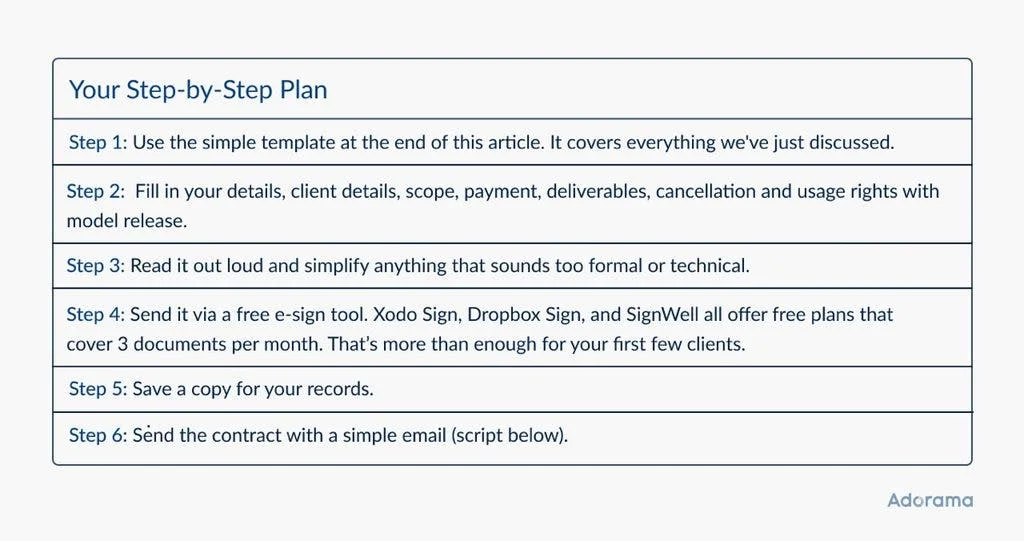
Raise the contract the moment a client says yes so it reads as part of the booking, not an afterthought. If that moment passes, send a short cover email before any work begins. Confirm the shoot, attach the document, note that it covers deliverables, payment and image use, and offer to answer questions. Keep the tone friendly and low-pressure.
Some clients will push back. A reply that tends to work: "I know the word 'contract' can feel heavy, but this is one page, and it protects both of us. You'll know exactly what you're getting and when." If someone still refuses to sign a simple agreement, take that seriously. It may signal how they'll treat your time later.
Filing It and Using the Template
Once both parties sign, save a digital copy and a backup on your cloud drive, labeled with the client's name and the shoot date. Having a consistent filing habit makes disputes far easier to resolve.
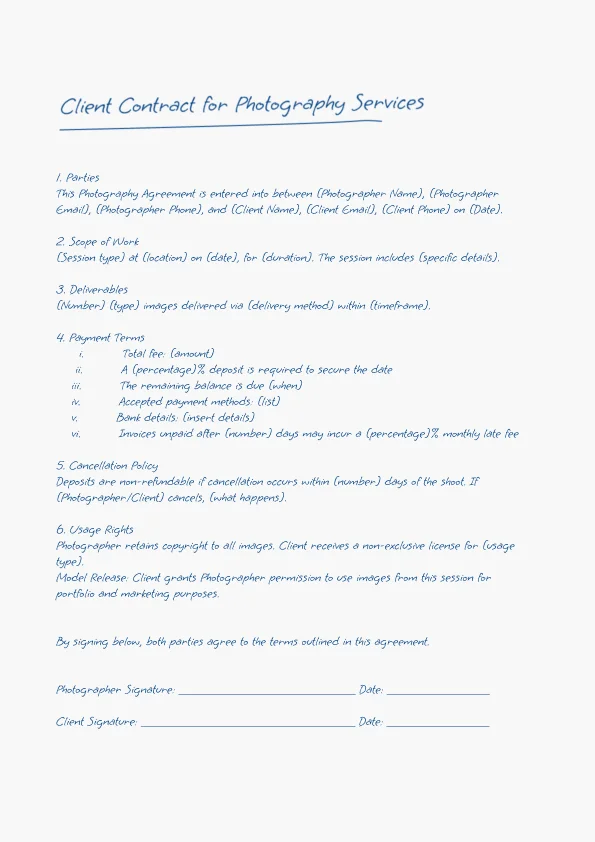
The template covers parties, scope, deliverables, payment and bank details, cancellation, usage rights and signature lines. Edit it to match your tone. A Word version is available to download from here, so you can fill in your details and adjust the terms.
Treat the template as a starting point, not legal advice. As your business grows, having a lawyer review your agreement is a worthwhile expense. For early clients, though, one page is enough to set a professional tone and protect both parties.
Build the document once, then every new booking starts from a form that already protects you. After a few jobs, it becomes routine, and you'll wonder how you ever worked without it.