First day cover ·
Flanders Scientific Adds Lower-Priced VP and V QD-OLED Reference Monitors
Flanders Scientific's VP and V series bring XMP-level QD-OLED image quality to more rooms, with V models starting at $5,995 and VP at $7,995.
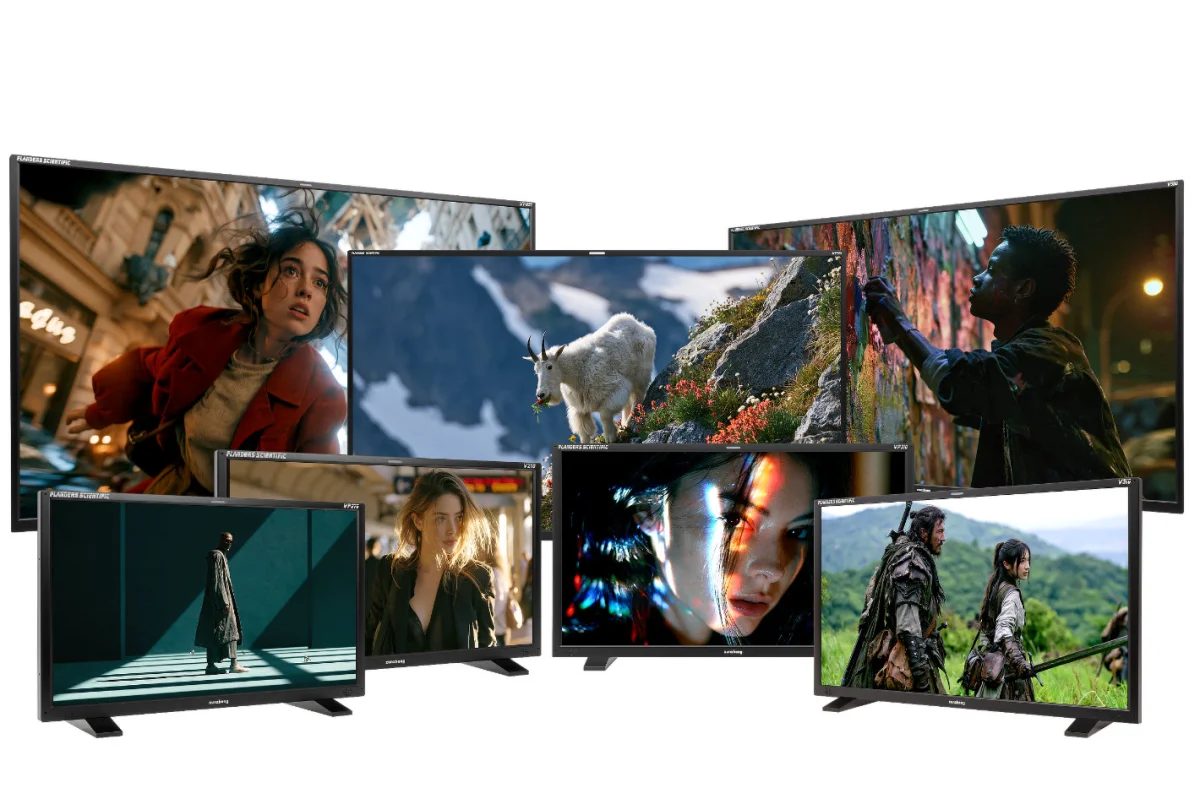
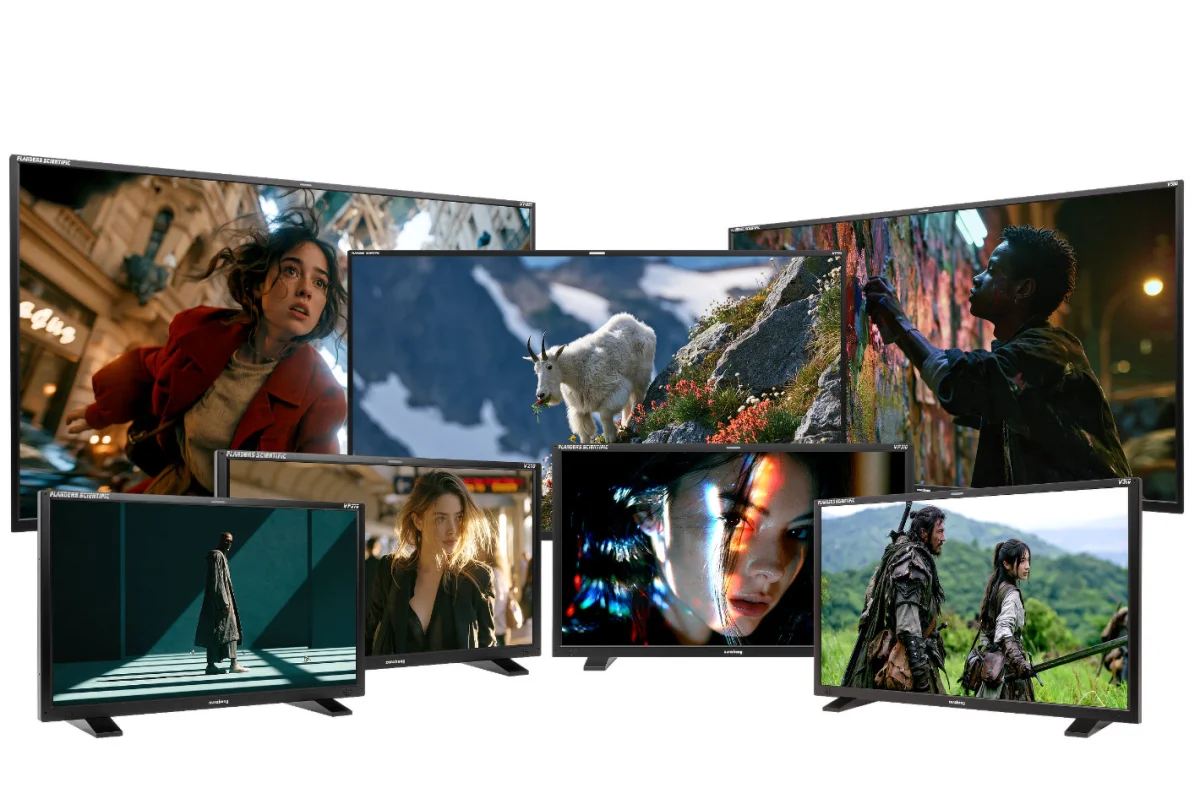
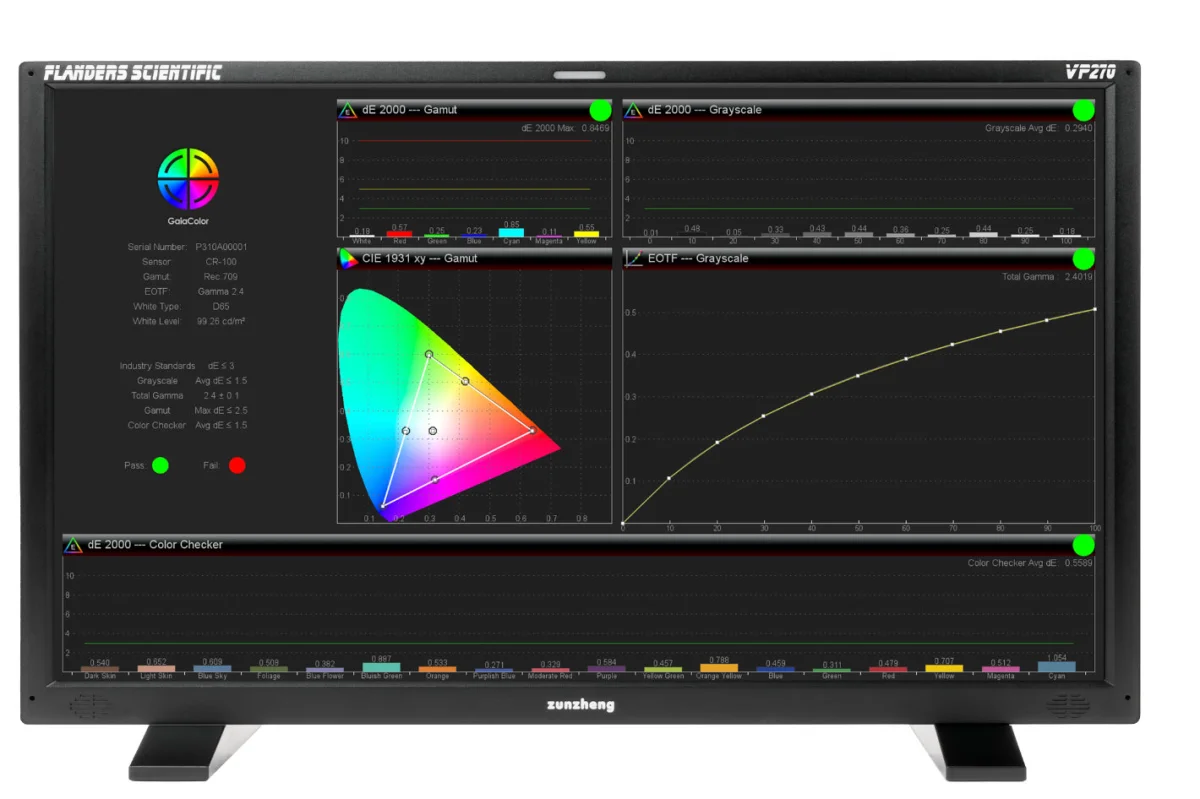
Flanders Scientific has split its reference monitoring line into two new series, and the trade-off is easy to understand. You keep the panel, the color engine and the GaiaColor calibration and analysis tools from the flagship XMP models. What you lose is the onboard toolset: waveform and vectorscope, Look LUT support, Livegrade integration, processed SDI outputs and the front-panel keypad. Both the VP and V series begin shipping this month.
What the trade-off actually buys you
Most grading suites already have scopes somewhere in the chain, whether that's a dedicated waveform box, a software scope in Resolve or a hardware LUT box feeding the display. For those facilities, paying for scopes and look management inside the monitor is paying twice. Flanders is betting that a large share of its buyers fall into that group, and the pricing suggests it's a reasonable bet.
Flanders describes the seven new models as bringing XMP image quality to more grading suites, editing rooms and creative workstations at substantially lower prices, aimed at customers who handle those functions elsewhere in their workflow. The VP series is pitched at post houses where accurate monitoring and professional SDI connectivity matter, but where scopes and look management already live on other hardware or software.
VP Series: SDI-ready reference for the post house
The VP line comes in 26.5-, 31.5-, 55- and 65-inch sizes. It has four 12G-SDI inputs with clean SDI outputs, plus HDMI 2.1 and DisplayPort 1.4. Quad-view mode lets you show several sources on one panel, and each input can carry its own color configuration. That per-input setting matters in practice: a single display can show a graded master, a reference from a different camera or deliverable and a client-approved still, each with a different viewing setup, without you switching profiles every time you change sources.
The platform also supports 120 Hz refresh and stereo 3D through an optional active-glasses system. If your work includes high-frame-rate review or 3D stereo checks, those are the specs to confirm against your pipeline before you order.
VP Series pricing starts at $7,995 USD, with savings of up to 30% compared with the equivalent XMP model.
V Series: the entry point into QD-OLED reference
The V series drops SDI entirely and sticks to HDMI 2.1 and DisplayPort 1.4. It comes in 26.5-, 31.5- and 55-inch sizes, and pricing starts at $5,995 USD, up to 48% below the equivalent XMP model. Flanders presents it as the lowest-priced way into its QD-OLED reference monitoring for anyone who doesn't need SDI.
That makes the V series a natural fit for color grading over HDMI or DisplayPort, along with editorial, VFX, animation, game development and audio post. Peter Barber, Managing Director and CEO of Atomos, put the pitch this way: "Traditionally, the cost of high-end reference monitors has limited how widely they could be deployed across post-production facilities. By offering the same exceptional image quality, colour accuracy and calibration capabilities at a more accessible price point, we are making it possible for customers to equip more workstations, more editing suites and more production environments with professional reference monitoring."
How I'd split the rooms
Here's the thing: the most practical use case isn't swapping XMP for VP across the board. It's tiering. Put an XMP or VP in the primary grading suite, where the onboard scopes and look management earn their keep, and use V Series panels in the complementary rooms: the edit bay, the VFX station, the sound suite or the review space where a client watches cuts. The image quality stays consistent across the chain, so a shot that looks right in the grading suite should look right in the edit, which is the real payoff of reference monitoring at scale.
Before you commit, check two things. First, make sure your scopes and LUT workflow actually live outside the monitor. If you rely on the XMP's processed SDI outputs or keypad for day-to-day work, the cheaper model will cost you time, not money. Second, if you're feeding a mixed fleet, verify that your calibration routine and GaiaColor profiles carry across both series so the room matches on the first day of use.
What XMP still offers
The new series don't replace the flagship. XMP and XMP C models remain in full production for facilities that need onboard tools, and the XMP Series keeps processed SDI outputs and direct front-panel keypad access. My read is that Flanders is widening the ladder rather than reshaping it, and that the real test will be how many post houses decide the scopes can live somewhere else.
More details on the full lineup are available from Flanders Scientific.