First day cover ·
Leopards, Cheetahs and Heat-Drowsy Wildlife on the Sand River
A November week on the Sand River: leopards resting in the heat, a cheetah coalition on alert, wild dog pups growing fast and birds working the afternoon.
November heat changes how the bush behaves. Animals move less in the middle of the day, they hunt in short bursts and they spend long stretches in shade. That pattern shows up across this week's sightings, and it makes for a good set of pictures, because so much of the action is waiting, watching and looking up at the wrong (or right) moment.
Leopards along the Sand River

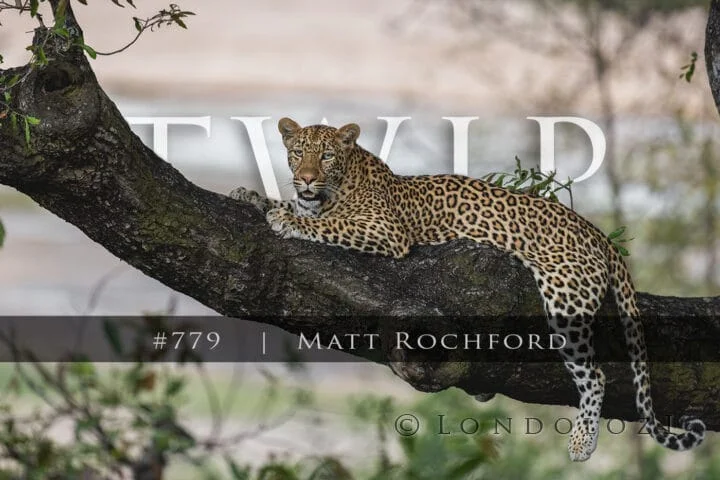
The Tinxiya Female is the star of the week's leopard coverage. She's a young female at around two years old, and she's nearing independence after a strong start under a resilient mother. Her profile places her in the Sunsetbend lineage, and the photographer notes she's a spitting image of her father, the Maxims Male. Confident and curious is the right description. She shows up in several frames here: resting in the shade of a red bushwillow, stretched along the boughs of a large jackalberry with the Sand River running behind her, and pausing to look at an approaching hyena after she'd finished a grey duiker she had caught less than an hour earlier.


The Piccadilly Female gets a more personal note. She's 13 and from the Sunsetbend lineage, and she's gradually pushing her range south of the Sand River into Londolozi. The photographer hadn't seen her in over four years, so finding her after a morning of tracking was a real surprise. She was resting in shade when they came across her.

Cheetahs, males and the long wait

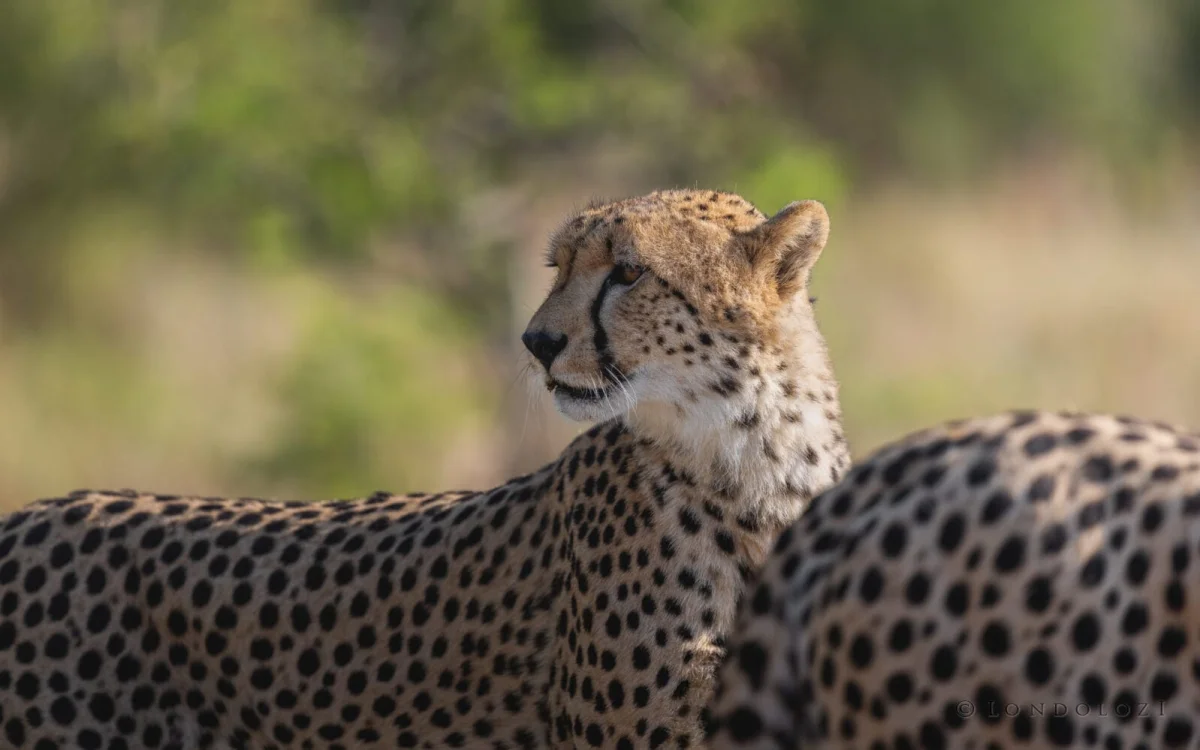
The Makatini Coalition's reaction to a passing Bateleur is a good example of why cheetahs are hard to photograph well and easy to appreciate. Their vigilance is constant, and a bird overhead can pull all of them into a watchful stance in an instant. The photographer's note about watching these males grow from tiny cubs to a strong, confident young coalition is a useful reminder of how much time sits behind a single frame like this one.
Male leopards and lions in this set are also more than scenery. The Hlambela Male, at eight years old and known since 2018, is described as a rising force in the north who has been pushing other males out. He's pictured twice, both times with the same patient plan. In one frame he rests on a termite mound, and in the other he braves the heat under a jackalberry, waiting for a warthog to emerge from its burrow beneath the mound.


The Shingi Male's week is a story of hard luck and opportunism. At two years old, he's the last surviving cub of a litter of three and is close to independence. He missed a hunting attempt on a herd of impala browsing fallen tamboti leaves, and he's always on the move, exploring most of southeastern Londolozi and dispersing further every month. A later frame shows him walking away from an impala carcass that the Nkoveni Female had caught, which a hyena had then stolen. He reached the scene just in time to salvage something for himself. That kind of timing is hard to plan, and it's exactly what makes long tracking days pay off.


Birds that rewarded patience

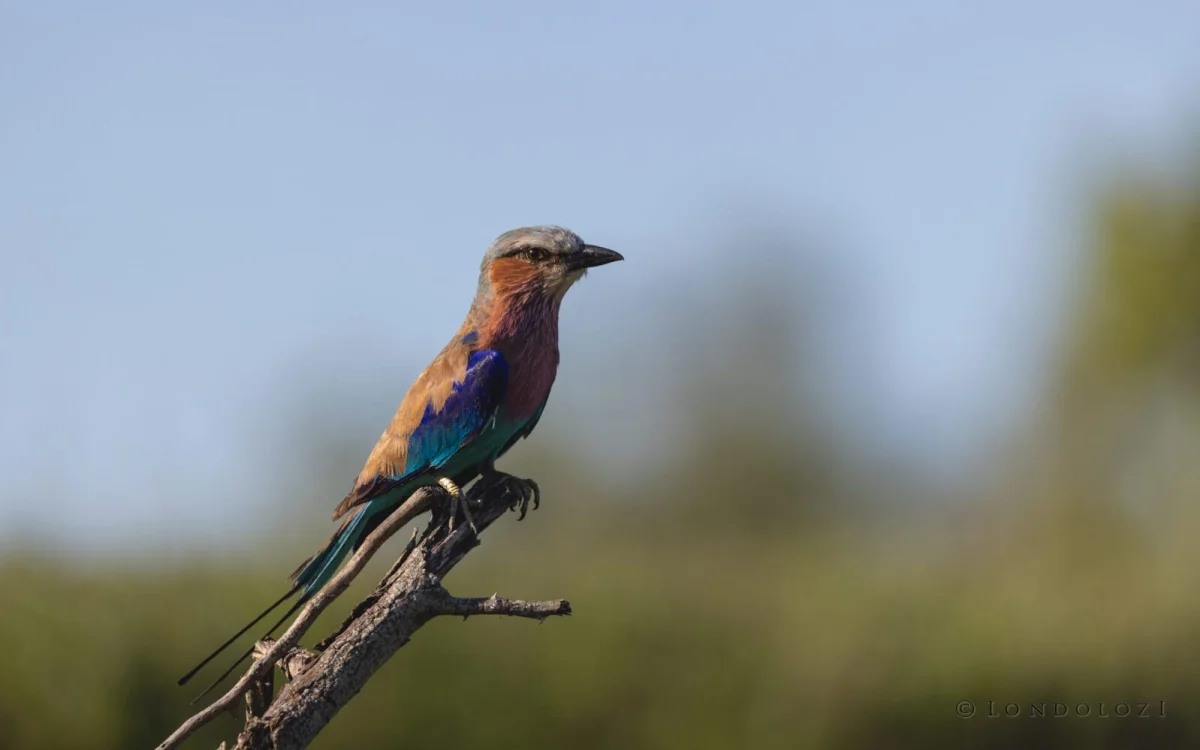
The birds this week are a study in patience and small movements. A Lilac-breasted Roller sits and scans the ground below for its next meal. A male Bennett's Woodpecker works through a small tamboti grove, open-beaked and panting through an incredibly hot afternoon. A Three-banded Plover, one of the smallest birds in the set, rapidly vibrates a foot in muddy shallows to flush out the tiny aquatic creatures it feeds on. The photographer's pick for favourite subject is the Little Bee-eater, which is fast enough that you'd be lucky to freeze one mid-flight.


Wild dogs, elephants and giraffe at dusk

The wild dog pups are the clear crowd favourite. The photographer says they're growing fast, and three of the five pups walked right up to the vehicle for a closer look. Their curiosity is a reminder that young animals are often less wary, which can make for intimate frames, though it also calls for a respectful distance so the pups don't have to adjust their behaviour around the vehicle.

Elephants crossing the Sand River after drinking and cooling down made for a classic scene during a morning coffee break. Giraffe showed up in silhouette at sundown, and one frame is set up to show the size difference between a fully grown male and female. A dwarf mongoose peeking out at eye level rounds out the mammal coverage.


Lions and the last light
The week closes with lions and a sunset. One of the N'waswitshaka Males lifts his head from a long afternoon nap to listen to another male roaring far away, a small moment that says a lot about how lions use sound across a territory. Later, the Plains Camp Male rises as the sun drops behind the Drakensberg, a scene the photographer expects some readers will recognise. Those are the frames I'd study if you want to see how the light and the animal's posture work together. Wait for the subject to change, and the picture changes with it.


Next week's set will likely follow the same thread: heat, shade and the animals that keep moving through it. The wild dog pups and the young male cheetahs are worth watching, since both are close to the age when they start striking out on their own.


