First day cover ·
Wild Dog Pack Moves to Its Fourth Den as Pups Near Their First Hunts
Four den moves in three months have kept this wild dog family close to home. The pups may soon leave the den to join the pack at kills.
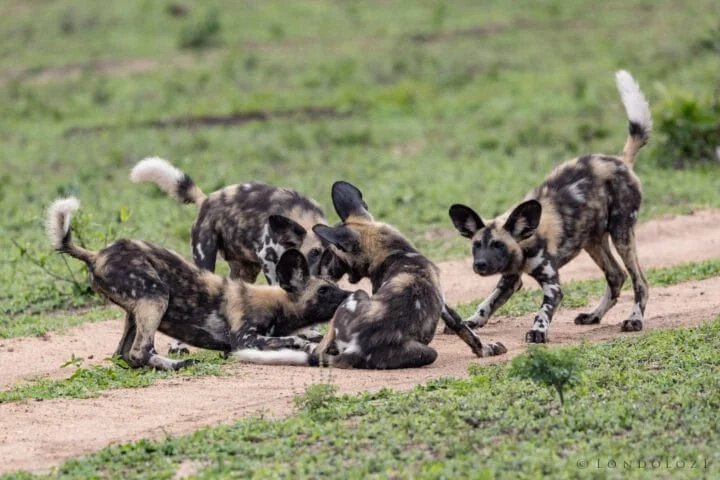
A fresh den and a new stage of life are both coming into view for a pack of four wild dogs and their pups. The family has shifted den sites four times in about three months, staying within roughly three kilometres of its earlier locations. Now the pups are nearing the age when they’ll begin travelling with the adults and, eventually, joining them at kills.
The latest move became clear after two days of searching. The adults were still being seen out hunting, but the pups had disappeared from the two previous den sites. Veatence and the observer watched those spots with binoculars, waiting for a sound or movement that might reveal where the family had gone. The pups had already been moved on.

The family turned up near a waterhole the following morning. From there, the dogs moved into a tributary, where a termite mound stood against one side. One adult began digging into the dry riverbank beside a fallen log. That combination looked like a suitable new den site, and the digging offered a strong clue: wild dogs prepare their dens by excavating.
Four sites, changing conditions
The den history shows how quickly the pups’ home base has changed. The first site was a termite mound, used for about two months. On 6 October, the pack moved to a second mound, where it stayed for a little over three weeks. A third move followed on 30 October; that site lasted nine days. The new location is an embankment in a drainage line.
There isn’t enough evidence to assign one definite reason for all those moves. As pups grow, parasites such as fleas and mites can accumulate at a den, so a cleaner or roomier site may offer better conditions. A pack may also shift if it detects a threat from another predator. And the pups’ age could be part of the picture: they’re approaching the point when they no longer need to remain at a den. Several factors may be at work at once.

The young pups watch as the adult dogs approach the den site.
What has been observed during these moves is straightforward: the pups travel on their own feet. The adults set off, and the pups follow them from one den to the next. No pup has been seen being carried. That detail makes each relocation a small preview of the greater independence the pups will soon need as they accompany the pack farther from home.
From the den to the pack
At around three months old, wild dog pups begin to roam with their pack. That transition is close for this litter, though its exact timing is uncertain. For now, the pups are still fed through regurgitation, and the adults haven’t yet been seen returning to collect them and lead them to a kill.
When that change happens, the adults are expected to go back for pups left behind and guide them to the food. The pups get first access at the kill. The sequence marks a substantial change in their daily routine: instead of waiting at the den for the adults to return, they’ll start travelling with the pack and feeding alongside it. The pups should be weaned, or close to it, by this stage.

One of the pups comes out of the den to greet an adult.
The pack’s small home range so far makes the next phase especially interesting to follow. Wild dogs are known to cover enormous distances, but this family of four has remained close to Londolozi since arriving. All four den sites have been within about three kilometres of one another. The repeated moves have changed where the pups shelter without yet taking the family far from that area.
The pups are also gradually becoming accustomed to people nearby, offering opportunities to observe the shift from den-bound youngsters to travelling pack members.

The young pups are gradually becoming accustomed to people nearby.
Five pups joining the four adults will bring nine dogs together at a kill. The first sign of that new routine may be the adults returning to the den and leading the pups out. When that happens, the family’s movements will show whether this close cluster of den sites gives way to wider travel. For now, the fresh bank-side den is the pups’ home, and the next milestone is their first trip with the adults to a kill.