First day cover ·
Nottens Male Explores a Possible Territory at Londolozi
After two days north of the Sand River, the Nottens Male’s scent-marking hints at a possible opening in Londolozi’s shifting leopard ranges.
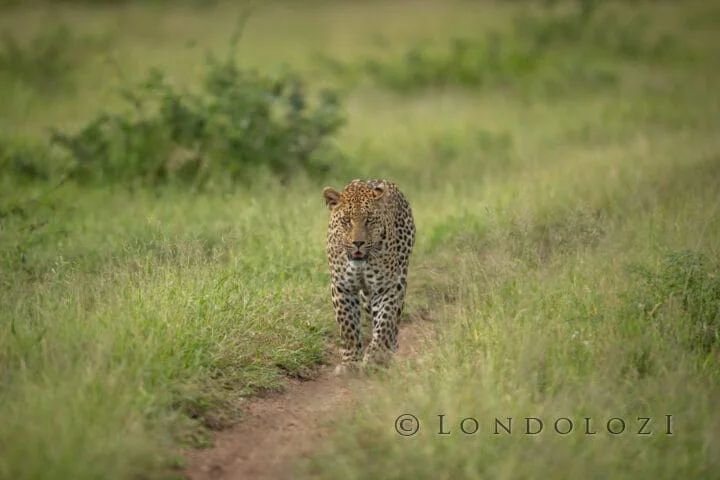
The Nottens Male’s recent visit to northern Londolozi offers a glimpse of how quickly leopard ranges can change. He spent about two days north of the Sand River, moving through an area where male leopard activity has become less consistent. He marked as he travelled, but a short visit can’t establish that he intends to stay. For now, his movements make him a candidate to watch.


The profile identifies him as the Nottens 4:4 Male, born in 2021 and currently four years old. It describes him as a son of Nweti, and says he is navigating a nomadic phase in the southern territories. He grew up just south of Londolozi and has spent time near his father’s range in the reserve’s southeast, so the surrounding country is familiar. He is now a large adult male, at a stage when finding a range of his own may become more pressing. His profile records 10 sightings by members and two known parents.

Why the northern range has room for a newcomer
Several changes among Londolozi’s male leopards have left parts of the reserve with less regular activity. The Nweti Male disappeared from the deep south and east about a year ago. The Mawelawela Male was lost in the past three months after injuries from an encounter with lions. The Senegal Bush Male disappeared two years ago.
Other males have shifted their use of the wider Sabi Sands. The Tortoise Pan Male has spent more time farther north, while the Hlambela Male has settled relatively consistently in the reserve’s northwest. The Maxim’s Male appears to be ranging farther south of the camps. These movements don’t guarantee a vacant range, but they may leave openings for a younger male to investigate.

The Nottens Male has spent much of his time in the northern Sabi Sands. His recent movement into northern Londolozi brings him into an area with potential, but whether it can support a lasting range depends on more than available space. A male needs prey and water, and a range that overlaps with females. He also has to contend with other males that may claim the same ground.
Two days of marking, and a stolen meal
During the sighting, he moved calmly through the area and scent-marked along the way. That repeated marking suggests he was leaving information for other leopards travelling through: his presence, and perhaps his recent passage. It’s an intriguing sign of how he used the area. Still, marking by itself can’t tell us whether he plans to settle there; a leopard passing through may mark, too.

He also killed a nyala, but hyenas took the carcass from him. Losing a meal is a familiar hazard for a leopard, and this encounter added a practical detail to the visit: a promising range still comes with competition over food. The kill doesn’t prove anything about his prospects, but it shows the daily pressures he faces while moving through unfamiliar or contested ground.

A visit, not yet a settled range
My read is that the combination of his age, familiarity with the surrounding area and repeated marking makes this visit worth following. But the evidence remains limited to a sighting of roughly two days. He could continue roaming, or another male could challenge his movements. No lasting claim to the area has been established.

The clearest signal to watch for is whether he returns and keeps using the northern reaches of Londolozi. Repeated visits and continued marking would add context to this first glimpse; one brief passage can’t settle the question. For now, the Nottens Male has explored a possible opening in a shifting range, leaving the next sighting to show whether he moves on or comes back.