First day cover ·
Ron Howard’s Avedon Documentary Reframes the Photographer’s Work and Life
Ron Howard’s 104-minute film pairs iconic fashion images with unseen material and personal accounts to show the range of Richard Avedon’s work.
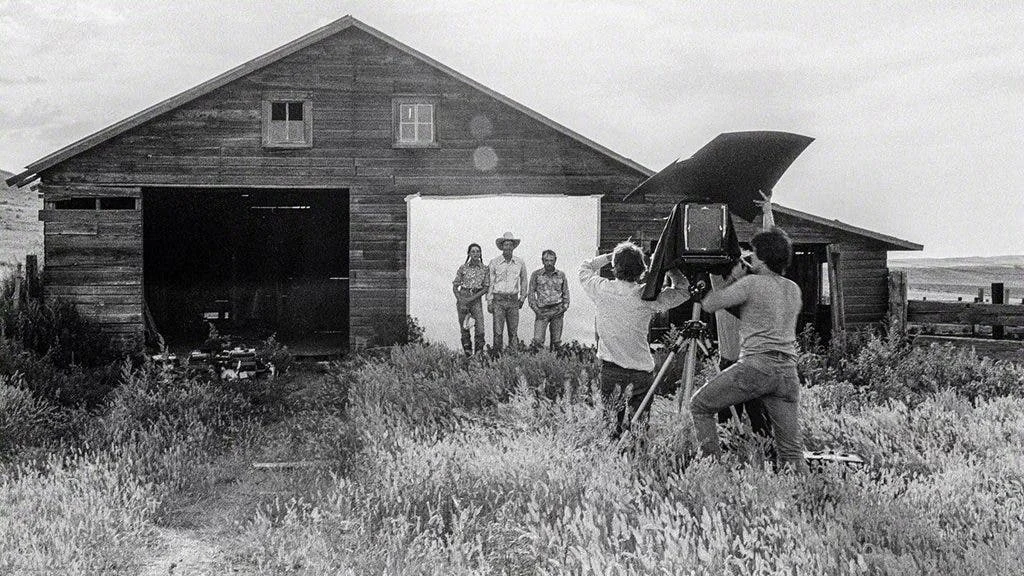
Richard Avedon’s photographs are familiar enough to feel like part of photography’s visual vocabulary: stark portraits against white, fashion images with sharply controlled movement, and subjects who seem to meet the camera without a layer of distraction. Ron Howard’s 104-minute documentary Avedon makes a case for looking again. Alongside celebrated pictures, it brings forward unpublished shoots, behind-the-scenes footage, archival recordings and recollections from people who knew or worked with the photographer.
That breadth is the film’s strongest contribution. Avedon’s reputation is often anchored in fashion and portraiture, but the documentary follows his attention across very different people and settings. It presents the polished images that made him famous while also examining work that could be beautiful, unsettling or controversial. The result is a more layered portrait of both the photographer and the choices behind his pictures.
Familiar photographs, a wider view
The film opens with Avedon in black and white, speaking directly to the viewer. “I can say very little about photography,” he says. “I follow no rules, no laws, and no advice.” The line sets an irreverent tone, then the screen fills with images that have long defined his public reputation.
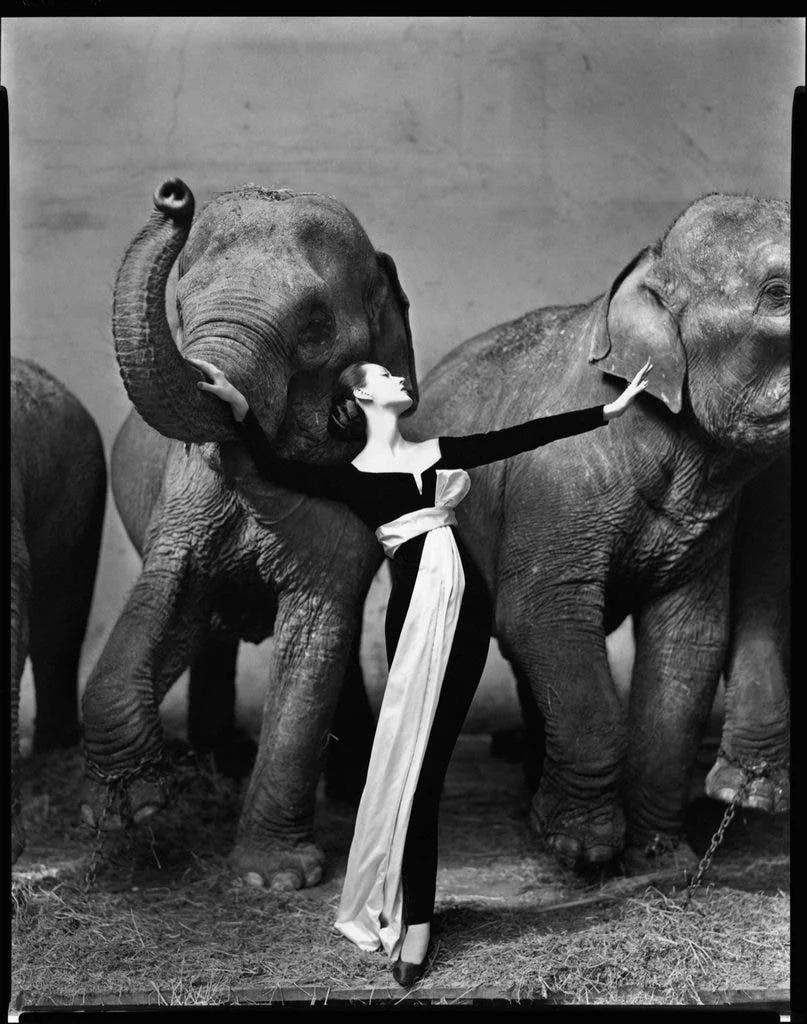
Nastassja Kinski appears with a snake wrapped around her body, an image whose stillness gives it an almost suspended quality. “Dovima with Elephants,” made in Paris in August 1955, brings a model in a Dior evening dress into the company of circus elephants. Art dealer Larry Gagosian calls it “one of the most iconic fashion photographs that has ever been made in the history of photography.” Its recognition doesn’t make it any less compelling; the film’s presentation gives it room to register again.
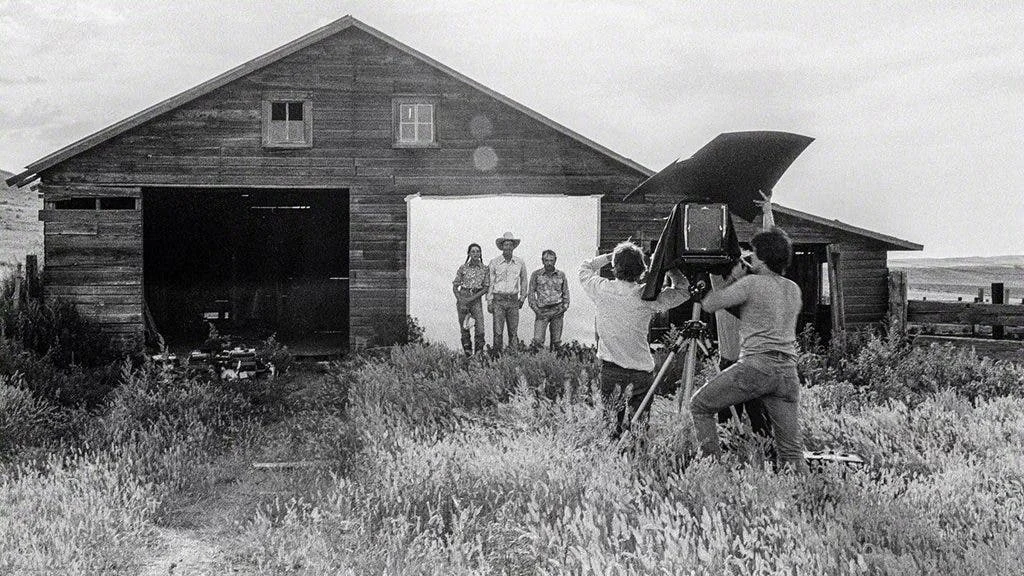
Fashion work for Harper’s Bazaar and Vogue is only one part of the story. Avedon also photographed artists, actors, and people whose lives were far from the editorial world that first brought him recognition. The documentary includes oilfield workers, miners, drifters, waitresses and patients in mental institutions. Giving these pictures space alongside the fashion work helps clarify the range of his interests without reducing the people in them to a single idea.
A photographer speaking in his own voice
Howard builds the film from archival interviews, photographs and newer conversations with Avedon’s friends, colleagues, collaborators and former subjects. The contributors include photographer Joel Meyerowitz, art dealer Larry Gagosian, Isabella Rosellini, Tina Brown, Calvin Klein and Sebastian Kim, Avedon’s former assistant, who later became a photographer. Avedon’s son John also appears, as do James Martin, executive director of the Richard Avedon Foundation, and Samira Nasr, editor-in-chief of Harper’s Bazaar.
The foundation provided access to archival recordings, along with personal notebooks, Polaroid test strips and other materials. That access lets the film move beyond retrospective praise. Avedon’s own voice carries his thoughts about photography, his work and his life, while those who knew him add perspective and sometimes complicate the image of the celebrated artist.
One of the film’s revealing moments comes when Avedon explains why photography suited him: “Look, I still can’t type, I can’t read my own handwriting, I don’t think consecutively, I’m anecdotal, I’m instinctual, but I can see like a son of a bitch.” It’s a vivid description of a way of working built around observation and instinct. His photographs suggest that seeing, for Avedon, meant more than arranging a subject in a frame; it meant searching for a particular expression, gesture or tension.
The documentary also traces parts of his upbringing in New York City. It touches on his strict father and on the influence of his sister Louise, connecting those early relationships to his interest in emotion and movement. These details give context to the work without treating a biography as a simple explanation for every picture.
What the photographs ask of their subjects
The film gives equal attention to Avedon’s elegance and its costs. A voiceover describes a career that made him “rich, famous and controversial,” a reminder that photographs can shape how a subject is seen as well as reveal something about them. His stripped-down backgrounds remove visual clutter, but they also leave the viewer face to face with the person and the photographer’s decisions about what to show.
John Avedon describes his father as searching for “some deeper sensibility, some deeper explosive moment about human nature, human character.” He adds that his father was preoccupied with “image versus reality.” That tension offers a useful way into the documentary’s varied photographs: the camera makes an image, yet the film keeps asking what lies behind the pose, the setting and the public story attached to a subject.
For photographers, Avedon is valuable less as a lesson in replicating a signature look than as a reminder to question what a familiar body of work leaves out. The iconic fashion pictures remain central, but the archival material and portraits from outside that world make the career harder to summarize—and more interesting to revisit. The next time one of Avedon’s best-known images appears, it may be worth asking what other work, and whose lives, sit beyond the frame of his reputation.