First day cover ·
Pelican Aegis PX25 25L Backpack Review: A Flexible Travel Bag for Camera Gear
The PX25 pairs a protective shell with a configurable interior, laptop sleeve and comfortable carry for travel, hikes and everyday camera outings.
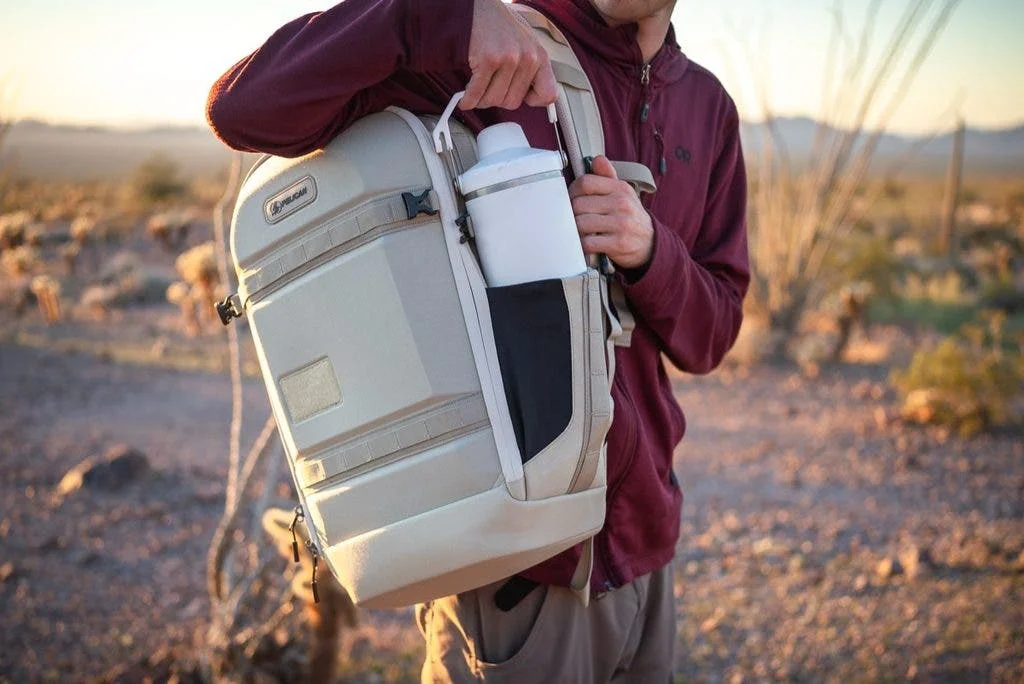
The Pelican Aegis PX25 25L makes its strongest case as a travel bag that can change jobs once you arrive. On a Southern California trip, it carried camera equipment through a day at the San Diego Zoo, then went along on hikes in the Mojave Desert. That range is the point: the interior is open enough to configure for different outings, while the exterior adds structure and protection for the journey between them.
The PX25 was supplied to the reviewer several months before the trip. Its 25-liter capacity and carry-on-friendly design suited air travel, and the same bag could then serve as a daypack. For photographers who usually divide a laptop, camera kit and personal items among separate bags, consolidating them can make transitions easier. The trade-off is that the main compartment needs its own organization, since the backpack doesn’t include camera-specific dividers or packing accessories.
A structured shell for travel and trails
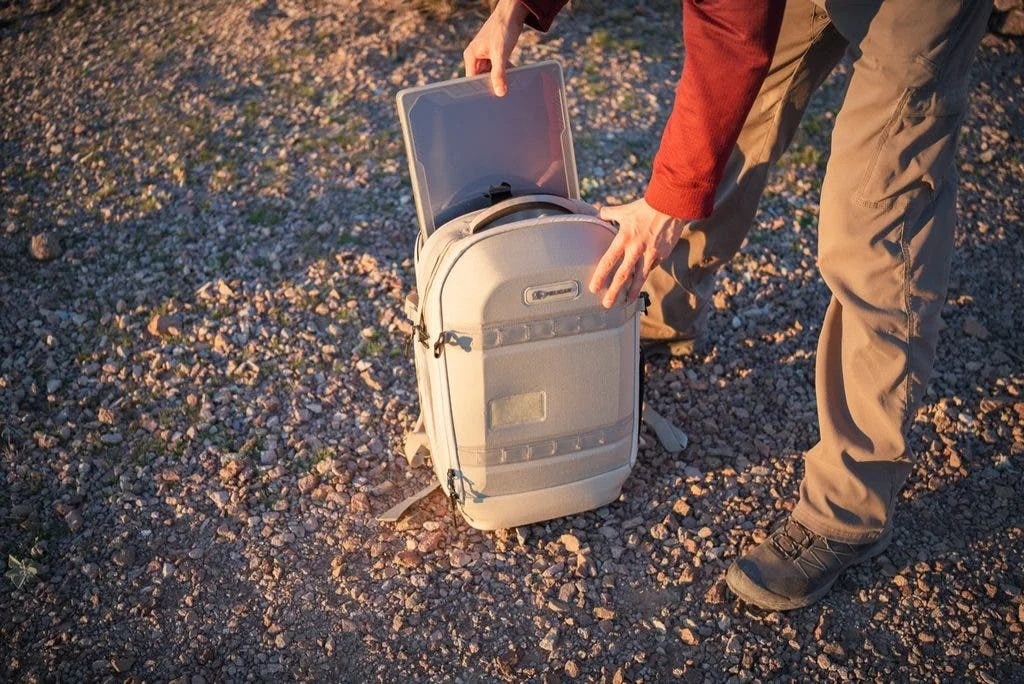
The front of the backpack uses an EVA-molded shell covered with Cordura. It gives the bag a semi-hard exterior, adding structure around the contents while keeping the pack light enough for a full day of carrying. The reviewer found that balance useful when placing the bag in an airplane’s overhead bin and setting it down on rocky ground during hikes.
That construction offers a measure of protection from knocks and drops, though it doesn’t replace a padded camera insert for equipment that needs individual cushioning. Think of the shell as a protective layer around the load; the way lenses and bodies are secured inside still depends on how the compartment is packed.
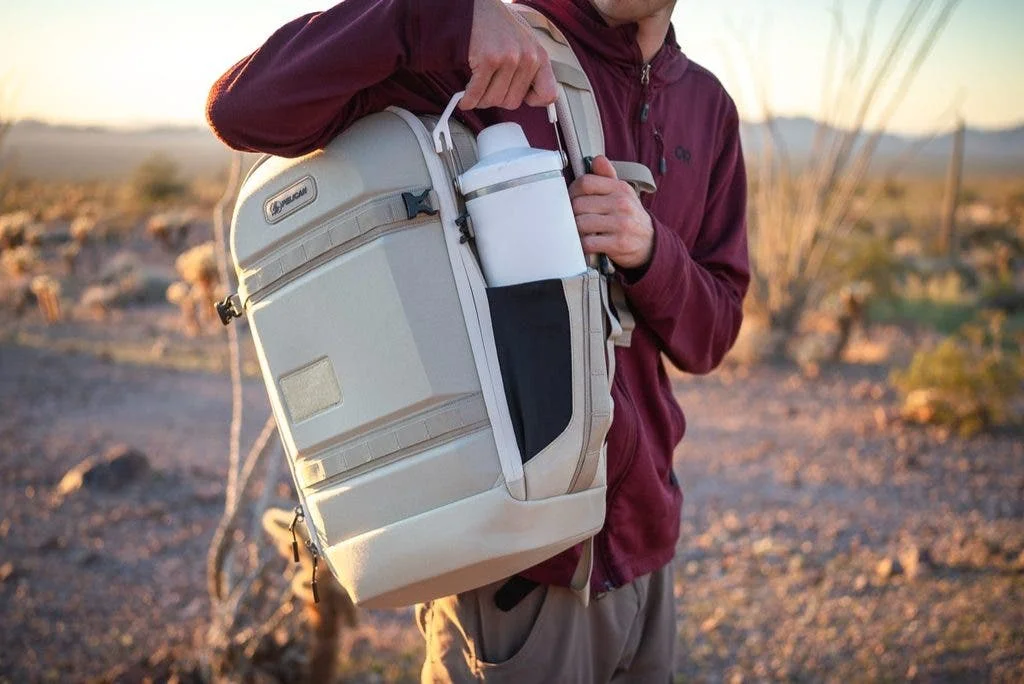
A stretch pocket on the side held the reviewer’s large 40-liter water bottle. The pocket is deep enough to help keep taller, narrower bottles in place while walking. Loops along its exterior can also be used with compression straps to secure items and keep a load close to the bag.
One main compartment, many packing choices
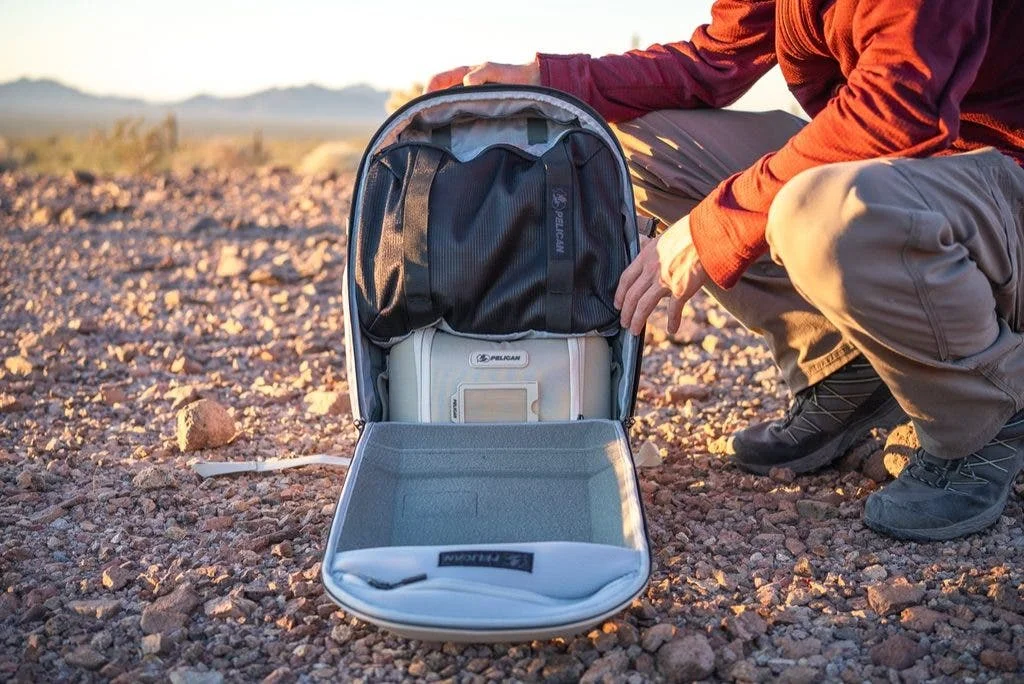
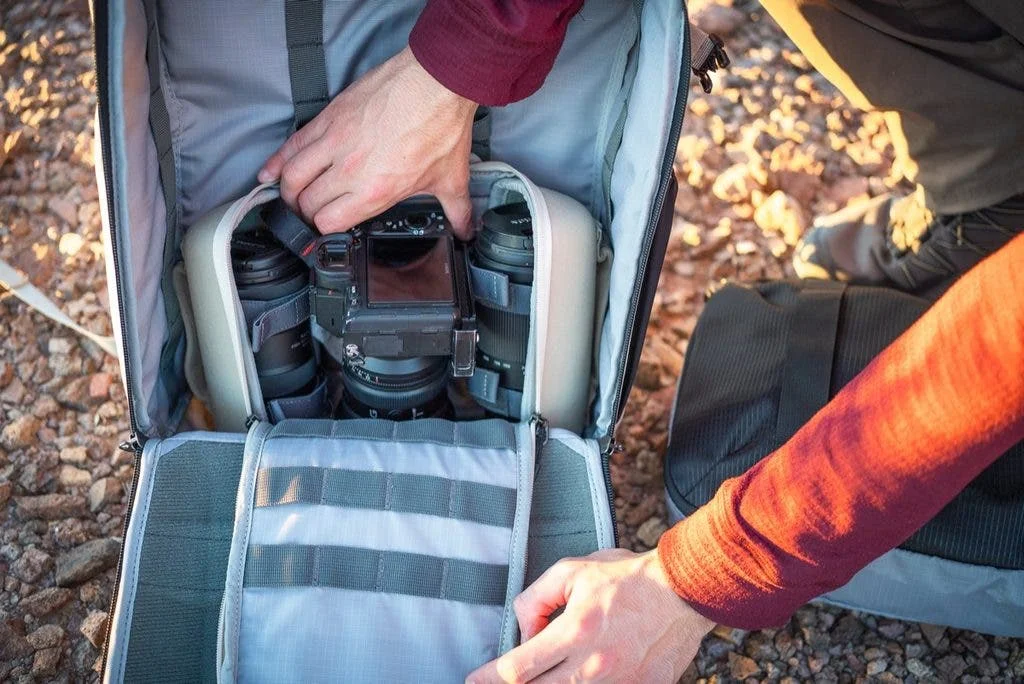
The main compartment opens from the front with a zipper that gives broad access to the interior. Its relatively simple layout leaves room to adapt the bag for a camera day, a hike or a mix of personal and work gear. Instead of committing the whole interior to fixed camera dividers, the PX25 lets the user decide how much space to give each part of the load.
That flexibility works best with a packing plan. The reviewer used three separate Pelican accessories: a ModPak Packing Cube for clothes and snacks, a ModPack Storage Pouch for smaller items such as a phone, and a ModPack AVP-D AV Pouch to carry a camera with two lenses. Those accessories are optional; their role is to show how a photographer can build a modular setup around the open compartment.
For a changing itinerary, that approach can be practical. A photographer can take out a pouch or cube as the day’s needs shift, rather than unpacking a tightly divided camera bag. But photographers who want dedicated, ready-made padding for every body and lens will need to bring suitable inserts. The PX25’s versatility comes from its open layout, so the contents need to be arranged with care.
A laptop sleeve built into the back
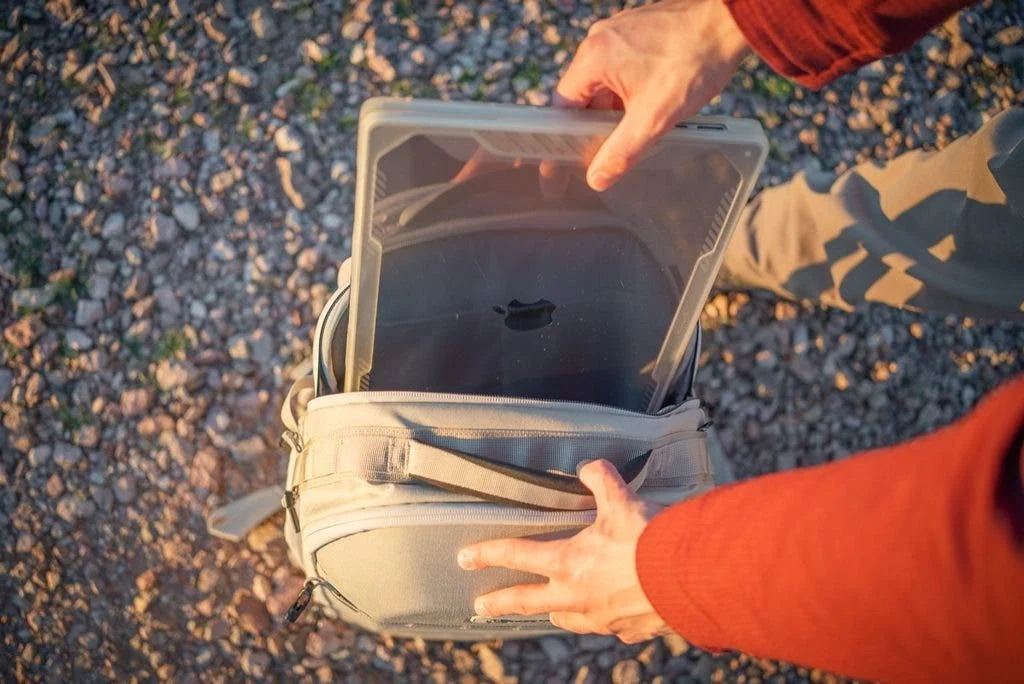
A separate compartment against the wearer’s back holds a laptop and a few accessories. The reviewer’s 16-inch laptop fit snugly, and the compartment’s padding also offers protection for a smaller computer. Keeping the laptop in the backpack meant there was no need to carry a second dedicated laptop bag on the trip.
The rear placement is useful for travel: the computer can be removed at the hotel while the camera and day-trip kit stay packed. It also keeps the laptop separate from the main compartment, where camera accessories and other items can be arranged to suit the day. The reviewer describes the fit of the 16-inch computer as snug, so anyone carrying a larger device should check dimensions before relying on the sleeve.
Comfort over a full day
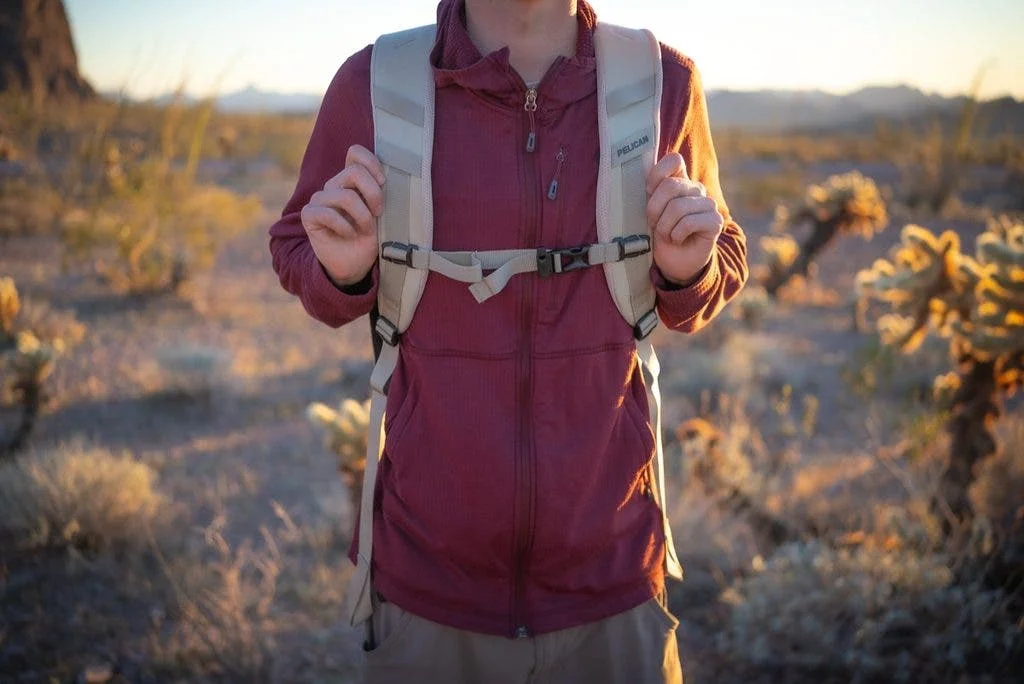
The back panel has a breathable air channel intended to encourage airflow between the pack and the wearer. Padded shoulder straps add cushioning without making the bag feel bulky, and an adjustable sternum strap lets the wearer secure the shoulder straps across the chest.
There’s no hip belt. That omission didn’t trouble the reviewer, who found the backpack comfortable on longer days, but it’s a relevant limit for photographers carrying a heavier camera load over extended walks. Without a hip belt, more of that weight stays on the shoulders. For a moderate travel and day-hike setup, the reviewer’s experience was positive; for a dense kit, load weight and fit will matter more.
A single bag for a mixed itinerary
The PX25’s appeal is the combination of a structured exterior, a configurable main compartment, a separate laptop sleeve and comfortable shoulder straps. On the Southern California trip, it covered the roles of several bags, from carrying equipment on a flight to serving as a daypack at the zoo and on desert hikes.
It’s a strong fit for photographers who want one carry-on-friendly pack for gear and personal essentials and are happy to provide their own interior organization. Those carrying a heavier load may miss a hip belt, while anyone who expects built-in camera dividers should plan to add an insert. For a trip that moves between transit, location work and everyday outings, the PX25’s open layout makes it easy to reshape the load for what the day requires.