First day cover ·
How to Raise Photography Rates With Clear Pricing and Client Communication
Build a rate from your costs, explain what clients receive, and give existing clients notice before your new prices take effect.
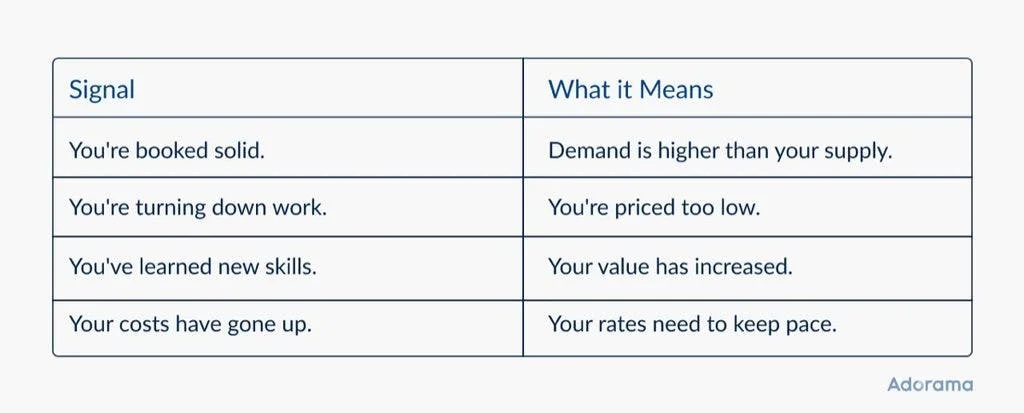
When photography work stays steady but profit doesn’t, raising your rates may be the step that makes the business sustainable. The hard part is often not choosing a new number. It’s handling the fear that clients will leave and the doubt that your work justifies the increase. A clear cost calculation and a direct explanation of what your service includes can make that conversation easier.
Respond to price comparisons with questions
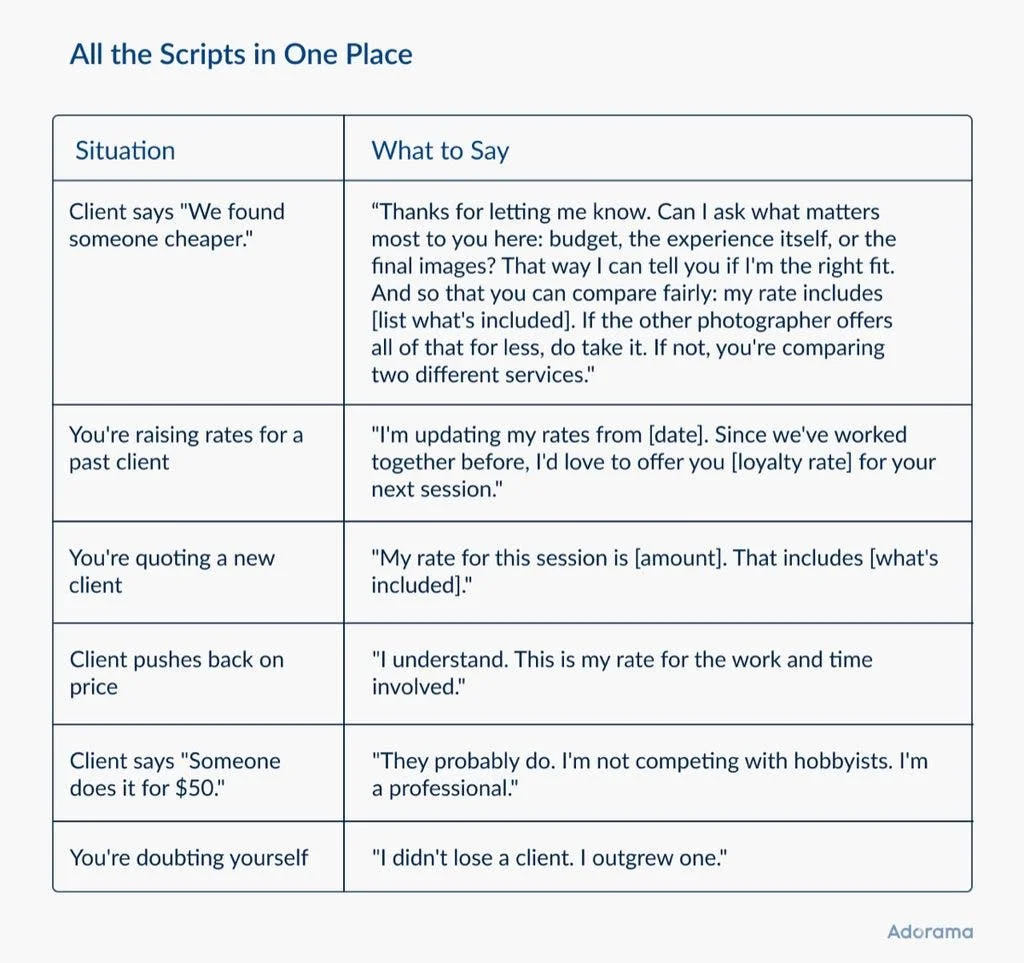
A client who says they found someone cheaper may be weighing options rather than asking you to discount. Before changing your price, ask what matters most to them: budget, the experience, or the final images. Their answer can show whether a different scope would help, or whether your service simply isn’t the right fit.
You can make the comparison more useful by naming what your rate covers. Depending on the assignment, that might include your time on the day, edited images, delivery timing, or licensing. If the other photographer includes the same things for less, the client can choose that option. If the services differ, the client can judge them on a fairer basis.
Sometimes the lower priced photographer is simply working in a different market or choosing to spend more hours for less pay. Explaining your offer won’t necessarily change that client’s decision, and it doesn’t have to. If price is their main consideration, they may not be the client your business needs.
There are also cases where limitations only become clear after the shoot. Images that look acceptable on a phone may not hold up in print; low light can produce grainy files, and fleeting moments may be missed. One wedding client described canceling a $3,200 booking in favor of a photographer charging $50, then contacting the original photographer after the wedding to request a free newlywed session because the delivered photos were unusable. Another account described wedding images compromised by equipment that couldn’t manage dim conditions, unsuitable lenses for the venue, and the absence of flash when it was needed. These examples don’t mean every lower priced service will disappoint. They do show why price alone can’t tell a client what they’ll receive.
Act while doubt is still there
Seeing another photographer charge half your rate can make you question your own pricing. That uncertainty can persist even when you know your costs and can explain your work. There will always be someone charging less, at every level of the market; comparing yourself with the lowest price available has no natural endpoint.
Use evidence to put the doubt in perspective. Do clients return, refer others, or tell you the photographs mattered to them? Ask a photographer you trust how they felt before raising their rates. Then make the change even if you don’t feel completely ready. Confidence may follow the decision rather than come before it.
Build a rate that covers the work
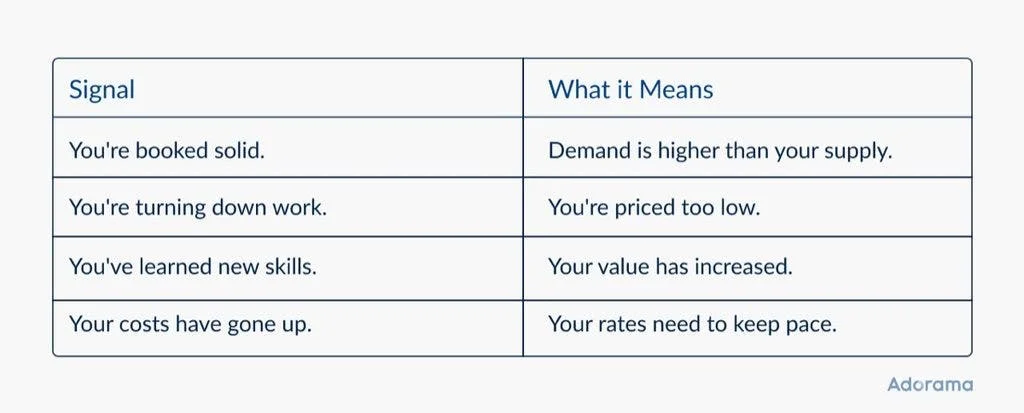
Start by calculating the cost of delivering a session. Include travel, editing hours, software, equipment depreciation, and taxes. That total is your floor: charging less means the job loses money before you account for profit.
Next, add a profit margin. For solo photographers in the United States, a net margin of 25–35% is described as healthy; other reported ranges run from 20–50%, depending on specialty and business model. A common rule of thumb is to add 25–30% to true costs to find a minimum viable rate. These figures are reference points, not a substitute for working through your own expenses.
Finally, compare your result with prices in your area. Headshot sessions are cited at $450–$900 in New York, $225–$525 in a mid-market city, and $150–$400 in smaller metropolitan areas. Local rates vary, so the useful target is one that covers your costs and makes sense for the market where you work.
Give clients notice and update your published prices
Tell people who have reason to expect your previous rate before the change takes effect. That includes current clients, people you quoted recently, and clients you’re contacting again after a pause. A loyalty rate for one transition booking can recognize the relationship while making the new pricing clear:
“I’m updating my rates from [date]. Since we’ve worked together before, I’d love to offer you [loyalty rate] for your next session.”
Update the prices wherever clients might find them, including your website, social channels, and rate card. Matching information across those places avoids quoting one price while a published page shows another.
Let the new rate shape your client base
Some clients may decide not to book at the higher price. That can sting, especially when the familiar worry returns: “Maybe I priced too high.” But keeping every client at an unprofitable rate can leave you busy without enough income to sustain the work. The clients who stay, along with new clients who accept your current rate, are the ones with whom you can build a viable business.
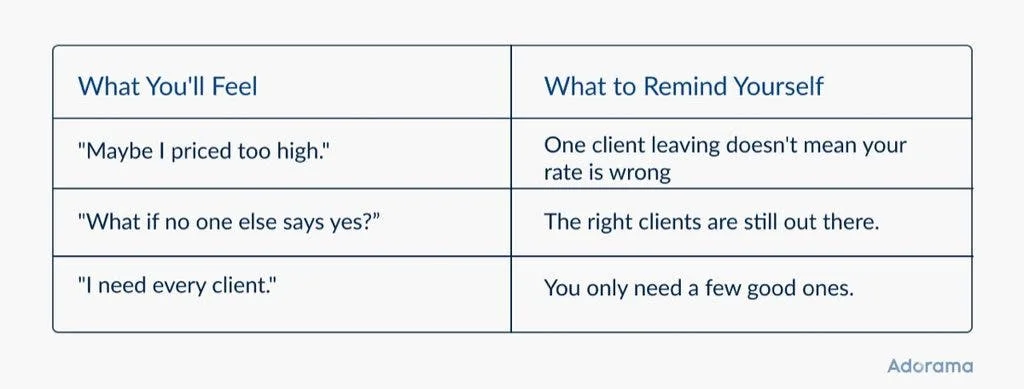
“I didn’t lose a client. I outgrew one.”
Make rate reviews part of the routine
Review your prices every six to twelve months, and revisit them when your costs or workload signal that the current rate no longer works. Pick one client conversation as your first step, use a clear explanation of what’s included, and continue from there. All images by Shailee Jain Noronha.