First day cover ·
Tu-Tones Male: The Londolozi Leopard Who Stayed in His Father’s Territory
Born in 2008, Tu-Tones shared his father’s territory for years. His unusual calm and brief rise ended after a rival displaced the older male.
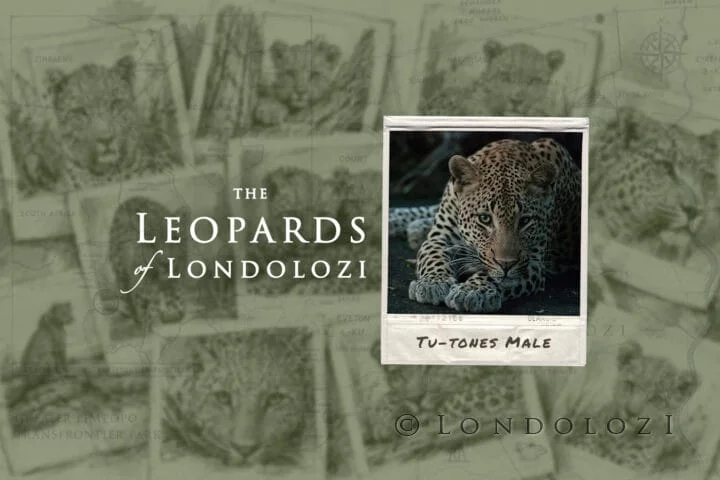
Tu-Tones Male lived by an unlikely arrangement: he stayed in his father’s territory, and his father let him. For years, the two males shared ground at Londolozi without the decisive fight that usually forces a young male leopard to leave. That gave Tu-Tones a rare place in the reserve’s story—and left him poorly prepared when the arrangement finally ended.

The son who stayed
Born in October 2008, Tu-Tones was one of two males in a litter born to the Maxabene Female. His brother grew up to be the Makhotini Male. Their father was the Camp Pan Male, then a powerful presence in the heart of Londolozi.
As a cub, Tu-Tones was called Pinky, a name inspired by his bright pink nose. A slightly misaligned eye added to his distinctive expression. His adult name came from the Tu-Tones track in the reserve’s south-east, where he spent much of his time.

Young male leopards generally disperse from the territory where they were born. Remaining on a dominant male’s ground risks conflict, even when that male is their father. Tu-Tones, though, settled within Camp Pan’s range. When the two met, they snarled and postured, then parted without a fight. The uneasy coexistence lasted for years.
That pattern shaped Tu-Tones’ life. He didn’t need to establish a separate territory or drive another male from one. He could remain close to familiar ground while his father continued to rule it. Unusual as the arrangement was, it seemed to hold.
A shared territory, and a shared courtship
The overlap extended to the Tamboti Female. On several occasions, Tu-Tones and Camp Pan were seen courting her at the same time. The female appeared to favor the younger male, and Tu-Tones was considered the likely father of her litter. Camp Pan had not fathered a known cub in years.
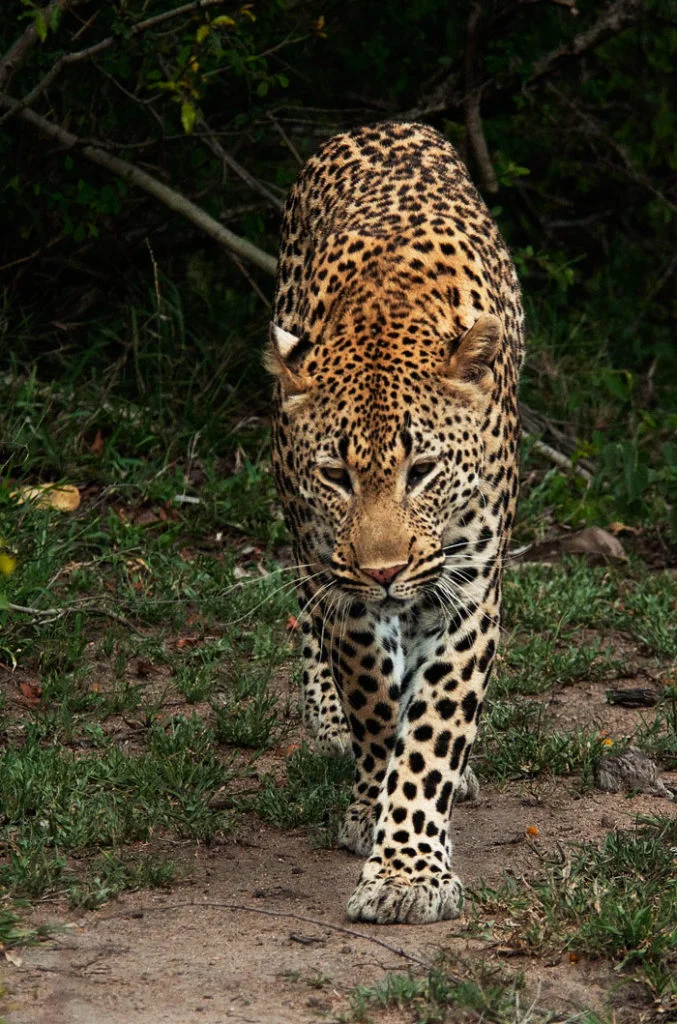
There was a striking reversal in that family dynamic: Tu-Tones lived on his father’s land and may have taken on part of his father’s reproductive role. Yet the account of their relationship isn’t one of a son forcing his way into power. Their meetings brought tension, but no reported battle that settled ownership of the territory.

Easy to watch, formidable in the wild
Rangers remembered Tu-Tones as exceptionally relaxed around people. One story captures that temperament: trackers walked along a road looking for his footprints while he watched them from about two metres away. When they finally spotted him, he yawned and went to sleep. He didn’t snarl or charge, and he didn’t hurry away.
That calm made him a favorite with guests, but it shouldn’t be mistaken for weakness as a hunter. Tu-Tones was large and powerful. He could haul a young zebra into a marula tree and bring down a full-grown warthog. His unhurried behavior around people was one part of his character; his hunting ability was another.


When the arrangement ended
In 2014, the younger Piva Male displaced Camp Pan. The change unsettled the system Tu-Tones had relied on: his father no longer held the territory, and Tu-Tones had no established range of his own to fall back on. After years without having to defend territory, he faced the pressures of life as a nomad.
Fights weakened him, and mange set in. He was last seen at Londolozi in late summer 2015, thin and fading. His body was found soon afterward just east of the reserve boundary. Tracks around it indicated that a troop of baboons had been close by—an alarming sign for an animal that, while healthy, would not normally have allowed them near.
Tu-Tones was about six and a half when he died. The profile dates his life from 2008 to 2015 and lists his age at death as seven. His father outlived him.

His story carries a hard lesson in how unusual success can depend on the conditions that allow it. Tu-Tones had years of relative stability beside his father, and he made the most of them. But once Camp Pan lost his position, the protection of that familiar arrangement vanished. Tu-Tones remains memorable for the years he spent bending the usual pattern of male leopard dispersal—and for the quiet, distinctive presence that made people stop and watch.

The Maxabene 3:2 male in the lowveld milkberry tree where he hoisted a zebra foal. He had killed zebra before, and his brother had killed a buffalo calf.